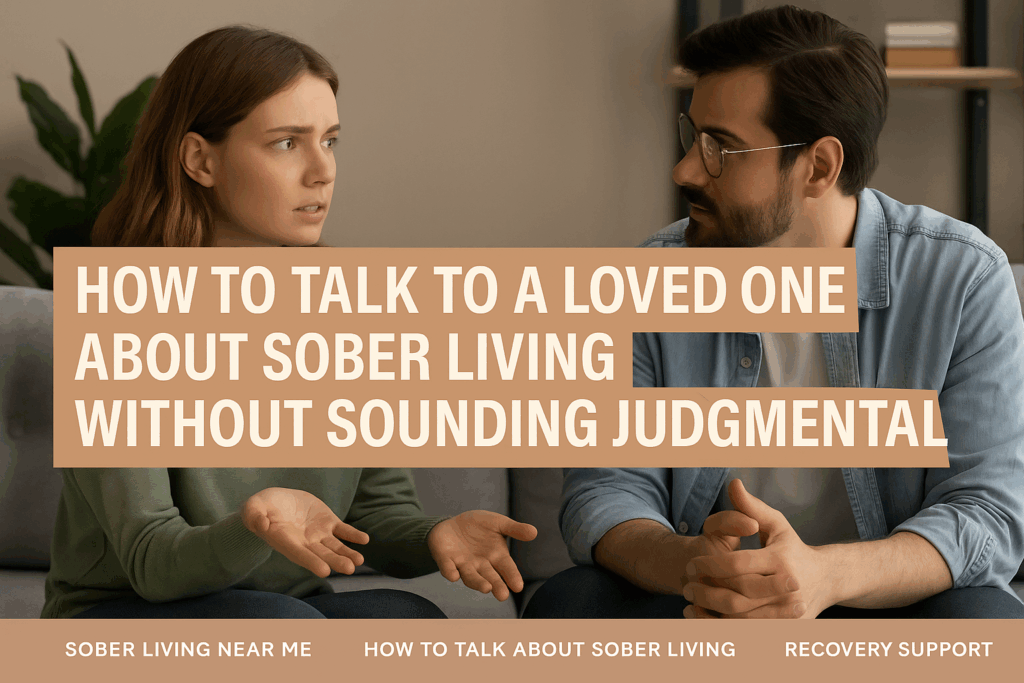
If someone you love is struggling with addiction or has recently completed treatment, the idea of sober living might seem like the natural next step in the process of recovery. But bringing it up? That’s a completely different story.
For many families, the conversation about sober living is fraught with anxiety. What if it sounds like judgment? What if they feel like you’re trying to control them or, worse, give up on them? You want to be helpful, but you don’t want to risk pushing them away in the process.
At Monarch Recovery Centers, we understand how truly delicate this moment can be. We’ve walked countless families through hundreds of these conversations, and we’ve seen what works and what backfires. If you’re feeling stuck on how to approach this conversation with your loved one and not sure where to get started, we’re happy to help. Whether you’re researching sober living near me or trying to understand your role in your loved one’s recovery journey, keep reading to discover how to approach this conversation in a way that builds connection, not resistance.
Quick Answer Summary
Talking to a loved one about sober living is often most effective when approached with empathy, curiosity, and support rather than pressure or judgment. Instead of presenting sober living as a punishment or requirement, families can frame it as a resource that provides structure, accountability, community, and recovery support. Open conversations that focus on understanding a loved one’s needs and goals can help reduce resistance while encouraging healthy next steps in the recovery process.
Key Takeaways
- Conversations about sober living are often more productive when they begin with curiosity, empathy, and active listening rather than control or ultimatums.¹
- Recovery support is most effective when individuals feel respected, empowered, and involved in decisions about their care.¹
- Sober living homes provide structure, accountability, peer support, and stability that can help strengthen long-term recovery outcomes.²
- Framing sober living as a supportive resource rather than a punishment can help reduce feelings of shame or resistance.
- Timing matters; important recovery conversations are often best held during calm, supportive moments rather than during conflict or crisis.
- Healthy boundaries can coexist with compassion and support, helping families encourage recovery without creating unnecessary tension.
- Recovery housing can serve as a bridge between treatment and independent living by providing ongoing support and accountability.²
- Family involvement, when appropriate, can play an important role in supporting recovery and strengthening long-term success.³
- Recovery is often strengthened through connection, community, and access to supportive environments rather than isolation.¹²
Start with Curiosity, Not Control
Before you start making suggestions, begin by asking them how they’re doing. What do they want next? What’s feeling difficult or overwhelming? Try directed questions such as:
- What do you think would help you feel supported right now?
- Are there any living situations that feel like they might help with staying on track?
- Would it help to talk about what’s worked or hasn’t since leaving treatment?
Asking questions helps create dialogue, letting your loved one feel seen and respected, not managed. Monarch encourages family involvement through empathy, not pressure. If you’re worried about relapse or instability, start by sharing your feelings, not instructions. This will, in turn, build trust.
Frame Sober Living as a Resource, Not as a Punishment
The phrase ‘sober home’ can trigger all kinds of internalized shame. Many people assume it’s like a halfway house, or that they’ve somehow failed if they’re not making it on their own. Your job is to reframe this way of thinking with statements such as:
- This isn’t about taking something away; it’s about giving you more support.
- It’s not a step back. It’s a foundation for moving forward.
- Sober living is about community, structure, and having space to grow.
You can share success stories to help in this instance. Talk about how recovery houses offer things like independence with guardrails, access to care and peer support that can be genuinely empowering for those in recovery.
Time it Right and Don’t Forget to Read the Room
A conversation this personal deserves the right timing and true care. Avoid bringing it up when your loved one is in crisis or emotionally flooded, when you’re feeling angry, resentful or anxious, and when they’re around others who might feel threatening or judgmental. Instead, look for moments when you’re alone and both relatively calm, when they’ve expressed interest in support, when they’ve voiced concern about relapse, and when you can be truly present, honest and emotionally available.
At Monarch, we remind families that timing isn’t everything, but it is something. Respect their pace and trust the relationship. Know that planting the seed can be just as powerful as demanding a decision.
Offer Support, Not Ultimatums
There’s a difference between boundaries and ultimatums. It’s okay to express your limits, but don’t use them as weapons. Try saying things such as:
- I want to support you in a way that works for both of us.
- I’ve noticed how hard it’s been to stay consistent lately. Would you be open to exploring what support could look like?
- If sober living feels like too much right now, let’s talk about what step feels possible.
At the same time, make sure to avoid statements like:
- You need to move into sober living, or I’m done.
- You clearly can’t do this on your own.
Monarch’s team helps families navigate boundaries that are firm but kind. The goal isn’t to force compliance, but rather to co-create safety.
Share Information Gently and Be Ready to Listen
When it’s time to share options, do it with care. Offer to explore sober living near me together and let them see photos, read reviews, or even visit a house if they’re open to it. A few things you can try saying include:
- I found a program that looks like it really respects people’s independence. Want to check it out together?
- This one has a focus on community and privacy – no one-size-fits-all treatment.
- Monarch Recovery Centers seems different than what we’ve seen before. It looks peaceful, supportive, and thoughtful. Should we check it out?
Then, stop talking. Let them process and don’t be afraid to let silence be a part of the conversation. Your goal isn’t a yes on the spot, but rather an opening.
Bridging the Gap with Compassion and Care
Talking about sober living doesn’t have to feel like walking on eggshells. When it’s grounded in true empathy, curiosity and shared hope, it becomes something else entirely: an invitation. So if you’re worried about how to talk to someone that you love, take a deep breath. Lead with compassion, share what you’ve learned, and ask more than you tell. And remember – it’s not about doing it perfectly. It’s about showing up with love.
At Monarch Recovery Centers, we help families build bridges, not walls. Our recovery houses are designed for individuals who want support without shame, with spaces where people can grow, heal, and reclaim autonomy without pressure or punishment. Interested in learning more about what we have to offer? Contact us today, and we’ll be happy to help.
Citations
- Substance Abuse and Mental Health Services Administration (SAMHSA). Recovery and Recovery Support. https://www.samhsa.gov/recovery
- Jason LA, Mericle AA, Polcin DL, White WL. The Role of Recovery Residences in Promoting Long-Term Addiction Recovery. https://pmc.ncbi.nlm.nih.gov/articles/PMC2556949/
- National Institute on Drug Abuse (NIDA). Treatment and Recovery. https://nida.nih.gov/publications/drugs-brains-behavior-science-addiction/treatment-recovery