When someone is struggling with opioid addiction, one of the most important decisions that they’ll make is choosing the right level of care. Many people assume that recovery must start with residential treatment, while others worry that outpatient care won’t be ‘serious enough’ to address something as complex as heroin or fentanyl dependence. In reality, effective treatment isn’t about choosing the highest level of care available – it’s about choosing the right level of care for the individual’s needs.
An Intensive Outpatient Program (IOP) is often misunderstood. Some people think it’s only appropriate for mild substance use or that it lacks the structure required for complex opioid addiction treatment. But when properly designed and clinically supported, IOP can be an essential and highly effective option, especially for individuals who are medically stable, motivated for recovery and able to engage consistently in treatment.
At Monarch Recovery Centers, IOP is built to address the real-world challenges of opioid addiction. It combines frequent therapy, clinical monitoring, relapse-prevention planning and ongoing support while allowing clients to remain fully engaged in work, family life or sober living. For many people, this balance is exactly what makes long-term recovery possible.
Interested in learning more about IOP and how it can help with opioid addiction treatment? Keep reading to discover everything that you need to know and how Monarch’s IOP can help you or a loved one during the path to long-term recovery.
Quick Answer Summary
An Intensive Outpatient Program (IOP) can be the right level of care for opioid addiction when someone needs structured, evidence-based treatment but does not require 24-hour residential supervision. IOP is often ideal after detox or stabilization, especially for individuals who are medically stable, motivated for recovery and able to participate consistently in therapy while managing work, family or daily responsibilities. Through frequent counseling, relapse-prevention planning, peer support and ongoing clinical care, IOP helps individuals build long-term recovery skills while remaining connected to real life outside of treatment.
Key Takeaways
- IOP can be an appropriate and effective level of care for opioid addiction when an individual is medically stable, motivated for treatment and able to participate consistently in therapy.
- Continuing care after detox or stabilization — including IOP — improves long-term outcomes and reduces relapse risk by maintaining clinical engagement and therapeutic contact.
- Structured outpatient treatment provides accountability, relapse-prevention planning and behavioral therapy while allowing individuals to remain active in work, family life or sober housing.
- IOP is especially effective as a step-down level of care for those transitioning from residential treatment or higher levels of support, helping stabilize recovery during re-entry to daily life.
- The “right level of care” depends on clinical appropriateness — not intensity alone — and should be determined using medical, psychological and social stability criteria.
Understanding IOP and How It Fits Into Opioid Addiction Treatment
An Intensive Outpatient Program provides structured, evidence-based care without requiring residential admission. According to SAMHSA’s guidance on intensive outpatient treatment and the continuum of care, effective addiction treatment is delivered across multiple levels of care so that support can be matched to each person’s needs over time.
For opioid addiction treatment, IOP is often most appropriate after detox or initial stabilization. Once the immediate physical risks of withdrawal are addressed, the real work of recovery begins, including learning how to manage cravings, regulate emotions and rebuild daily routines without substances. IOP offers the intensity needed for this phase while allowing individuals to practice recovery skills in real-world environments.
IOP is not a step down in seriousness, but rather the level of engagement required can be quite demanding. Clients must show up consistently, participate actively and apply what they learn outside of sessions. This accountability is one of the reasons that IOP can be so effective for opioid addiction recovery.
When IOP Is the Right Fit for Someone Struggling With Opioids
IOP is most appropriate when an individual’s medical and psychiatric needs can be safely managed without 24-hour supervision. This often includes people who have completed detox, are stable on medication-assisted treatment when indicated or have a strong support system in place.
For individuals who cannot step away from work, parenting or caregiving responsibilities, IOP offers a way to receive meaningful treatment without completely disrupting daily life. This is particularly important for people who need recovery to coexist with real-world obligations rather than pause on them entirely.
IOP is also a strong option for individuals transitioning out of residential treatment. Instead of moving to full-time care or no care at all, IOP provides continuity. Clients remain connected to a clinical team while gradually increasing independence, reducing the risk of relapse during this vulnerable transition period.
Why Structure Still Matters in Outpatient Care
One of the biggest misconceptions about outpatient treatment is that it lacks structure. In reality, structure is what distinguishes intensive outpatient programs from standard outpatient therapy.
At Monarch, IOP is designed around consistent schedules, clear expectations and frequent clinical contact. Clients attend therapy multiple times per week, keeping recovery front and center during early sobriety. This frequency allows therapists to address challenges as they arise, rather than weeks after the fact.
For opioid addiction, this consistency is critical. Cravings can fluctuate, stressors can appear suddenly and emotional triggers can intensify without warning. Regular therapy sessions help clients stay grounded, accountable and supported during these moments. Structure also reinforces routine, a key component of relapse prevention. Knowing when and where treatment occurs helps stabilize daily life, making it easier to plan healthy behaviors around recovery.
Addressing the Myth That IOP is ‘Less Serious’
Opioid addiction carries real medical risks, which can lead people to believe that anything short of residential care is inadequate. But seriousness isn’t determined by location, but rather by clinical quality, engagement and consistency.
IOP treats opioid addiction by addressing the behaviors, thought patterns and emotional drivers that fuel substance use. Through group therapy, clients learn from others navigating similar challenges. Through individual counseling, they address personal triggers, trauma and mental health concerns. Through relapse-prevention planning, they build concrete strategies for managing cravings and stress.
Importantly, outpatient treatment requires individuals to actively participate in their recovery while facing daily life. This real-world application strengthens coping skills and builds resilience in ways that isolated treatment settings cannot always replicate.
All in all, IOP isn’t easier – it’s different. And for many people, it’s exactly what makes recovery sustainable.
How Monarch’s IOP Supports Opioid Addiction Recovery
Monarch’s intensive outpatient program is designed to provide the level of care opioid addiction demands. Clients receive frequent, structured therapy within a compassionate, clinically grounded environment. Treatment plans are individualized, addressing both substance use and co-occurring mental health conditions when present.
Clients in IOP benefit from ongoing monitoring, peer support and access to additional services such as sober living or transportation when needed. This integrated approach ensures that recovery is supported across multiple areas of life, not just during therapy hours.
For individuals seeking opioid addiction treatment through a trusted drug treatment center or treatment centers in Sacramento, Monarch offers care that is both flexible and clinically robust. The goal is not short-term abstinence, but long-term stability and independence.
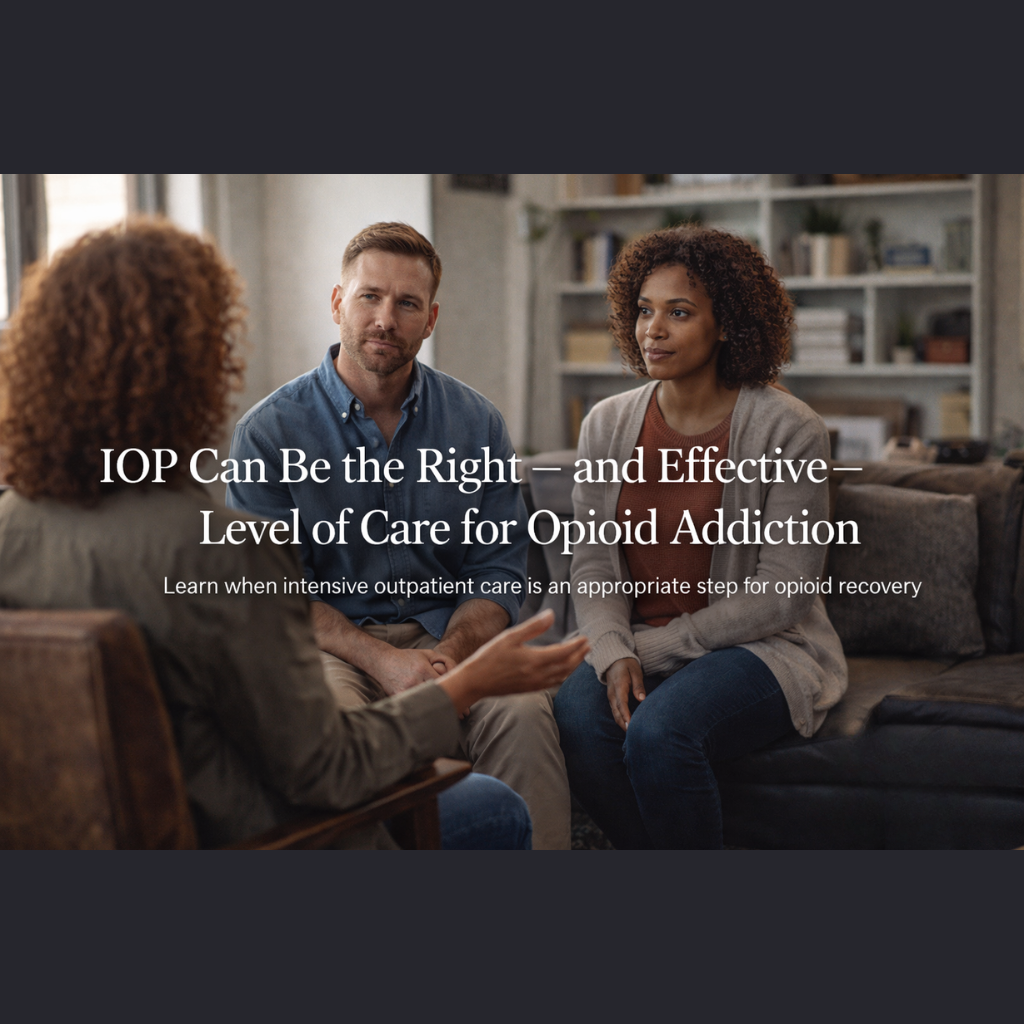
IOP Can Be the Right — and Effective — Level of Care for Opioid Addiction
Recovery works best when treatment matches the individual, not when individuals are forced into a one-size-fits-all model. Intensive Outpatient Programs provide a powerful option for people recovering from opioid addiction who need structure, accountability and clinical support without residential care.
IOP offers the intensity required to address cravings, triggers and emotional healing wihle allowing individuals to rebuild their lives in real time. When properly designed and consistently attended, it can be just as effective, and often more sustainable, than higher levels of care.
At Monarch Recovery Centers, IOP is built to support meaningful, lasting recovery from opioid addiction. If you or someone that you love is seeking a thoughtful, evidence-based approach that balances treatment with daily life, IOP just might be the right next step. Recovery is possible, and the right level of care makes all of the difference. Ready to learn more about Monarch’s IOP and how it can help support opioid addiction treatment? Reach out to us today.