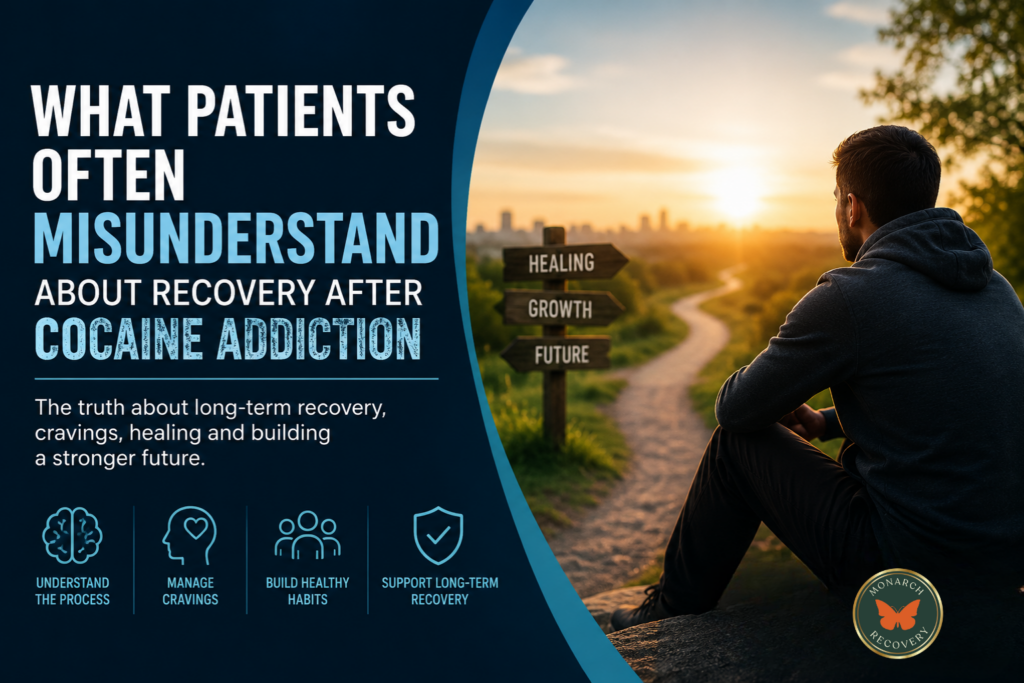
Completing treatment for cocaine addiction is a major accomplishment. For many patients, reaching sobriety can feel like crossing an important finish line after months or years of struggling with substance use. However, one of the most common misconceptions about this recovery is that stopping cocaine is the end of the process rather than the beginning of a new phase of growth and healing.
The reality is that recovery often involves much more than abstaining from substances. While early sobriety is an important milestone, long-term recovery typically requires ongoing work related to emotional regulation, stress management, coping skills, routines, relationships, and relapse prevention. Many patients are surprised to discover that some of the biggest challenges emerge after the initial stage of treatment, when they begin to navigate everyday life without relying on cocaine.
According to the Substance Abuse and Mental Health Services Administration (SAMHSA) Recovery Resources, recovery is a process of improving health, wellness and quality of life while working towards self-directed goals and long-term stability. That process often continues well beyond detox and early treatment.1
Understanding what recovery actually looks like can help patients approach the journey with realistic expectations and a stronger foundation for success. For many individuals, ongoing cocaine addiction treatment, addiction therapy, and support through intensive outpatient programs (IOPs) provide important tools for building sustainable recovery long after early sobriety begins.
Quick Answer Summary
Recovery after cocaine addiction involves much more than simply stopping drug use. While achieving sobriety is a major milestone, long-term recovery often requires ongoing work in areas such as emotional regulation, coping skills, stress management, relapse prevention, healthy routines, and relationship rebuilding. Many patients are surprised to learn that cravings, emotional challenges, and life stressors can continue after treatment ends. Continued support through therapy, intensive outpatient programs (IOPs), and recovery-focused routines can help individuals build the stability and resilience needed for lasting recovery.
Key Takeaways
- Recovery from cocaine addiction is an ongoing process that extends beyond achieving sobriety and often includes improving overall health, wellness, and quality of life.¹
- Cocaine can affect brain reward pathways, motivation, and decision-making, making recovery a gradual process that continues long after substance use stops.²
- Cravings may persist during recovery and do not necessarily indicate failure; learning to manage triggers is an important part of long-term success.
- Motivation is important, but sustainable recovery is often strengthened through structure, accountability, healthy routines, and ongoing support.
- Emotional challenges such as anxiety, stress, irritability, and sadness may become more noticeable during early recovery as individuals learn healthier coping strategies.³
- Recovery focuses on building resilience and navigating life’s challenges differently rather than avoiding all triggers indefinitely.
- Ongoing addiction therapy and intensive outpatient programs (IOPs) can provide valuable support, relapse prevention tools, and accountability during long-term recovery.
Misconception #1: Recovery Is Complete Once Cocaine Use Stops
One of the most common misunderstandings about cocaine addiction recovery is the belief that sobriety itself is the ultimate goal. While stopping substance use is essential, recovery often involves rebuilding multiple areas of life that may have been affected during active addiction. Relationships, routines, physical health, emotional wellbeing, finances, and personal goals frequently require attention during the months that follow treatment.
Many patients enter recovery expecting to feel immediately better once cocaine use stops. While some improvements may happen quickly, healing is often gradual. According to the National Institute on Drug Abuse (NIDA) Cocaine Research Report, cocaine use can significantly affect the brain’s reward pathways and decision-making processes. Recovery may involve ongoing adjustments as the brain and body adapt to functioning without the substance.2
For many individuals, recovery becomes less about avoiding cocaine and more about creating a healthy, fulfilling life that supports long-term sobriety.
Misconception #2: Cravings Should Disappear Quickly
Many patients assume that once they are committed to recovery, cravings will fade relatively quickly. In reality, cravings can remain a part of the recovery experience long after substance use ends. Triggers associated with past cocaine use may continue surfacing during moments of stress, boredom, celebration, conflict, or emotional discomfort.
Experiencing cravings does not necessarily mean that someone is failing in recovery. In many cases, it simply reflects how addiction affects learning, memory, and behavioral patterns over time. Recovery often involves learning how to respond to cravings differently rather than expecting them to disappear immediately. Through addiction therapy and relapse prevention planning, patients can develop strategies for recognizing triggers, managing urges, and making healthier decisions when cravings arise.
Misconception #3: Motivation Alone Is Enough
Motivation is important during recovery, but many patients underestimate how much structure also matters. Most people begin treatment with strong intentions and a genuine desire to change. However, recovery often requires systems and habits that support those intentions during difficult moments. Stressful situations, unexpected challenges, emotional setbacks, and environmental triggers can all affect recovery regardless of how motivated someone feels.
This is why treatment providers frequently emphasize routine, accountability, and consistency at this stage. Healthy habits help to create stability during periods when motivation naturally begins to fluctuate, and recovery is often strengthened by practical behaviors such as attending therapy and following structured treatment plans. These habits provide support when willpower alone may not be enough.
Misconception #4: Emotional Challenges Should Improve Immediately
Many patients expect emotional well-being to improve quickly once cocaine use stops. While some people experience relief during early sobriety, others are surprised to encounter emotional challenges that feel even more noticeable than before. Anxiety, irritability, frustration, sadness, and stress may become more apparent once substances are no longer masking them.
This adjustment is not unusual. Cocaine is frequently used as a way to cope with uncomfortable emotions, increase confidence, boost energy, or escape stress. When substance use ends, individuals often begin confronting emotions that they may have been avoiding for months or even years.
According to the National Institutes of Health Substance Use Recovery Research, recovery frequently involves learning new coping strategies and developing further emotional regulation skills. For many patients, emotional growth becomes one of the most important parts of their long-term recovery.3
Misconception #5: Triggers Can Be Avoided Forever
Another common misunderstanding is the belief that recovery simply requires avoiding every trigger. While reducing exposure to high-risk situations can be helpful, it is rarely possible to eliminate all triggers completely. Life continues bringing stress, conflict, disappointment, uncertainty, and unexpected challenges.
Recovery often involves building resilience rather than trying to avoid every difficult situation. Patients may learn how to recognize warning signs, manage emotional responses, establish healthy boundaries, and utilize support systems when challenges arise. Over time, many individuals develop greater confidence in their ability to navigate difficult situations without returning to substance use. In other words, the focus shifts from avoiding life to learning how to simply engage with it differently.
Why Ongoing Addiction Therapy Matters
Because recovery involves more than abstinence alone, many patients benefit from continued therapeutic support after completing initial treatment. Addiction therapy provides opportunities to explore underlying patterns, develop coping skills, strengthen emotional awareness, and address challenges as they arise. Therapy can also help patients identify situations that increase the risk of relapse while reinforcing healthier responses to stress and adversity.
Many individuals discover that some of their most meaningful recovery work happens after they stop using substances. As life becomes more stable, therapy often provides the space to address personal growth, relationship dynamics, self-esteem, and long-term goals. Rather than focusing exclusively on substance use, ongoing therapy frequently supports broader healing and personal development.
How an Intensive Outpatient Program Supports Long-Term Recovery
One reason patients sometimes struggle after early treatment is that the transition back into daily life can feel overwhelming. An intensive outpatient program (IOP) helps bridge the gap between structured treatment and independent recovery by providing ongoing support while allowing patients to maintain responsibilities at home, work or school.
Unlike inpatient treatment, an intensive outpatient program allows individuals to practice recovery skills in real-world situations while continuing to receive professional guidance. Patients can address challenges as they emerge rather than waiting until problems become larger obstacles.
Services often include individual counseling alongside group therapy as well as relapse prevention planning and recovery education. It also often utilizes mental health support and accountability alongside goal setting. For many patients, this ongoing structure provides valuable stability during a period when new routines and coping skills are still developing.
The Value of Outpatient Rehab Sacramento Services
Recovery is often strongest when support remains accessible after initial treatment. For individuals seeking outpatient rehab Sacramento services, local treatment options can make it easier to remain engaged in care while balancing everyday responsibilities. Continued support allows patients to strengthen recovery skills within the same environments where those skills will ultimately be used.
Whether through addiction therapy, an intensive outpatient program or ongoing services from a drug treatment center, consistent support can help patients navigate challenges before they begin affecting long-term progress.
Recovery is rarely a single event – more often than not, it’s a process of continued learning, growth and adaptation. Having access to professional support throughout that process can make a meaningful difference.
Recovery After Cocaine Addiction Is a Journey of Growth, Not Just Sobriety
One of the most important things patients learn about recovery after cocaine addiction is that long-term success involves much more than stopping substance use. Recovery often requires developing new habits, learning healthier coping strategies, rebuilding confidence, strengthening relationships, and creating a lifestyle that supports lasting wellbeing. These changes take time, but they can also create opportunities for meaningful growth.
The challenges that emerge during early recovery do not mean that someone is failing. In many cases, they reflect the reality that recovery is an ongoing process rather than a single destination. At Monarch Recovery Centers, we understand this notion that healing continues long after the initial stages of treatment. Through cocaine addiction treatment, addiction therapy, and structured support through an intensive outpatient program, patients can continue building the skills needed for long-term recovery and growth.
If you or someone that you love is exploring outpatient rehab Sacramento options or looking for support from a trusted drug treatment center, reach out to us today to learn more about our programs designed to support lasting recovery.
Citations
- Substance Abuse and Mental Health Services Administration (SAMHSA) – Recovery and Recovery Support https://www.samhsa.gov/recovery
- National Institute on Drug Abuse (NIDA) – Cocaine Research Report: What Is Cocaine? What Are the Long-Term Effects of Cocaine Use? https://nida.nih.gov/publications/research-reports/cocaine
- National Center for Biotechnology Information (NCBI Bookshelf) – Recovery-Oriented Systems of Care (ROSC) Resource Guide (NBK424861) https://www.ncbi.nlm.nih.gov/books/NBK424861/