Beginning addiction treatment is often easier said than done. Many people recognize that they need support long before they reach out for help, but practical concerns can make taking that first step feel overwhelming. A demanding work schedule, family responsibilities, transportation challenges, school commitments or financial obligations may leave little room for traditional treatment. Some individuals also worry that they will have to choose between their recovery and the people who depend on them.
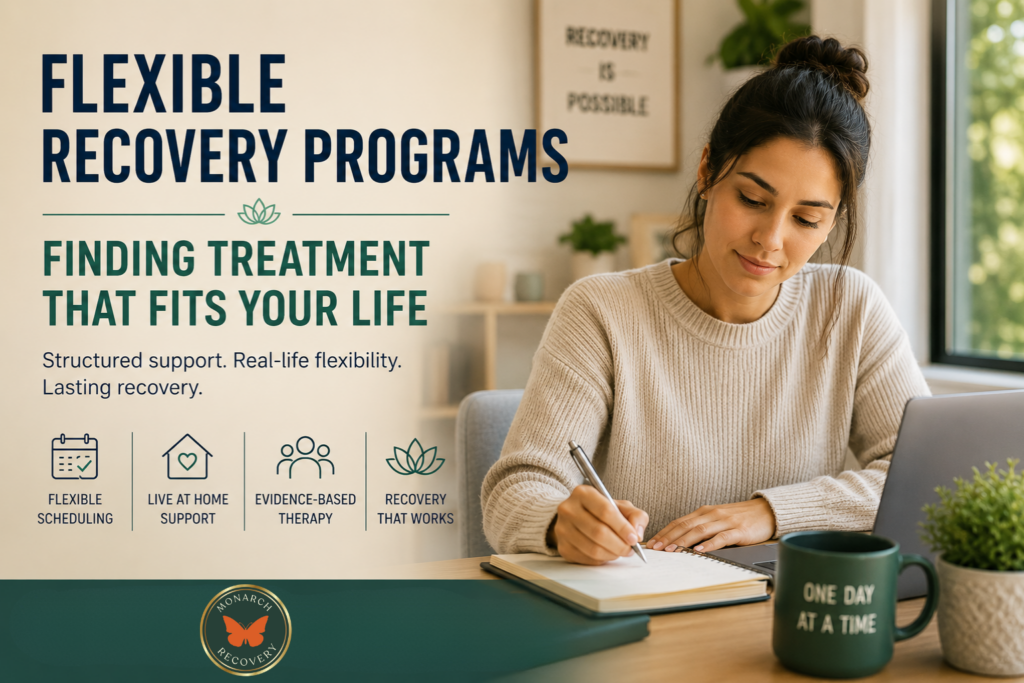
Fortunately, addiction treatment doesn’t always require putting life on hold. Today, flexible outpatient programs allow many individuals to receive structured clinical care while continuing to live at home, maintain employment, attend school, and care for their families. Rather than asking patients to step away from their everyday responsibilities entirely, these programs are designed to help recovery become a part of daily life.
At Monarch Recovery Centers, we believe that treatment should be accessible, personalized, and realistic. Through individualized intensive outpatient therapy and comprehensive Sacramento addiction treatment, we help our patients receive meaningful support while balancing the responsibilities that matter to them the most.
Quick Answer Summary
What are flexible recovery programs?
Flexible recovery programs allow individuals to receive structured addiction treatment while continuing to manage work, school, family and other daily responsibilities. Through individualized Intensive Outpatient Programs (IOPs), counseling and telehealth options, patients can receive evidence-based care without putting their lives on hold.¹²³
Key Takeaways
- Flexible outpatient recovery programs help reduce common barriers to treatment, making it easier for individuals to begin and remain engaged in recovery.²³
- Intensive Outpatient Programs (IOPs) provide structured, individualized addiction treatment while allowing patients to continue living at home and maintaining daily responsibilities.¹
- Recovery skills are strengthened by practicing healthy coping strategies in real-world situations while receiving ongoing clinical guidance.¹²
- Flexible scheduling and telehealth services improve access to care without reducing the accountability, structure or effectiveness of treatment.²³
- Choosing the appropriate level of care should always be based on an individualized clinical assessment and each person’s unique recovery needs.¹
Recovery Looks Different for Everyone
No two recovery journeys are exactly alike. One person may be returning to work after taking time away, while another is balancing a full-time job with parenting responsibilities. Some individuals are enrolled in college, caring for aging family members, or rebuilding stability after a difficult period in their lives.
These differences matter because effective addiction treatment is not based on a single schedule or standardized plan. According to the National Institute on Drug Abuse (NIDA), treatment should be tailored to each individual’s unique needs, recognizing that no single approach is appropriate for everyone.1. A flexible recovery program acknowledges these realities by adapting treatment to the individual whenever clinically appropriate rather than expecting every patient to fit the same routine.
Why Flexibility Matters
Many people delay treatment because they believe that recovery requires stepping away from every other responsibility. In reality, postponing treatment often allows substance use to continue affecting work performance, relationships, physical health, and emotional well-being. Flexible treatment options can help remove this barrier.
For individuals facing transportation challenges, financial concerns, work schedules or other obstacles, our Breaking Down Barriers to Addiction Treatment page highlights additional resources that can help make recovery more accessible.
The Substance Abuse and Mental Health Services Administration (SAMHSA) emphasizes that reducing obstacles to care is an important part of improving access to behavioral health services.2 When treatment is easier to attend consistently, people are often more likely to remain engaged and continue building momentum in recovery.
What is Intensive Outpatient Therapy?
Intensive outpatient therapy provides structured addiction treatment while allowing patients to continue living at home and participating in many aspects of everyday life. Unlike residential treatment, an outpatient approach allows individuals to attend scheduled therapy sessions and recovery programming without remaining at a treatment facility full time.
Depending on each person’s individualized treatment plan, services may include individual counseling, group therapy, relapse prevention education, family support, and ongoing treatment planning. Because patients continue navigating their normal routines throughout treatment, they also have opportunities to immediately apply the recovery skills that they are learning in therapy. For many individuals, this combination of structure and real-world experience supports lasting behavioral change.
Recovery Happens in Everyday Life
One of the strengths of outpatient treatment is that recovery is practiced where life actually happens. Patients continue to work, attend school, spend time with family, and manage everyday responsibilities while receiving clinical support. This means that real-life challenges become opportunities for growth.
A stressful meeting at work, a disagreement with a loved one, financial concerns, or unexpected changes in routine can all become valuable topics for discussion during therapy sessions. Rather than navigating these situations alone, patients receive guidance from clinicians who help them develop healthier ways of responding. Over time, these experiences help strengthen confidence, resilience, and practical coping skills that extend well beyond the therapy room.
Structure Remains an Essential Part of Flexible Care
Some people assume that flexibility means that treatment is less structured. In reality, the opposite is true. Patients participating in an intensive outpatient program Sacramento follow individualized treatment plans that include scheduled appointments, therapeutic goals, regular process reviews, and ongoing communication with their clinical team.
The schedule may be more adaptable than residential treatment, but accountability remains central to the recovery process. Recovery requires consistency, regardless of whether therapy occurs during the day, in the evening or through a combination of in-person and virtual services. The goal of flexibility is to remove unnecessary barriers while preserving the structure that supports long-term healing.
Telehealth Has Expanded Access to Recovery
Flexible care has become even more accessible through the introduction of telehealth. For individuals facing transportation challenges, demanding work schedules, childcare responsibilities, or health concerns, virtual therapy can make consistent participation significantly easier.
SAMHSA notes that telehealth has become an important tool for expanding access to behavioral healthcare and improving continuity of care for many patients.3 When clinically appropriate, virtual services may complement outpatient treatment by reducing travel time and making it easier to remain connected with the treatment team. This additional flexibility helps ensure that logistical challenges are less likely to interrupt recovery.
Finding the Right Level of Support
Although flexible outpatient care benefits many people, it’s not always appropriate for every stage of recovery. Some individuals may require more intensive services due to withdrawal symptoms, medical needs, co-occurring mental health conditions, or safety concerns. Others may begin treatment in a residential setting before transitioning into outpatient care as they become more stable. A comprehensive assessment helps determine which level of care best matches each person’s clinical needs.
If you are searching for an intensive outpatient program near me or an IOP program near me, it’s important to look beyond location alone. The quality of care, experience of the clinical team, individualized treatment planning, and availability of ongoing support all play important roles in long-term recovery. The best program is one that provides the right level of care while adapting to your unique circumstances.
Flexibility Encourages Long-Term Engagement
Recovery isn’t completed in a matter of weeks – it’s an ongoing process of building healthier habits, strengthening relationships, learning new coping strategies, and developing greater confidence over time. Treatment that fits into everyday life can make it easier for patients to remain engaged throughout that process.
Instead of feeling forced to choose between recovery and work, school, or family, many individuals discover that they can move forward in multiple areas of life at the same time. This ability to integrate recovery into daily routines often creates a stronger foundation for long-term success because healthy habits are developed where they will ultimately be used.
Recovery Works Best When Treatment Fits Your Life
There is no perfect time to begin recovery. Life will continue bringing responsibilities, unexpected challenges, and competing priorities. Waiting for circumstances to become ideal often means delaying the support that could begin improving your health and well-being today. Flexible outpatient care allows many people to start building lasting recovery while continuing to manage the realities of everyday life.
At Monarch Recovery Centers, we provide compassionate Sacramento addiction treatment through individualized intensive outpatient therapy designed to meet each patient’s unique needs. Whether you are looking for an intensive outpatient program Sacramento residents trust or searching for an intensive outpatient program near me, our team can help you explore treatment options that provide both flexibility and meaningful clinical support. Contact us today to learn more about our outpatient programs and discover how recovery can fit into your life without asking you to leave it behind.
Citations
- National Institute on Drug Abuse (NIDA). Principles of Drug Addiction Treatment: A Research-Based Guide (Third Edition). NIDA explains that effective addiction treatment should be individualized and may include outpatient services, behavioral therapies and continuing care based on each person’s clinical needs. https://nida.nih.gov/publications/principles-drug-addiction-treatment-research-based-guide-third-edition
- Substance Abuse and Mental Health Services Administration (SAMHSA). Recovery. SAMHSA emphasizes that recovery is a personalized process supported by accessible treatment, community support and long-term engagement in care. https://www.samhsa.gov/recovery
- Substance Abuse and Mental Health Services Administration (SAMHSA). Telehealth for the Treatment of Serious Mental Illness and Substance Use Disorders. SAMHSA highlights how telehealth expands access to behavioral health treatment by reducing transportation, scheduling and other logistical barriers while improving continuity of care. https://store.samhsa.gov/product/telehealth-treatment-serious-mental-illness-substance-use-disorders/pep21-06-02-001