

Emotions are a normal part of everyday life. Anger, fear, sadness, frustration, excitement and anxiety all provide information about what we are experiencing. The challenge is not having difficult emotions, but rather what happens when those emotions become so intense, persistent or difficult to manage that they begin affecting decisions, relationships, coping strategies or recovery.
For those who have experienced trauma, chronic stress, loss or other emotionally difficult experiences, regulating emotions may sometimes become more complicated. During addiction recovery, those responses can also become important when substances have previously been used as a way of coping with distress.
Brainspotting is one therapeutic approach that may be incorporated into treatment when these emotional experiences are relevant. Brainspotting therapy in Sacramento does not promise to ‘fix’ emotional regulation or eliminate uncomfortable feelings, but rather it may provide a structured setting for exploring emotional responses as one part of a broader trauma-informed treatment plan.
Quick Answer
How Can Brainspotting Help With Emotional Regulation?
Brainspotting may support emotional regulation by providing a structured therapeutic setting where a person can notice and explore emotions, thoughts, memories and physical sensations connected with difficult experiences. Rather than directly teaching specific coping skills, Brainspotting generally takes an experiential approach to emotional processing. Research on Brainspotting remains limited, so it may be incorporated into a broader trauma-informed treatment plan when clinically appropriate rather than used as a replacement for established mental health or addiction treatment.
Key Takeaways
- Emotional regulation involves recognizing, experiencing and responding to emotions rather than simply suppressing uncomfortable feelings. Trauma and significant stress may affect emotional-regulation processes and strategies.¹
- Trauma can affect emotional wellbeing in different ways. Trauma-informed care emphasizes recognizing these individual differences while prioritizing safety and avoiding retraumatization.² ³
- Brainspotting uses focused visual attention while a client notices internal experiences. Published literature has discussed its potential relevance to trauma processing and emotional regulation, although the evidence base remains limited.⁴
- Brainspotting is not primarily a skills-training therapy. It may complement approaches that explicitly teach coping, distress-tolerance or other emotional-regulation skills rather than replacing them.
- Current Brainspotting research is still emerging. A 2025 study reported greater early improvement when Brainspotting was delivered earlier alongside CBT, but both groups improved and the author called for additional randomized controlled trials.⁵
- Emotional regulation can be relevant during addiction recovery. Trauma-informed behavioral healthcare recognizes potential relationships among trauma, mental health and substance use while emphasizing individualized assessment and treatment.⁶
- Brainspotting should be one component of a broader treatment plan when clinically appropriate. Counseling, behavioral therapies, medication when appropriate, relapse-prevention planning and recovery support may all play roles based on individual needs.
What Is Emotional Regulation?
Emotional regulation refers broadly to the ways that people notice, experience and respond to emotions. Regulation does not mean suppressing every uncomfortable feeling or remaining calm all the time, but rather healthy emotional regulation can involve recognizing what you’re feeling, tolerating discomfort, understanding what may have triggered a response and choosing how to act rather than reacting automatically.
Everyone has moments when that process becomes difficult. However, trauma and significant stress can influence emotional responses. Research continues to examine the relationship between trauma, posttraumatic stress and different emotional regulation strategies, including how flexibly people can adapt their response to different situations.1
For someone seeking trauma therapy in Sacramento, treatment may therefore involve not simply reducing unpleasant emotions, but developing a different relationship with those emotions and learning ways to respond to them.
How Trauma Can Affect Emotional Responses
Traumatic experiences affect people differently. According to the Substance Abuse and Mental Health Services Administration (SAMHSA), trauma can have lasting effects on mental, physical, social, emotional and spiritual wellbeing.2 Some people experience relatively few long-term effects, while others may encounter ongoing emotional or behavioral changes.
A person might become highly reactive to certain reminders or situations, while another may feel emotionally numb or disconnected. Someone else may have difficulty identifying why a particular interaction creates such a strong response.
These experiences do not mean that every intense emotion is evidence of unresolved trauma. Rather, they do illustrate why trauma-informed treatment avoids assuming that everyone will respond to difficult experiences in the same way. SAMHSA emphasizes safety, trust, collaboration, empowerment and avoiding retraumatization as central elements of trauma-informed care.3 This individualized approach becomes especially important when therapy involves exploring emotionally difficult material.
Where Does Brainspotting Fit?
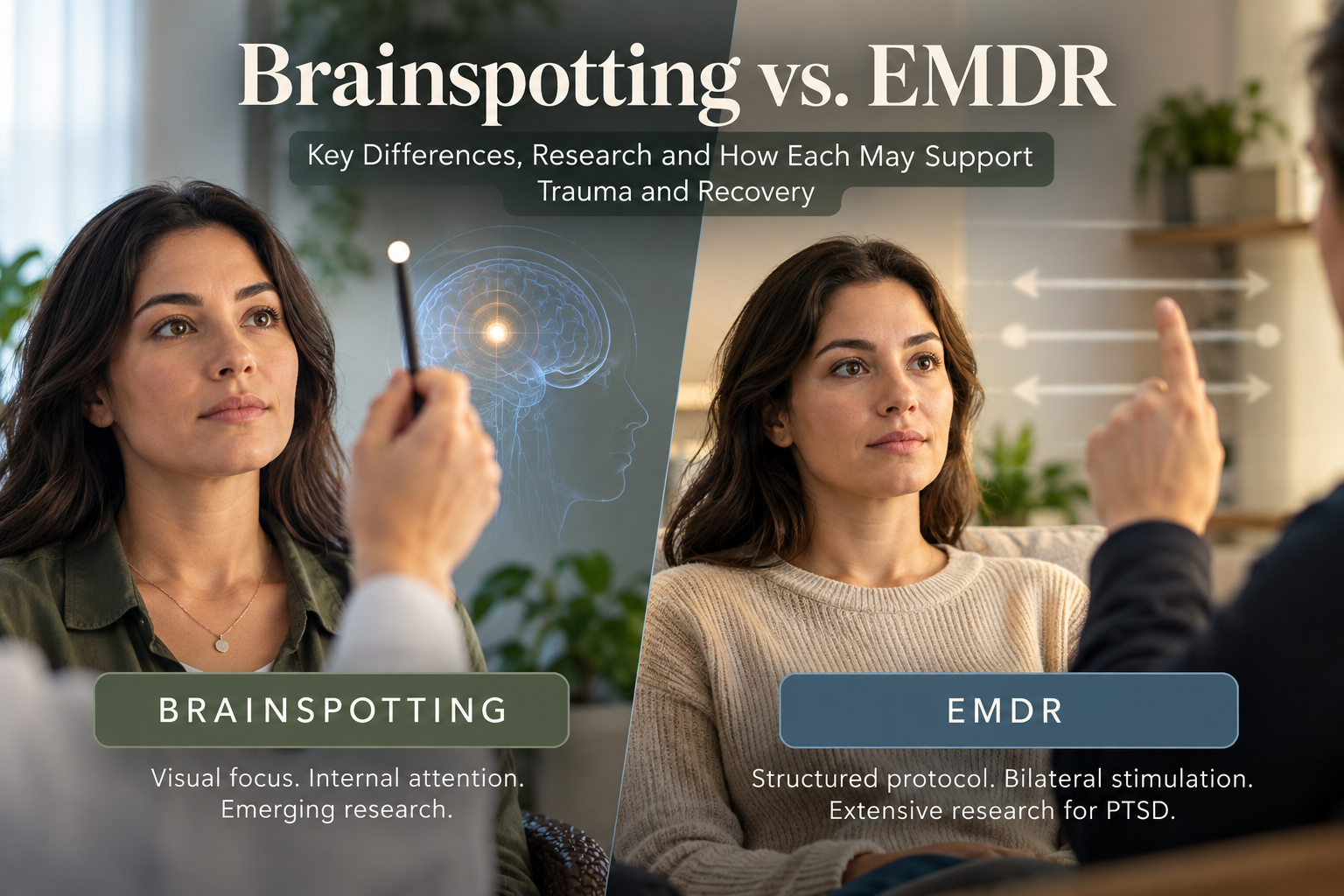
Brainspotting is an experiential therapeutic approach developed in the early 2000s. During Brainspotting, a therapist typically helps the client identify an issue or experience to focus on and notice the emotions, thoughts, memories, images or physical sensations connected with it. The therapist and client then identify a particular location within the client’s visual field that becomes a point of focus during part of the session. While maintaining that visual attention, the client observes what arises internally.
This process can create an opportunity to remain present with an emotional experience in a supported therapeutic environment rather than immediately avoiding, suppressing or reacting to it. This is one way that Brainspotting may become relevant to emotional regulation.
However, it is important not to overstate what is actually known. Published literature has discussed Brainspotting in connection with trauma processing and emotional regulation, but its evidence base remains relatively small.4 Research into how and why Brainspotting might produce therapeutic effects is still actively developing.
Does Brainspotting Teach Emotional Regulation Skills?
Not necessarily in the same way as a skills-focused therapy. Some therapists explicitly teach strategies for recognizing emotions, challenging thoughts, tolerating distress, communicating needs or changing behaviors. Brainspotting generally takes a more experiential approach.
Rather than giving the client a specific strategy for changing an emotion, a session may provide time to notice and explore the emotional response itself. For example, someone might focus on an experience that consistently triggers anxiety and notice how that response appears through emotions, thoughts, memories or physical sensations. The goal is not necessarily to force the anxiety to disappear during the session. Instead, the therapeutic work may involve staying with and exploring the experience at a manageable pace.
This distinction is important. Brainspotting in Sacramento can complement therapies that provide concrete coping and emotional-regulation skills rather than replacing them.
What Does Research Tell Us?
Research specific to Brainspotting remains emerging. A 2025 article published in Psychotherapie Forum discussed Brainspotting in relation to trauma processing and emotional regulation and presented clinical case material.4 While such publications contribute to the developing literature, they do not establish that Brainspotting reliably improves emotional regulation across patients or conditions.
Another 2025 study evaluated Brainspotting combined with cognitive behavioral therapy following singular stressful or traumatic experiences. Participants who received Brainspotting earlier showed greater early improvement, while both study groups improved by the end of treatment and at follow-up. The author emphasized that the findings had considerable limitations regarding generalizability and that additional randomized controlled trials are needed.5
These limitations matter. Brainspotting can be discussed as an emerging therapeutic approach that clinicians may incorporate into individualized care, but stronger claims about its effects on emotional regulation are not yet supported by a large research base.
Emotional Regulation and Addiction Recovery
Emotional regulation can become particularly relevant when trauma-informed care is incorporated into addiction treatment. This doesn’t mean that difficult emotions or trauma cause every substance use disorder. Addiction develops through complex and varied combinations of biological, psychological, environmental and social factors.
However, SAMHSA’s guidance on trauma-informed behavioral healthcare recognizes connections between trauma, mental health and substance use and encourages providers to understand the potential role of trauma when delivering treatment.6
For some people, substance use may have become one way of responding to stress, memories, anxiety, grief, anger or other difficult internal experiences. When substance use stops, these emotions don’t necessarily disappear. Part of recovery may therefore involve developing additional ways of recognizing and responding to distress without returning to substance use.
Brainspotting Addiction Recovery Is Part of a Larger Plan
When trauma or emotional distress is relevant to someone’s recovery, Brainspotting and addiction recovery may intersect. Someone might use Brainspotting to explore an emotional response while using other parts of treatment to develop practical coping skills, improve communication or address patterns associated with substance use.
This is why Brainspotting should not be treated as a standalone treatment. Comprehensive treatment may include individual counseling, group therapy, behavioral therapies, medication when appropriate, relapse-prevention planning, recovery support and other services based on the person’s needs. Brainspotting may become one piece of that larger plan when a clinician determines that trauma-related or emotionally difficult experiences deserve additional attention.
Building Emotional Regulation Into a Broader Recovery Plan
Emotional regulation is not about becoming unaffected by difficult experiences. Recovery can involve learning how to recognize emotions, tolerate discomfort, understand patterns, use appropriate coping strategies and make choices even when feelings are present. For some people, trauma-informed therapy is part of developing that capacity.
Brainspotting offers one possible way to explore emotional responses within a supportive therapeutic environment. Research into the approach remains limited, so it should not be presented as a guaranteed method for improving emotional regulation or as a replacement for established mental health or addiction treatment.
At Monarch Recovery Centers, Brainspotting therapy in Sacramento may be incorporated into individualized addiction treatment alongside counseling, behavioral therapies and other recovery services when clinically appropriate. If trauma, stress or difficult emotions may be affecting your recovery, contact us today to learn more about trauma therapy in Sacramento, Brainspotting and the treatment options available as part of a broader recovery plan.
Citations
- Konrad AC, Miu AC, Trautmann S, Kanske P. (2025). Neural correlates and plasticity of explicit emotion regulation following the experience of trauma. Frontiers in Behavioral Neuroscience, 19:1523035. https://www.frontiersin.org/journals/behavioral-neuroscience/articles/10.3389/fnbeh.2025.1523035/full
- Substance Abuse and Mental Health Services Administration. Interagency Task Force on Trauma-Informed Care. https://www.samhsa.gov/mental-health/trauma-violence/trauma-informed-care
- Substance Abuse and Mental Health Services Administration. Trauma-Informed Approaches and Programs. https://www.samhsa.gov/mental-health/trauma-violence/trauma-informed-approaches-programs
- Baumann M. (2025). Brainspotting als Behandlungsmethode nach Traumatas, zur Emotionsregulation bis hin zur Potentialentfaltung. Psychotherapie Forum, 29, 52–58. https://link.springer.com/article/10.1007/s00729-025-00274-6
- Glantschnig S. (2025). Brainspotting after singular stressful/traumatizing experiences: Evaluation of a combination of Brainspotting and cognitive behavioural therapy. Psychotherapie Forum, 29, 59–66. https://link.springer.com/article/10.1007/s00729-025-00275-5
- Substance Abuse and Mental Health Services Administration. TIP 57: Trauma-Informed Care in Behavioral Health Services. https://www.samhsa.gov/resource/dbhis/tip-57-trauma-informed-care-behavioral-health-services