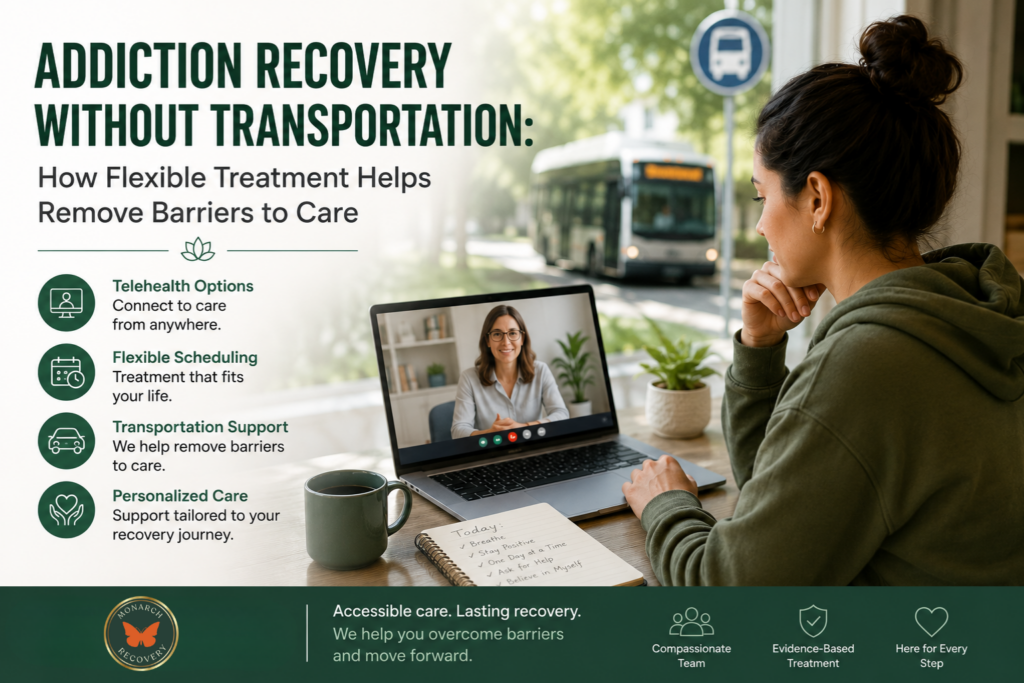
For many people, deciding to seek addiction treatment is only the first step in the process – the next challenge is figuring out how to get there. Reliable transportation is something that many people take for granted until it becomes a barrier. A broken-down car, limited public transit, financial constraints, health concerns, or living far away from treatment services can make it difficult to attend appointments consistently. Even when someone is motivated to begin recovery, simply getting to treatment can feel like an obstacle that is impossible to overcome.
Fortunately, transportation challenges don’t have to prevent someone from receiving care. Advances in telehealth, flexible outpatient programming, and recovery support services have made treatment more accessible for many people who previously struggled to participate consistently. When combined with individualized treatment planning, these options can help patients stay connected to the structure and accountability that recovery requires, even when traveling to in-person appointments is difficult.
At Monarch Recovery Centers, we believe that practical barriers should never stand in the way of recovery. Through personalized intensive outpatient therapy, flexible scheduling, telehealth services, and supportive Sacramento addiction treatment, we help patients access care that fits their lives while maintaining meaningful clinical support.
Quick Answer Summary
Can I receive addiction treatment if I don’t have reliable transportation?
Yes. Many addiction treatment programs now offer flexible outpatient care, telehealth services and transportation support to help patients stay connected to treatment. Individualized care plans allow many people to continue receiving therapy and recovery support even when traveling to appointments is difficult.¹²³
Key Takeaways
- Transportation challenges should never prevent someone from seeking addiction treatment.¹²
- Intensive outpatient therapy allows many patients to receive structured care while continuing to live at home and manage daily responsibilities.¹
- Telehealth expands access by reducing travel requirements and helping patients remain engaged in treatment.²³
- Recovery depends on consistent participation, accountability, and individualized care—not simply attending therapy in person.¹²
- Flexible treatment options and transportation assistance can help patients maintain long-term recovery despite practical barriers.¹²³
Transportation Is One of the Most Common Barriers to Treatment
Transportation challenges can affect people in different ways. Some individuals don’t own a reliable vehicle, while others depend on family members or friends for rides. Others may have limited public transportation or long travel times that make attending several appointments a week unrealistic.
Unexpected situations can also interfere with treatment. A car repair, illness, changing work schedules or a family emergency may temporarily limit a person’s ability to travel even if transportation is usually available. These challenges do not reflect a lack of motivation.
The Substance Abuse and Mental Health Services Administration (SAMHSA) has emphasized that improving access to care includes reducing practical barriers that make treatment difficult to begin or maintain.1 Transportation is one of those barriers, and finding ways to reduce its impact can help people feel more engaged in recovery.
Transportation Is Only One Barrier to Recovery
Transportation is only one of the practical challenges that can make addiction treatment feel out of reach. Work schedules, childcare responsibilities, financial concerns, insurance questions and uncertainty about treatment are all common reasons that people postpone getting help. While every situation is different, recognizing these barriers is often the first step toward overcoming them. At Monarch Recovery Centers, we work with each patient to identify practical solutions that support consistent participation in treatment. You can learn more in our guide on breaking down barriers to addiction treatment, which explores many of the common obstacles people face and the resources available to help overcome them.
Missing Appointments Can Disrupt Recovery
Consistency is an important part of addiction treatment. Regular therapy sessions, communication with clinicians, and participation in recovery programming help patients build momentum over time. When transportation issues repeatedly interfere with appointments, it can become more difficult to maintain that consistency.
Missing treatment is rarely about not caring. More often, it reflects circumstances outside of a person’s control. Someone may spend hours coordinating transportation, rearranging work responsibilities, or finding childcare to simply attend a single appointment. Over time, those obstacles can become discouraging. Removing transportation barriers helps patients focus their energy where it belongs: on recovery.
How Intensive Outpatient Therapy Improves Access
One reason that intensive outpatient therapy has become an important option for many people is its flexibility. Unlike residential treatment, outpatient care allows patients to continue living at home while participating in structured therapy, counseling, relapse prevention planning, and recovery education. This approach makes it easier for many individuals to continue working, attending school or caring for family members while receiving treatment.
According to the National Institute on Drug Abuse (NIDA), effective addiction treatment should be individualized and matched to each person’s clinical needs rather than following a single model.2 For many people, outpatient care provided the balance of structure and flexibility needed to remain engaged in recovery.
Telehealth Has Expanded Treatment Opportunities
Telehealth has significantly changed how behavioral healthcare is delivered. Instead of requiring every appointment to take place in person, many treatment plans now incorporate secure virtual therapy sessions when clinically appropriate. This allows patients to remain connected to their clinicians while reducing the need to travel for every aspect of treatment.
SAMHSA notes that telehealth has expanded access to behavioral health services by helping patients overcome logistical barriers while supporting continuity of care.3 For individuals experiencing transportation challenges, virtual care can make the difference between delaying treatment and beginning recovery today. Rather than viewing telehealth as a replacement for in-person care, many providers use it as one component of a comprehensive treatment plan that increases accessibility while maintaining clinical quality.
Accountability Does Not Depend on Location
Some people worry that participating remotely means that treatment will become less structured. In reality, accountability is built through consistent participation, honest communication, and individualized treatment planning rather than the physical location of a therapy session.
Patients receiving IOP rehab services continue attending scheduled appointments, working towards therapeutic goals, communicating regularly with clinicians, and applying recovery skills in their everyday lives. In other words, the expectations remain the same. The difference lies in that transportation challenges are less likely to prevent someone from staying connected to care. For many patients, this increased consistency strengthens recovery rather than weakening it.
Recovery Happens in Everyday Life
One of the strengths of outpatient treatment is that patients begin practicing recovery skills where they will ultimately use them. Life continues between therapy sessions. There are work deadlines to meet, children to care for, relationships to navigate, and unexpected challenges to manage. These everyday experiences provide valuable opportunities to apply healthier coping strategies and build confidence over time.
When patients encounter difficulties, they can discuss those situations during future therapy sessions and continue refining the skills that support long-term recovery. This ongoing connection between treatment and daily life helps recovery become sustainable rather than temporary.
Transportation Support Can Strengthen Recovery
While telehealth expands access, some individuals may still benefit from in-person services during portions of their recovery. Recognizing this, many treatment providers also work to reduce transportation barriers through additional support services.
At Monarch Recovery Centers, transportation assistance is part of our broader commitment to making treatment accessible whenever possible. Depending on each person’s circumstances and treatment plan, transportation support resources may help reduce some of the practical obstacles that interfere with care.
When combined with flexible outpatient programming and telehealth, these resources help create more opportunities for patients to remain consistently engaged in treatment. Recovery should not depend on whether someone has access to reliable transportation on any given day.
Choosing the Right Level of Care
Although flexible outpatient treatment benefits many people, it’s not the appropriate choice for everyone. Some individuals may require more intensive medical supervision, withdrawal management or residential treatment before transitioning into outpatient services. Others may benefit from a hybrid approach that combines virtual care with scheduled in-person appointments.
A comprehensive clinical assessment can help determine which level of care best supports each person’s recovery goals and clinical needs. If you’re searching for an intensive outpatient program near me or an IOP program near me, remember that accessibility is only one part of the decision. Finding experienced clinicians, individualized treatment planning, and ongoing recovery support is equally important. The most effective treatment plan is one that provides the appropriate level of care while helping patients remain engaged throughout the recovery process.
Removing Transportation Barriers Makes Recovery More Accessible
No one should have to delay treatment because getting to appointments feels impossible. Transportation challenges are real, but they don’t have to prevent people from receiving compassionate, evidence-based care. Flexible outpatient services, telehealth, and supportive recovery resources have created new opportunities for individuals to begin treatment while continuing to manage the realities of everyday life.
At Monarch Recovery Centers, we believe that recovery should be accessible to everyone. Through personalized intensive outpatient therapy, flexible IOP rehab options, telehealth services, and comprehensive Sacramento addiction treatment, we help patients overcome practical barriers while receiving the structure, accountability, and support needed for lasting recovery.
If you’re searching for an intensive outpatient program near me or an IOP program near me, contact us today. Our team can help you explore treatment options designed to fit your life while providing the clinical care and recovery support that you deserve.
Citations
- Substance Abuse and Mental Health Services Administration (SAMHSA). Recovery and Recovery Support.
https://www.samhsa.gov/recovery - National Institute on Drug Abuse (NIDA). Principles of Drug Addiction Treatment: A Research-Based Guide (Third Edition).
https://nida.nih.gov/publications/principles-drug-addiction-treatment-research-based-guide-third-edition - Substance Abuse and Mental Health Services Administration (SAMHSA). Telehealth for the Treatment of Serious Mental Illness and Substance Use Disorders.
https://store.samhsa.gov/product/telehealth-treatment-serious-mental-illness-substance-use-disorders/pep21-06-02-001