Over the past several years, telehealth has transformed the way that people access healthcare, including addiction treatment. What was once viewed as a convenient alternative has become an established part of many recovery programs, making care more accessible for individuals who may have previously struggled to attend appointments because of work schedules, family responsibilities, transportation limitations or other everyday challenges.
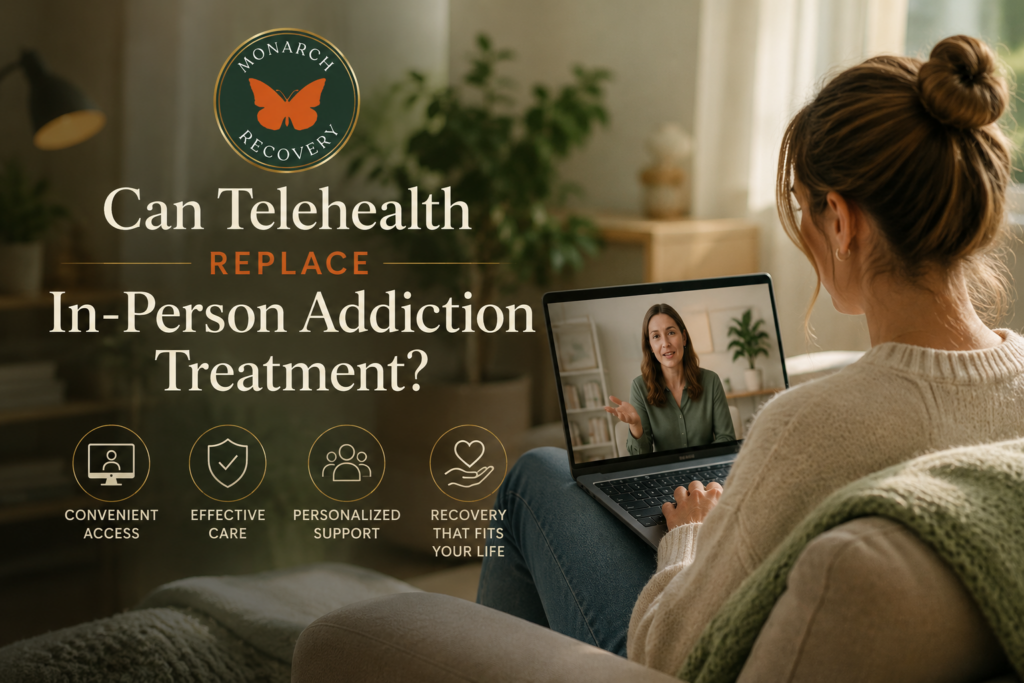
As virtual treatment has become more widely available, many people have begun asking an important question: Can telehealth replace in-person addiction treatment? The answer is not always straightforward.
For some individuals, telehealth provides the flexibility and support needed to begin and maintain recovery. For others, in-person treatment may offer a level of structure, supervision or clinical care that is better suited to their needs. In many cases, the most effective approach is not choosing one over the other but combining both through a personalized treatment plan.
At Monarch Recovery Centers, we recognize that recovery is not a one-size-fits-all process. Our telehealth addiction treatment Sacramento services, virtual IOP Sacramento programs and hybrid care options are designed to meet patients where they are while providing evidence-based support that adapts to their individual goals and circumstances.
Quick Answer
Telehealth has expanded access to addiction treatment by making therapy, counseling, and recovery support more flexible and convenient. While some individuals may benefit from fully virtual care, many achieve the best outcomes through a hybrid approach that combines telehealth with in-person services based on their clinical needs, recovery goals, and stage of recovery.¹²³
Key Takeaways
- Telehealth addiction treatment increases access to recovery services by reducing barriers such as transportation, work schedules, and childcare responsibilities.¹
- Virtual counseling and online IOP programs allow many individuals to remain engaged in treatment while maintaining daily responsibilities.¹²
- In-person treatment remains important for individuals who require greater structure, medical supervision, or intensive clinical care.²
- Effective addiction treatment should always be individualized rather than relying on a single treatment model.²³
- Hybrid treatment combines virtual and in-person care, allowing recovery plans to evolve alongside each patient’s progress.¹²
- Consistent participation in treatment—whether virtual, in-person, or hybrid—is one of the most important factors supporting long-term recovery.¹²
How Telehealth Has Changed Addiction Treatment
For many years, addiction treatment primarily took place in person. Individual counseling, group therapy, outpatient programs and recovery meetings required patients to travel to treatment centers on a regular schedule. While these services remain an important part of addiction care, they are not always accessible for everyone.
Transportation challenges, demanding work schedules, childcare responsibilities, chronic health conditions or anxiety about attending treatment in person can all make it difficult for individuals to participate consistently.
Telehealth has helped remove many of these barriers. Through secure video technology, patients can now participate in therapy sessions, recovery programming and counseling from home or another private location. According to the Substance Abuse and Mental Health Services Administration (SAMHSA), telehealth has become an important tool for expanding access to behavioral health services and improving continuity of care, particularly for individuals who may otherwise face obstacles to treatment.1 Rather than replacing recovery, technology has expanded the ways that people can receive support.
What Telehealth Addiction Treatment Can Offer
Telehealth substance abuse treatment allows patients to receive structured clinical care while remaining connected to their daily responsibilities. Depending on a person’s treatment plan, services may include individual counseling, group therapy, relapse prevention education, recovery planning and ongoing clinical support.
For many individuals, this flexibility makes it easier to remain engaged in treatment over time. Someone who works full time may be able to attend evening therapy sessions without leaving work early, or a parent caring for young children may participate in treatment without arranging additional childcare. Additionally, someone recovering from illness or managing transportation challenges may remain connected to care without worrying about travel.
These practical benefits can often reduce barriers that might otherwise delay or interrupt treatment. Importantly, telehealth is not simply about convenience. Consistent participation is one of the strongest predictors of successful engagement in treatment, and increasing access can help more people remain involved in their recovery journey.
The Benefits of In-Person Treatment
While telehealth offers significant advantages, in-person treatment continues to play an important role for many patients. Face-to-face care provides opportunities for direct observation, structured therapeutic environments and immediate interaction with both clinicians and peers. Some individuals feel more comfortable participating in therapy within a dedicated treatment setting, while others benefit from the routine and accountability that in-person programming provides.
Patients with more complex needs may also require services that cannot be delivered virtually. In-person care can be especially valuable during certain stages of recovery, particularly when more intensive monitoring, medical services or specialized interventions are appropriate.
Rather than viewing one approach as better than the other, it’s often more helpful to recognize that each serves different purposes depending on a person’s circumstances.
Can Telehealth Fully Replace In-Person Care?
For some people, telehealth may provide all of the support that they need throughout a particular stage of recovery. For others, virtual treatment works best as one part of a broader recovery plan.
The National Institute on Drug Abuse (NIDA) emphasizes that effective addiction treatment should be individualized and matched to each person’s needs rather than following a single standardized model. Factors such as medical history, mental health needs, recovery goals, living environment, access to technology and personal preferences all influence which level of care is most appropriate.2,3
Rather than asking whether telehealth can completely replace in-person treatment, a more helpful question may be: Which treatment approach provides the right level of support for this individual at this point in their recovery? The answer may change as recovery progresses.
Why Many Patients Benefit from Hybrid Treatment
At Monarch Recovery Centers, many patients benefit from a hybrid treatment model that combines the accessibility of virtual care with the structure of in-person services. Hybrid treatment recognizes that recovery is dynamic, with some initially benefitting from more frequent face-to-face support before gradually transitioning to virtual counseling as they build confidence and stability. Others may primarily participate in telehealth while attending select in-person appointments based on their treatment plan.
This flexibility allows care to evolve alongside the patient’s needs. Rather than requiring patients to choose one format exclusively, hybrid care creates opportunities to receive the right type of support at the right time. For many individuals, this balanced approach offers both convenience and clinical opportunity.
Virtual IOP and Online Counseling Options
One of the most common forms of telehealth addiction treatment is a virtual intensive outpatient program (IOP). A virtual IOP Sacramento program allows patients to participate in structured therapy and recovery programming while continuing to work, attend school, care for family members or manage other daily responsibilities.
Similarly, online IOP California services provide consistent therapeutic support without requiring patients to commute to treatment multiple times each week. These programs typically include individual counseling,group therapy, relapse prevention planning, recovery education and ongoing clinical guidance.
Because patients continue navigating everyday life while participating in treatment, they also have opportunities to immediately apply new coping skills and discuss real-world experiences with their treatment team.
Choosing the Right Treatment for Your Recovery
Recovery is deeply personal. Some appreciate the convenience and privacy of telehealth rehab Sacramento services, while others find that attending treatment in person helps them stay focused and accountable. Many individuals discover that combining both approaches provides the flexibility and support that they need to remain engaged in recovery.
There is no universally correct choice. The most effective treatment plan is one that reflects an individual’s clinical needs, recovery goals, lifestyle and support system. Working with experienced clinicians can help determine which combination of services is most appropriate while allowing treatment to adapt as recovery continues.
Flexible Addiction Treatment That Meets You Where You Are
One of the greatest strengths of telehealth is that it expands access to care. People should not have to postpone treatment because of transportation difficulties, demanding work schedules, childcare responsibilities, mobility limitations or concerns about attending appointments in person.
By offering flexible treatment options, virtual care helps more individuals begin recovery and remain connected to support throughout their journey. Telehealth is not intended to replace every aspect of addiction treatment, but rather to expand the ways high-quality care can be delivered while making treatment more accessible for the people who need it.
At Monarch Recovery Centers, we believe recovery should fit into real life whenever possible. Whether you’re interested in telehealth addiction treatment Sacramento services, a virtual IOP Sacramento program, online IOP California options or a personalized hybrid treatment program, our team can help you determine which approach best supports your recovery goals.
Contact us today to learn more about our telehealth substance abuse treatment services and discover a flexible, individualized path toward lasting recovery.
Citations
- Substance Abuse and Mental Health Services Administration (SAMHSA)
Using Technology-Based Therapeutic Tools in Behavioral Health Services (Telehealth for Serious Mental Illness and Substance Use Disorders).
https://store.samhsa.gov/product/telehealth-treatment-serious-mental-illness-substance-use-disorders/pep21-06-02-001 - National Institute on Drug Abuse (NIDA)
Principles of Drug Addiction Treatment: A Research-Based Guide (Third Edition).
https://nida.nih.gov/publications/principles-drug-addiction-treatment-research-based-guide-third-edition - National Institute on Drug Abuse (NIDA)
Drugs, Brains, and Behavior: The Science of Addiction.
https://nida.nih.gov/publications/drugs-brains-behavior-science-addiction