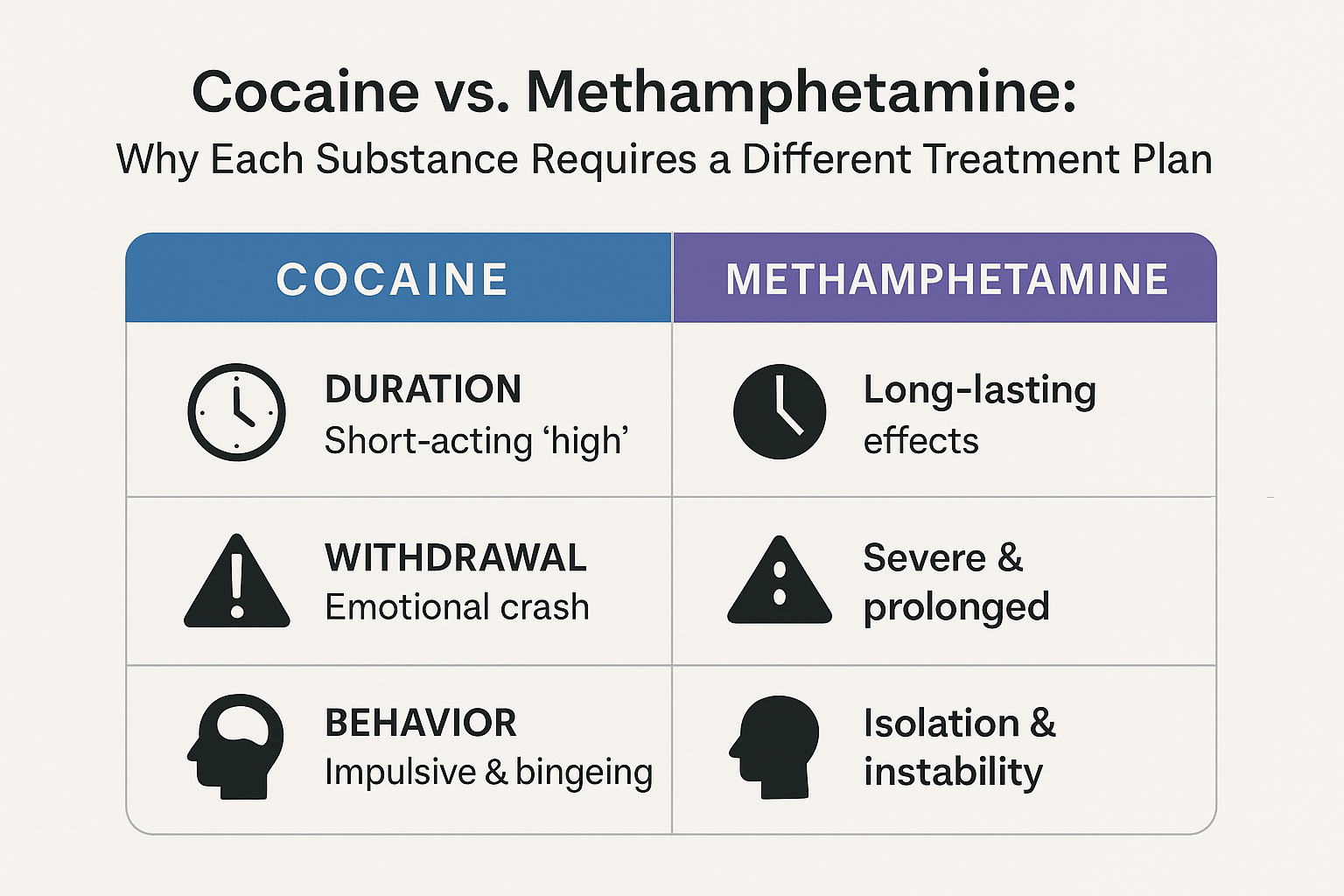
Cocaine and methamphetamine are often grouped together because they’re both stimulants, drugs that increase energy, elevate the mood and activate the brain’s reward systems. But beneath those similarities lie two substances with profoundly different effects on the brain, body and long-term behavior. Cocaine produces a short, intense rush that fades quickly, while meth creates a prolonged, destabilizing high that can linger for hours. Cocaine tends to drive impulsive, binge-pattern use, while meth often leads to isolation, emotional instability and deeper neurological disruption.
Because these drugs behave so differently, their treatment must be different, too. A one-size-fits-all stimulant treatment plan simply doesn’t work. People recovering from cocaine addiction often need a heavy focus on emotional regulation and impulse-control therapy, while those recovering from meth frequently need longer stabilization periods, cognitive healing and deeper trauma-informed care.
At Monarch Recovery Centers, our clinicians understand these distinctions. Our stimulant addiction treatment plans account for the unique biological, emotional and behavioral challenges associated with each drug. Using our intensive outpatient program structure, dual-diagnosis treatment and trauma-informed approaches, clients will receive personalized care based on the substance that they used, the patterns that shaped their addiction and the underlying mental health factors that influence their recovery.
Interested in learning more about the differences between cocaine and methamphetamine, why they require different treatment plans and how Monarch can help in the recovery process? Keep reading to discover everything that you need to know to help inform your recovery or a loved one’s recovery.
How Cocaine and Meth Affect the Brain Differently
Though both substances increase dopamine (the neurotransmitter tied to pleasure, motivation and reward), they do so in very different ways. Cocaine briefly blocks dopamine reuptake, creating a short-lived surge of euphoria. The body metabolizes it quickly, leading to a fast crash and a rapid return of cravings. Methamphetamine, however, releases large amounts of dopamine while simultaneously blocking reuptake, overwhelming the brain’s natural balance.
These differences shape nearly every aspect of addiction. Cocaine users often experience emotional volatility and short, intense cravings that come in waves. Meth users, on the other hand, face long-term dopamine depletion, which can cause depression, slow thinking, low motivation and difficulty experiencing pleasure. Repeated meth exposure can also change dopamine and serotonin nerve terminals, contributing to lasting cognitive and emotional challenges.
Because meth disrupts the brain so extensively, recovery typically requires longer stabilization, mood regulation and cognitive support. Cocaine addiction treatment often emphasizes impulse control, emotional coping strategies and understanding triggers that lead to binge use. Monarch’s personalized treatment plans reflect these neurological realities and help clients rebuild emotional and cognitive health in ways that align with the drug’s effect.
Withdrawal Experiences: Two Very Different Challenges
Stimulant withdrawal isn’t always medically dangerous, but it is psychologically intense and can quickly lead to relapse without support. Cocaine withdrawal comes on fast. As soon as the drug wears off, people often experience exhaustion, irritability, agitation and a heavy emotional crash. Depression and cravings can hit suddenly and intensely, especially during moments of stress or emotional overwhelm. These mood swings can make early recovery feel chaotic and unpredictable.
Meth withdrawal is slower and more destabilizing. Because meth stays in the system longer and disrupts dopamine regulation more profoundly, withdrawal can last for days or even weeks. Many people experience severe depression, anxiety, sleep disturbances, paranoia, mental fog and difficulty feeling motivation or pleasure. This ‘flat’ emotional state, caused by depleted dopamine, can make recovery feel hopeless without consistent therapeutic support.
These differences are why treatment must be specific. Cocaine recovery benefits from relapse-prevention strategies that address emotional crashes and impulsive cravings. Meth recovery requires a longer runway for the brain to heal, with trauma-informed therapy, structured support and careful monitoring to stabilize mood and thinking. Monarch’s clinicians understand these distinct pathways and offer stimulant addiction treatment that meets clients where they are, neurologically, psychologically and emotionally.
Behavioral Patterns and Risks Associated with Each Substance
Cocaine often emerges in social, high-pressure or high-stimulation environments, such as nightlife, parties, professional stress or fast-paced lifestyles. Its short high encourages repetitive use in a single session, leading many people to binge cocaine in quick bursts and then crash in private. These patterns can feel tied to emotional triggers or life stressors.
Methamphetamine use tends to evolve in a different direction. Because the drug’s effects last so long, people often withdraw from social settings, lose sleep for days at a time and experience escalating paranoia or emotional instability. Meth’s long-lasting high can create a cycle of isolation, obsession and physical decline that’s far more consuming than the typical cocaine-use pattern.
Understanding these behaviors is essential for effective treatment. Cocaine addiction treatment often focuses on emotional regulation, managing impulsive cravings, preventing binge cycles and building healthier ways to cope with stress. Meth addiction treatment requires restoring sleep, stabilizing mood, rebuilding cognitive function, addressing paranoia or depression and helping reconnect with healthy routines.
Monarch’s trauma-informed and individualized approach allows clinicians to address the emotional and behavior challenges unique to each stimulant, rather than forcing people into a generic protocol.
Why Each Drug Requires a Different Treatment Plan
Even though cocaine and meth are both stimulants, the therapeutic needs behind each addiction vary wildly. Cocaine users often need strong relapse-prevention planning, emotional skills training and strategies to manage high-pressure or social environments. Meth users generally require longer term support, deeper trauma work and careful attention to mood, sleep and cognitive functioning.
At Monarch, this begins with a comprehensive assessment that explores substance history, mental health, trauma, lifestyle factors and emotional patterns. For those recovering from cocaine, therapy may focus heavily on coping skills, boundary-setting and learning to interrupt impulsive behavior during moments of stress. For meth recovery, treatment may emphasize grounding techniques, emotional stabilization, trauma processing and rebuilding cognitive function through consistent therapeutic engagement.
Dual diagnosis treatment is essential for both groups, but meth users often experience more severe depression, anxiety or trauma activation. On the other hand, cocaine users may struggle with stress-driven behaviors, burnout or emotional dysregulation. Monarch’s clinicians tailor therapy to the person, not the drug, integrating CBT, DBT principles, motivational interviewing and trauma-informed care to address each client’s specific needs.
Programs like Monarch’s intensive outpatient therapy program (IOP) are especially helpful because they offer long-term structure, accountability, multiple therapy sessions per week, peer support and relapse-prevention work without requiring residential treatment. This is particularly valuable in stimulant addiction treatment, where the brain heals slowly and consistency is essential.
The Monarch Model: A Personalized Approach to Stimulant Addiction Recovery
Monarch Recovery Centers recognizes that meaningful recovery requires a flexible, supportive and scientifically grounded approach. Their stimulant addiction treatment includes trauma-informed therapy, dual diagnosis care, individualized counseling, group support, mindfulness practices, relapse-prevention planning and the structured accountability of outpatient rehab Sacramento programs.
Cocaine and meth may be stimulants, but they require different healing timelines. Monarch’s clinicians help clients understand their triggers, rebuild routines, restore emotional regulation and strengthen resilience. By combining clinical care with compassion, structure and evidence-based therapy, Monarch supports clients in rebuilding their lives, not just stopping substance use.
A Tailored Approach to Stimulant Addiction Makes Recovery Possible
Cocaine and methamphetamine may fall under the same drug category, but the realities of recovery from each are profoundly different. Cocaine addiction treatment often centers on emotional regulation, impulse control and managing high-pressure environments. Meth addiction treatment requires longer stabilization, deeper trauma-informed therapy and tools for navigating mood swings, cognitive challenges and emotional fatigue.
At Monarch Recovery Centers, people receive stimulant addiction treatment that honors these differences and supports long-term healing through personalized care, dual diagnosis treatment and the structure of intensive outpatient programs. Whether someone is seeking meth addiction treatment, cocaine addiction treatment or comprehensive addiction treatment in a compassionate setting, Monarch provides the expertise and support needed to rebuild a healthy, grounded life.
Healing from stimulant addiction takes time, but with the right care, recovery is absolutely possible. Ready to get started on your stimulant recovery journey? Reach out to us today and we’ll be happy to help put you on the right path.
Key Takeaways
- Cocaine and methamphetamine are both stimulants, but they impact the brain very differently, requiring individualized addiction treatment plans
- Cocaine produces short, intense dopamine spikes that drive binge-pattern use, while meth floods and depletes dopamine, causing prolonged emotional and cognitive disruption
- Withdrawal experiences differ significantly: cocaine causes rapid emotional crashes, while meth withdrawal can last weeks with severe mood and motivation challenges
- Effective stimulant addiction treatment must reflect these differences, addressing emotional regulation for cocaine users and long-term stabilization for meth users
- Monarch Recovery Centers uses trauma-informed therapy, dual diagnosis care and structured IOP programs to support each client’s specific stimulant recovery needs