

Trying a new type of therapy can bring up plenty of questions. What will the therapist ask you to do? Will you have to talk about difficult experiences in detail? What happens if you become emotional? And how do you know whether you are doing the therapy ‘right?’
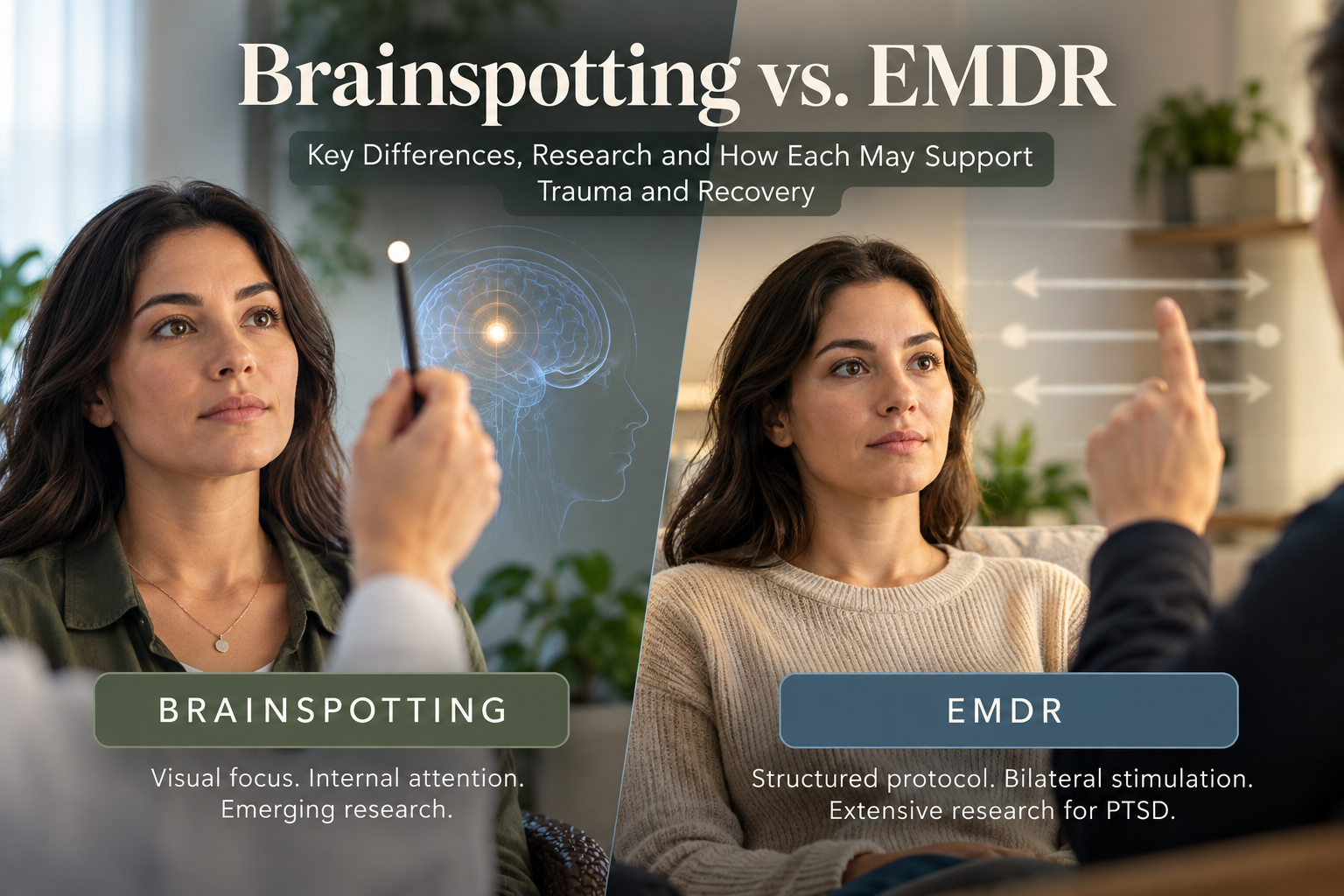
For people exploring Brainspotting, understanding what a session may involve can make the process feel less unfamiliar. Brainspotting is an experiential psychotherapy approach that uses a person’s visual field as part of focused therapeutic attention. A therapist may ask a client to focus on an emotionally meaningful concern while noticing thoughts, feelings, memories or physical sensations that arise. The therapist then helps identify a visual point that becomes a focus during part of the session.
The exact experience can vary considerably from person to person. Brainspotting may also be used as one component of a broader treatment plan rather than as a standalone therapy. For someone participating in IOP therapy or an intensive outpatient program, for example, Brainspotting may complement counseling, behavioral therapies, recovery education and other services when clinically appropriate. Understanding this larger context is an important part of knowing what to expect.
Quick Answer Summary
During Brainspotting therapy, a therapist helps you identify an issue to focus on, notice the thoughts, emotions or physical sensations connected with it, and identify a point in your visual field to use as a focus during part of the session. You may spend periods quietly observing what arises rather than describing every thought or memory aloud. There is no single “correct” response to Brainspotting, and the therapist can adjust the pace based on your needs. At Monarch Recovery Centers, Brainspotting may be incorporated into IOP therapy as one part of an individualized addiction recovery plan.
Key Takeaways
- Brainspotting uses focused visual attention as part of an experiential psychotherapy process. A therapist may help identify a visual focal point while the client notices thoughts, emotions, memories or physical sensations that arise.³˒⁴
- Brainspotting does not require a particular emotional reaction or breakthrough. Experiences can differ considerably between individuals, and sessions may include periods of quiet internal observation.
- Clients do not necessarily have to describe every difficult memory in detail. Communication and collaboration with the therapist remain important, particularly for pacing and managing distress.
- Safety and individual readiness matter when trauma is involved. Trauma-informed behavioral healthcare emphasizes understanding trauma’s effects and reducing the risk of retraumatization.¹˒²
- Brainspotting’s proposed neurological mechanisms remain theoretical. The published papers cited here describe hypotheses rather than firmly established explanations of how Brainspotting works in the brain.³˒⁴
- Brainspotting can be one component of a broader addiction treatment plan. At Monarch Recovery Centers, it may be integrated with IOP therapy, counseling and other recovery services when clinically appropriate.
Before Brainspotting Begins
A Brainspotting session doesn’t necessarily begin with immediately identifying a point and staring at it. As with other forms of therapy, the clinician first needs to understand what the client is experiencing and what they hope to address. This may involve discussing current concerns, treatment goals, relevant history and how the person has been feeling since the previous session.
A therapist may also talk through the Brainspotting process before beginning so that the client understands what they will be asked to do. This preparation can be particularly important when trauma is part of someone’s history. SAMHSA describes trauma-informed care as an approach that recognizes the effects that trauma can have, creates practices informed by that understanding and works to avoid retraumatization.1, 2
This means that therapy should not simply push someone into an intensive experience because emotional discomfort is assumed to equal progress. Pacing, safety, collaboration and the individual’s readiness all matter.
Choosing What to Focus On
Once the therapist and client decide to use Brainspotting, they may identify a particular issue to explore. This focus could involve an experience, emotion, stressful situation, relationship pattern or another concern relevant to treatment. A client may be asked to notice what happens internally when thinking about it.
This is one reason why Brainspotting may feel somewhat different than therapies that primarily rely on conversation. The client may notice emotions, memories, thoughts, images or physical sensations, or be asked to consider the intensity of the distress or activation that they are experiencing.
There is no single response that everyone is expected to have. One person may immediately notice tension somewhere in the body, while another might experience an emotion or memory. Someone else may initially notice very little. None of these responses automatically means that the therapy is or is not working.
Finding a Visual Focal Point
The visual component is one of Brainspotting’s most recognizable features. The therapist may slowly guide the client’s gaze across different locations in the visual field, sometimes using a pointer. Together, the therapist and client pay attention to whether certain positions seem connected with changes in the client’s internal experience.
Once a focal point has been identified, the client may be encouraged to maintain their gaze around that location while continuing to notice what arises. Brainspotting’s developers have proposed that eye position may be related to the processing of emotionally significant experiences. Published papers have also proposed neurological mechanisms that might explain the approach.3,4
However those mechanisms remain hypotheses rather than firmly established explanations of what occurs in the brain during Brainspotting. Patients don’t need to understand or accept a particular neurological theory to participate in a session. From a practical standpoint, they can expect the visual focal point to serve as a way of directing and sustaining attention while they observe their internal experience.
What Happens While You Focus on the Brainspot?
This portion of the session may be quieter than some people expect. The therapist doesn’t necessarily ask questions continuously. Rather, there may be periods when the client maintains visual focus and pays attention to thoughts, feelings, memories, images or physical sensations. The therapist remains present and attentive, but the process leaves more room for observation than a traditional back-and-forth conversation.
Some people may experience noticeable emotional responses, while others may find that thoughts or memories shift over the course of the session. Physical sensations may become more noticeable or change, but there can also be stretches when the experiences feel relatively uneventful. There is no required sequence.
Brainspotting is not a performance, and patients do not need to uncover a forgotten memory, have an emotional breakthrough or reach a particular insight for the session to count.
Do You Have to Describe Everything You Are Thinking?
Patients may wonder whether Brainspotting requires talking through every detail of a difficult experience. Not necessarily! A client may communicate what they are noticing during the process, but Brainspotting can also involve periods of internal attention without narrating every thought or memory aloud.
This doesn’t mean that the therapist becomes uninvolved. Communication remains important, particularly when the therapist needs to understand the client’s level of distress, help maintain an appropriate pace or determine whether to continue or change direction.
The degree of verbal discussion can also depend on the individual and the therapist’s approach. For someone who feels apprehensive about discussing painful experiences, it can be helpful to talk about those concerns before beginning. Trauma-informed treatment should involve collaboration rather than assuming that every patient needs to process difficult material in exactly the same way.
What If the Session Feels Overwhelming?
Trauma-informed work and other emotionally oriented therapy can sometimes bring up uncomfortable reactions. If distress becomes too intense, the client should be able to communicate that to the therapist. A clinician may slow the process, redirect attention, use grounding strategies or decide that continuing Brainspotting at that moment is not appropriate.
SAMHSA’s guidance on trauma-informed behavioral healthcare emphasizes safety and avoiding retraumatization as important components of treatment.1,2 This is also why Brainspotting should be considered within the context of the person’s broader needs rather than treated as something everyone should automatically receive.
Someone early in addiction recovery may have different priorities from someone who has developed greater stability. Clinical needs, current systems, treatment goals and readiness can all influence whether Brainspotting is appropriate and how it is used.
What Happens at the End of the Session?
Brainspotting doesn’t necessarily end the instant that someone stops looking at the focal point. The therapist may give the client time to notice how they are feeling and discuss anything significant that came up. The session may include an opportunity to reflect on changes in emotions, thoughts or physical sensations without requiring the client to reach a tidy conclusion.
Not every session produces a dramatic shift. A person may leave with a new insight, notice that their emotional response has changed or simply have greater awareness of a particular pattern. Experiences and outcomes vary, and Brainspotting should not be presented as producing a predictable response after a specific number of sessions. The therapist can use what emerges to help inform future treatment while continuing to evaluate whether the approach remains useful for that individual.
How Brainspotting Can Fit Into IOP Therapy
For people receiving addiction treatment, Brainspotting may represent only one part of a much larger recovery plan. An intensive outpatient program provides structured daily treatment without requiring the individual to live at a treatment facility. Depending on the program and the patient’s needs, care may incorporate individual and group counseling, behavioral therapies, relapse-prevention strategies, recovery education and support for co-occurring concerns.
At Monarch Recovery Centers, Brainspotting may be incorporated into individualized treatment when clinically appropriate, but it doesn’t replace the broader work involved in addiction treatment. Someone participating in intensive outpatient therapy may, for example, use Brainspotting to explore an emotionally difficult experience while using other parts of treatment to develop coping skills, recognize triggers, strengthen relationships and create routines that support recovery.
This broader framework is especially important because the research base for Brainspotting remains limited compared with more established therapies. Its proposed neurological mechanisms also remain theoretical.4 Rather than positioning one therapy as the answer to every challenge, an IOP can provide multiple forms of support based on the individual’s needs and progress.
What to Expect From Brainspotting as Part of Your Recovery
A Brainspotting session may involve less conversation than someone expects, but it should still be a collaborative process. Clients can expect to identify something that they want to work on, notice their emotional or physical response, work with the therapist to identify a visual focal point and spend time observing what arises while maintaining focused attention. The therapist remains present throughout the process and can adjust the session based on the client’s responses. Most importantly, there is no single ‘correct’ Brainspotting experience.
At Monarch Recovery Centers, Brainspotting may be integrated into IOP therapy, counseling and other services as part of an individualized recovery plan. If you are curious about Brainspotting or looking for an intensive outpatient program, contact us today to learn more about available treatment options and whether Brainspotting may be appropriate for your unique needs.
Citations
- Substance Abuse and Mental Health Services Administration. TIP 57: Trauma-Informed Care in Behavioral Health Services. SAMHSA. https://www.samhsa.gov/resource/dbhis/tip-57-trauma-informed-care-behavioral-health-services
- Substance Abuse and Mental Health Services Administration. Trauma-Informed Care in Behavioral Health Services: Quick Guide for Clinicians Based on TIP 57. https://www.samhsa.gov/resource/dbhis/trauma-informed-care-behavioral-health-services-quick-guide-clinicians-based-tip-57
- Corrigan F, Grand D. Brainspotting: Recruiting the midbrain for accessing and healing sensorimotor memories of traumatic activation. Medical Hypotheses. 2013;80(6):759–766. doi:10.1016/j.mehy.2013.03.005. https://pubmed.ncbi.nlm.nih.gov/23570648/
- Corrigan FM, Grand D, Raju R. Brainspotting: Sustained attention, spinothalamic tracts, thalamocortical processing, and the healing of adaptive orientation truncated by traumatic experience. Medical Hypotheses. 2015;84(4):384–394. doi:10.1016/j.mehy.2015.01.028. https://pubmed.ncbi.nlm.nih.gov/25665861/