For many people, deciding to seek addiction treatment is not the hardest part of recovery. The real challenge is figuring out how to fit treatment into an already demanding, jam-packed schedule. Work commitments, college classes, parenting responsibilities, and other obligations often leave little room for personal care. Many individuals find themselves worrying that getting help will require taking extended time away from work or disrupting the routines that their families depend on. Others assume that they have to wait for a quieter season of life before beginning treatment.
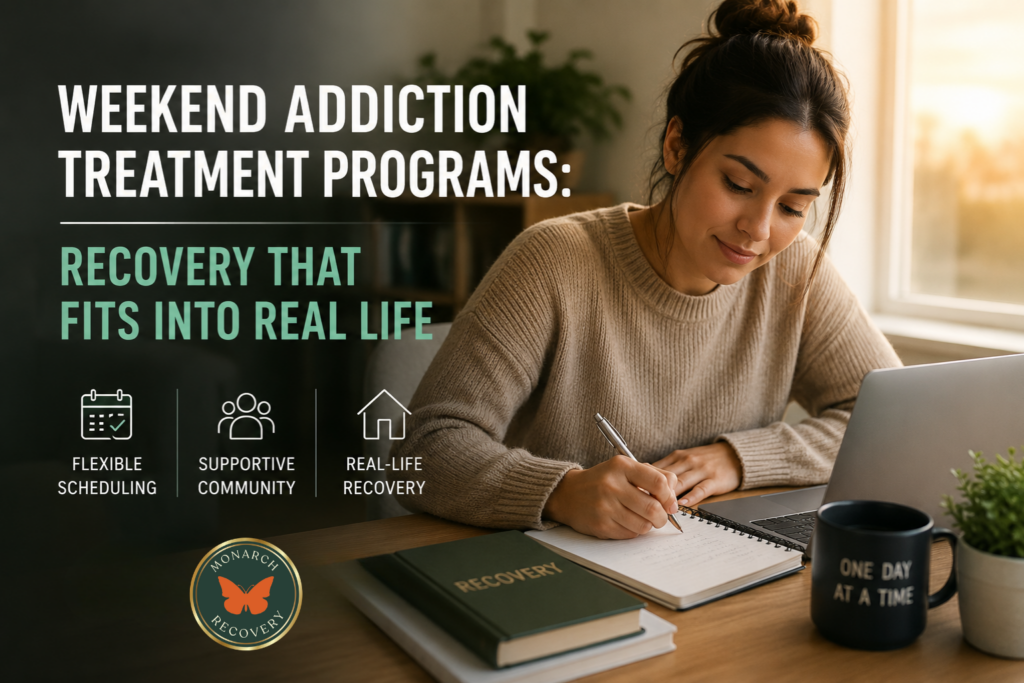
The reality is that there is rarely a perfect time to prioritize recovery. Fortunately, today’s addiction treatment options are more flexible than ever before. Weekend programming and other adaptable outpatient services can help people receive structured clinical support while continuing to meet many of their everyday responsibilities. For individuals whose schedules make traditional weekday appointments difficult, these options can make treatment feel far more accessible.
At Monarch Recovery Centers, we believe that recovery should work with real life whenever possible. Through individualized IOP therapy, flexible scheduling options, and comprehensive Sacramento addiction treatment, we help patients receive meaningful support without requiring them to step away from work, school, or family responsibilities entirely.
Quick Answer Summary
Can you attend addiction treatment on weekends?
Yes. Weekend addiction treatment programs allow many individuals to receive structured clinical care while continuing to manage work, school and family responsibilities. Intensive Outpatient Programs (IOPs) often provide flexible scheduling without sacrificing the evidence-based therapy, accountability and ongoing support that are essential for long-term recovery.¹²³
Key Takeaways
- Weekend addiction treatment programs help reduce scheduling barriers that often prevent people from seeking care.¹³
- Intensive Outpatient Programs (IOPs) combine evidence-based addiction treatment with the flexibility to continue living at home and maintaining daily responsibilities.²
- Flexible scheduling does not reduce the quality or structure of treatment—patients continue following individualized treatment plans with ongoing clinical support.²³
- Outpatient care allows individuals to immediately apply coping skills in everyday situations while receiving regular guidance from their treatment team.¹²
- Choosing the appropriate level of care should always be based on a comprehensive clinical assessment and each person’s individual recovery needs.²
Why Scheduling Is a Common Barrier to Treatment
Many people who are ready for treatment delay taking the first step because they simply cannot imagine how to make it work. Someone working full-time may worry about missing shifts or losing income, or a parent may struggle to find childcare during weekday appointments. College students often balance classes, internships, and part-time jobs, while caregivers may already have responsibilities that leave little flexibility during the day. These concerns are understandable.
The Substance Abuse and Mental Health Services Administration (SAMHSA) recognizes that improving access to care is an important part of supporting recovery. Flexible treatment options, including outpatient and telehealth services, help reduce practical barriers that might otherwise prevent people from engaging in treatment.1,3
When scheduling becomes more manageable, treatment subsequently becomes more accessible.
What Is an Intensive Outpatient Program?
An intensive outpatient program substance abuse treatment model provides structured addiction care while allowing patients to continue living at home and participating in their daily lives. Unlike residential treatment, which requires patients to remain onsite for a period of time, intensive outpatient therapy combines evidence-based treatment with greater flexibility. Depending on each person’s clinical needs, treatment may include individual counseling, group therapy, relapse prevention planning, recovery education, family support, and ongoing treatment planning.
The National Institute on Drug Abuse (NIDA) explains that effective addiction treatment should be individualized because no single approach is appropriate for every person.2 For many individuals, an IOP provides the right balance between structure and independence.
How Weekend Programs Expand Access
Weekend addiction treatment programs are designed to help people participate in care when weekday schedules are difficult to navigate. For some patients, weekends provide the only realistic opportunity to attend therapy consistently. Instead of choosing between work responsibilities and recovery, they can participate in treatment during times that better align with their personal schedules.
This flexibility can be especially valuable for healthcare professionals, first responders, retail employees, hospital workers, construction workers, educators, and others whose weekday schedules may be demanding or unpredictable. Weekend availability also benefits many parents whose childcare arrangements or school schedules may make weekday appointments more difficult. By expanding appointment options, treatment becomes available to people who might otherwise postpone seeking help altogether.
Flexibility Doesn’t Mean Less Structure
One common misconception is that flexible scheduling makes treatment less effective. In reality, flexibility and accountability are not opposites. Whether appointments occur during the week or on weekends, patients participating in intensive outpatient therapy continue following individualized treatment plans developed by their clinical team. Sessions remain structured, recovery goals are regularly reviewed, and clinicians continue monitoring progress throughout treatment.
The purpose of flexible scheduling isn’t to reduce expectations, but rather to remove unnecessary barriers that might prevent someone from participating consistently. Recovery still requires commitment, honesty, and active engagement regardless of when appointments occur.
Recovery Happens Between Sessions
One of the advantages of outpatient care is that patients immediately begin applying what they learn in therapy to their everyday lives. Rather than waiting until treatment ends, individuals practice new coping while continuing to navigate work, parenting, school, and relationships.
A stressful shift at work, an argument with a family member, or an unexpected challenge at home can become opportunities to practice healthier responses. During future therapy sessions, patients can reflect on those experiences with their clinicians, identify what worked well and continue strengthening recovery skills. This ongoing connection between treatment and daily life often helps recovery feel more practical and sustainable.
Building Consistency During Busy Seasons
Recovery is rarely about making one dramatic change. More often, it’s built through small, consistent decisions repeated over time. Attending therapy regularly, following through on recovery goals, communicating openly with clinicians, and continuing to practice healthy coping strategies all contribute to long-term progress.
Weekend programming can support this consistency by making treatment easier to maintain during particularly busy periods of life. Patients facing work schedules, transportation challenges, or other practical obstacles may also benefit from the additional recovery resources highlighted on our Breaking Down Barriers to Addiction Treatment page.
Instead of waiting until work slows down or family obligations become less demanding, patients can begin receiving support while continuing to manage many of their existing responsibilities. For many individuals, this consistency becomes one of the strongest predictors of long-term engagement in recovery.
Choosing the Right Level of Care
Although weekend outpatient treatment offers important advantages, it’s not the appropriate choice for every situation. Some individuals require a higher level of care because of medical needs, withdrawal concerns, co-occurring mental health conditions, or the severity of their substance use disorder. Others may begin recovery in residential treatment before transitioning into outpatient services as their needs evolve.
A comprehensive clinical assessment helps determine which level of care is most appropriate based on each person’s circumstances. If you have searched online for an IOP program in Sacramento, it’s important to look beyond convenience alone. The quality of care, clinical experience, treatment planning, and ongoing support are equally important factors when choosing a program. Recovery is strongest when treatment matches the person’s needs rather than expecting the person to fit a predetermined model.
Flexible Treatment Can Help People Begin Recovery Sooner
One of the greatest benefits of weekend programming is that it removes the belief that life has to stop before recovery can begin. Many people delay treatment because they assume that they need extended time away from work or family. Flexible scheduling challenges that assumption by demonstrating that meaningful recovery can begin while people continue to fulfill many of their existing responsibilities.
Rather than waiting for the ‘right time,’ patients can begin building healthier routines, developing coping strategies and strengthening their recovery while remaining connected to the people and responsibilities that matter most. That accessibility can make the first step feel much more achievable.
Recovery Should Fit Your Life, Not the Other Way Around
Recovery doesn’t need the perfect timing. For many people, the most successful treatment plan is one that works alongside the realities of everyday life rather than asking them to put everything on hold. Weekend addiction treatment programs help make that possible by combining flexibility with the structure and accountability that recovery requires.
At Monarch Recovery Centers, we provide compassionate Sacramento addiction treatment through individualized IOP therapy and intensive outpatient therapy designed to meet people where they are. Whether your schedule is shaped by work, parenting, school, or other responsibilities, our team can help you explore treatment options that support both your recovery and your daily life.
If you are looking for an IOP program in and around Sacramento, or want to learn more about flexible outpatient treatment options, contact us today. Together, we can build a recovery plan that fits your life while providing the support that you need to move forward.
Citations
- Substance Abuse and Mental Health Services Administration (SAMHSA). Recovery. SAMHSA emphasizes that recovery is an individualized process supported by accessible, person-centered treatment, ongoing support and community engagement. https://www.samhsa.gov/recovery
- National Institute on Drug Abuse (NIDA). Principles of Drug Addiction Treatment: A Research-Based Guide (Third Edition). NIDA explains that effective addiction treatment should be individualized and often includes outpatient services, behavioral therapies, and continuing care based on each person’s needs. https://nida.nih.gov/publications/principles-drug-addiction-treatment-research-based-guide-third-edition
- Substance Abuse and Mental Health Services Administration (SAMHSA). Telehealth for the Treatment of Serious Mental Illness and Substance Use Disorders. SAMHSA discusses how flexible treatment delivery models, including outpatient and telehealth services, help improve access to behavioral health care by reducing practical barriers to treatment. https://store.samhsa.gov/product/telehealth-treatment-serious-mental-illness-substance-use-disorders/pep21-06-02-001