The first weeks and months of recovery often bring a mix of emotions. Many people feel hopeful about making a fresh start while also navigating uncertainty, stress and the challenge of adjusting to life without substances. This is a period of significant change, and having consistent support can make an important difference.
While some individuals begin recovery in residential or inpatient treatment, others are clinically appropriate candidates for outpatient care that allows them to continue living at home. Advances in telehealth have made this care even more accessible, giving many patients the opportunity to participate in therapy from wherever they are while remaining connected to experienced clinicians and structured recovery services.
Virtual therapy is not simply about convenience. For many people, it provides continuity, accountability and consistent access to care during a time when recovery skills are still developing. At Monarch Recovery Centers, virtual services are often incorporated into individualized treatment plans that may include IOP therapy, intensive outpatient therapy, and other evidence-informed approaches designed to support long-term recovery.
Quick Answer Summary
How can virtual therapy support someone during early recovery?
Virtual therapy can provide consistent counseling, structured appointments, clinician check-ins and practical recovery planning while allowing appropriate patients to continue living at home. It can reduce barriers such as transportation, childcare and demanding schedules while helping individuals remain connected to treatment as they develop healthier routines and coping skills. Telehealth is not appropriate for every clinical situation, so the right level of care should always be determined through an individualized assessment.
Key Takeaways
- Early recovery often requires ongoing care as people adjust to new routines, emotions, relationships and coping strategies.¹
- Virtual therapy can improve access and continuity by reducing transportation, scheduling, health and caregiving barriers.²
- Telehealth treatment can remain structured through scheduled sessions, individualized goals and regular communication with clinicians.²
- IOP therapy allows appropriate patients to receive frequent clinical support while continuing to live at home and manage daily responsibilities.³
- Virtual treatment is one option within a broader continuum of care and should be matched to each patient’s medical, psychological and social needs.¹³
Early Recovery Is a Time of Adjustment
Recovery begins long before life feels stable again. Even after physical withdrawal symptoms improve, many individuals continue adjusting to new routines, healthier coping strategies, and changes in their relationships, emotions, and daily responsibilities. Situations that once seemed manageable may suddenly feel unfamiliar without substances, and emotions that were previously avoided may become more noticeable.
According to the National Institute on Drug Abuse (NIDA), addiction is a chronic but treatable medical condition, and recovery often requires ongoing care that evolves as a person’s needs change.1 Because early recovery involves so many transitions, consistent therapeutic support can help people build confidence while navigating new experiences one step at a time.
How Virtual Therapy Creates Consistency
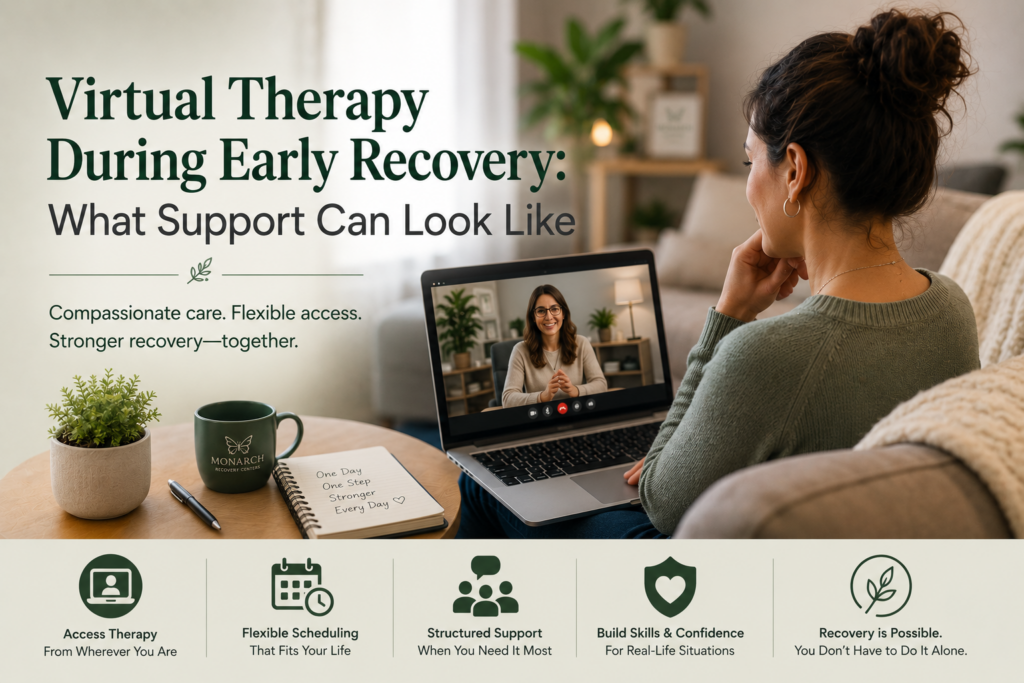
One of the greatest benefits of virtual therapy is that it helps remove practical barriers that might otherwise interrupt treatment. Long commutes, work schedules, transportation limitations, childcare responsibilities or health concerns can all make it difficult to attend appointments consistently. Telehealth allows many individuals to participate in therapy from home or another private location while maintaining their everyday responsibilities.
This consistency matters. The Substance Abuse and Mental Health Services Administration (SAMHSA) notes that telehealth can improve access to behavioral healthcare by helping patients remain connected to treatment even when logistical challenges arise.2 When appointments become easier to attend, patients are often better positioned to maintain momentum throughout recovery.
Structure Remains Essential
Virtual therapy may happen through a computer or mobile device, but that doesn’t mean that treatment becomes less structured. Patients participating in intensive outpatient therapy (IOP) continue following individualized treatment plans that include scheduled appointments, therapeutic goals, and regular communication with their clinical team. Sessions occur consistently, progress is reviewed over time, and treatment recommendations evolve as recovery develops.
This structure provides an important foundation during early recovery, when many people are still establishing healthy routines. Rather than replacing accountability, virtual care helps extend it into everyday life by keeping patients connected to ongoing clinical guidance while they begin applying recovery skills outside the treatment setting.
Support Between Therapy Sessions
Recovery doesn’t pause when a therapy appointment ends. Many of the most meaningful moments occur between sessions, when patients encounter real-world situations that challenge their new coping skills. A stressful day at work, conflict with a loved one, feelings of loneliness, or unexpected changes in routine can all influence recovery.
Therapy helps individuals prepare for these situations before they happen. During sessions, patients work with their clinicians to identify potential triggers, strengthen coping strategies and develop practical plans for navigating difficult moments. When new challenges arise, they can discuss those experiences during future appointments, reflect on what they’ve learned and continue refining their recovery skills.
This ongoing process helps transform therapy from a series of isolated conversations into a continuous source of support and growth.
Recovery Needs Often Change Over Time
One of the most important aspects of addiction treatment is flexibility. The level of support that someone needs during the first few weeks of recovery may look very different from what they need several months later. As confidence grows and healthy routines become more established, treatment plans often evolve to reflect those changes.
Some individuals begin with more frequent appointments before gradually transitioning to less intensive care. Others may temporarily require additional support during periods of increased stress, major life transitions or unexpected setbacks.
Recovery is rarely a straight line, and treatment should be flexible enough to adapt alongside it. This individualized approach helps ensure that patients continue receiving the appropriate level of care as their circumstances change.
When a Higher Level of Care May Be Needed
Although virtual therapy offers meaningful support for many individuals, it isn’t necessarily appropriate for every situation. Some patients may benefit from a higher level of care because of the severity of their substance use disorder, medical needs, co-occurring mental health conditions or safety concerns. Others may require additional supervision during withdrawal or early stabilization before transitioning into outpatient treatment.
A comprehensive clinical assessment helps determine which services are most appropriate at each stage of recovery. Rather than viewing virtual therapy as a replacement for all forms of treatment, it’s better understood as one option within a broader continuum of care. For many individuals, telehealth becomes an important part of recovery after stabilization has occurred or as part of an integrated outpatient treatment plan.
The Role of IOP in Early Recovery
For many patients, IOP therapy provides an ideal balance between flexibility and clinical support. An IOP rehab program allows individuals to continue living at home while participating in structured treatment several times a week. Depending on each person’s treatment plan, services may include: individual counseling, group therapy, relapse prevention education, family support and ongoing recovery planning.
Virtual options can further increase accessibility by allowing appropriate portions of treatment to be delivered remotely when clinically indicated. This approach enables patients to remain actively engaged in recovery while continuing to meet work, school and family responsibilities.
Finding the Right Treatment Fit
When searching online for an intensive outpatient program near me or an intensive outpatient program Sacramento, it’s easy to focus on location or convenience alone. While accessibility is important, the quality and appropriateness of care can matter just as much.
Effective recovery treatment begins with understanding the individual. Clinical history, recovery goals, medical needs, mental health, home environment, and support systems all influence which level of care will provide the strongest foundation for recovery.
Programs that offer individualized treatment planning can adjust services over time as needs change, helping patients receive the right support at every stage of their recovery journey.
Recovery Is Stronger With Consistent Support
Early recovery can feel uncertain, but no one has to navigate it alone. Consistent therapeutic support, structured treatment and compassionate clinical guidance can help individuals build healthier routines while developing the confidence needed for long-term recovery. Virtual therapy has expanded access to these services, enabling patients to receive care while continuing to manage the realities of everyday life.
Consistent Support for Every Stage of Early Recovery
At Monarch Recovery Centers, we recognize that recovery is different for each and every person. Through individualized intensive outpatient therapy, flexible virtual services, and comprehensive IOP rehab programs, we help patients receive the level of support that best matches their clinical needs and recovery goals.
If you or someone you love is looking for an intensive outpatient program Sacramento residents trust or searching for an intensive outpatient program near me, contact us today. Our team will be happy to help you explore treatment options that provide the structure, accountability, and support needed to build lasting recovery.
Citations
- National Institute on Drug Abuse. Treatment and Recovery. NIDA explains that addiction is treatable and that successful recovery may require ongoing or repeated care that responds to a person’s changing needs. https://nida.nih.gov/publications/drugs-brains-behavior-science-addiction/treatment-recovery
- Substance Abuse and Mental Health Services Administration. Telehealth for the Treatment of Serious Mental Illness and Substance Use Disorders. This guide reviews telehealth’s role in expanding access, supporting continuity and delivering behavioral healthcare to adults with substance use disorders. https://library.samhsa.gov/sites/default/files/pep21-06-02-001.pdf
- National Institute on Drug Abuse. Principles of Drug Addiction Treatment: A Research-Based Guide, Third Edition. NIDA emphasizes that treatment must be individualized, continuously assessed and adjusted to address a patient’s substance use as well as associated medical, psychological, social and vocational needs. https://nida.nih.gov/sites/default/files/podat-3rdEd-508.pdf