For many parents, deciding to seek addiction treatment is not the hardest part of recovery. The greater challenge is figuring out how to receive care while continuing to care for everyone else. School drop-offs, work schedules, childcare responsibilities, extracurricular activities, and household obligations often leave very little room for personal needs. Many parents worry that entering treatment means stepping away from their children or disrupting the routines their families depend on. Others postpone getting help because they cannot imagine how recovery could fit into an already full schedule.
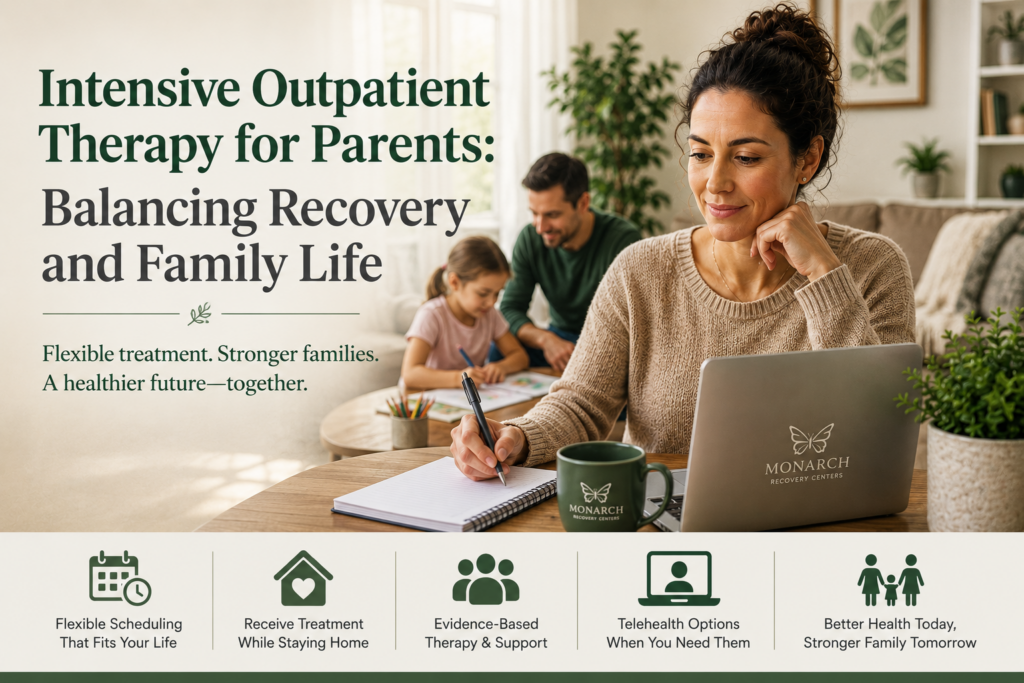
Fortunately, addiction treatment has evolved to become more flexible and accessible. Programs such as intensive outpatient therapy allow many parents to receive structured clinical support while continuing to live at home, care for their families, and maintain many of their daily responsibilities.
At Monarch Recovery Centers, we understand that recovery rarely happens under perfect circumstances. Through personalized treatment plans, flexible scheduling, and comprehensive Sacramento addiction treatment services, we help parents begin building healthier futures without feeling like they must choose between their recovery and their families.
Quick Answer Summary
Can parents receive addiction treatment without stepping away from their families?
Yes. Intensive Outpatient Programs (IOPs) allow many parents to receive structured addiction treatment while continuing to live at home, care for their children and maintain work and family responsibilities. Flexible scheduling, individualized treatment plans and telehealth options help make recovery more accessible without sacrificing quality of care.
Key Takeaways
- Intensive outpatient therapy allows many parents to receive addiction treatment while maintaining family responsibilities.¹²
- Recovery benefits the entire family by strengthening communication, stability and healthy routines over time.¹
- Flexible scheduling and telehealth services help reduce barriers such as childcare, transportation and work conflicts.¹³
- Parents can practice recovery skills in everyday family life while receiving ongoing clinical support.²
- The most effective treatment plan is individualized and based on each person’s clinical needs, home environment and recovery goals.²
Parents Often Face Unique Barriers to Treatment
Every person entering recovery brings different circumstances, but parents often carry additional responsibilities that can make seeking help feel especially complicated. Some worry about arranging childcare while attending appointments, while others fear taking time away from work or missing important family events. Single parents may feel like they have no practical way to participate in treatment, while caregivers supporting aging parents or other family members often face similar concerns.
These logistical challenges are real, but they should not become reasons to delay care. The Substance Abuse and Mental Health Services (SAMHSA) emphasizes that improving access to behavioral healthcare is an important part of helping individuals engage in treatment and sustain recovery. Flexible care models, including outpatient and telehealth services, can help reduce the barriers that might otherwise prevent people from receiving support when they need it most.1
Recovery Benefits the Entire Family
Parents sometimes hesitate to seek treatment because they worry about the temporary impact it may have on their children. In reality, addressing a substance use disorder is often one of the most meaningful investments a parent can make in their family’s future.
Recovery can create opportunities to strengthen communication, rebuild trust, establish healthier routines, and become more emotionally available for loved ones. While the process takes time, many families experience positive changes as parents develop healthier coping strategies and greater stability. Seeking treatment is not about stepping away from family responsibilities. It’s about building the foundation to meet those responsibilities more consistently over the long term.
What is Intensive Outpatient Therapy (IOP)?
Intensive outpatient therapy (IOP) is designed for individuals who need structured addiction treatment while continuing to live at home and participate in everyday life. Unlike residential treatment, an intensive outpatient program substance abuse treatment model allows patients to attend scheduled therapy sessions, counseling, recovery education, and clinical programming without remaining at a treatment facility full-time. This approach makes treatment more accessible for parents whose daily responsibilities require them to remain actively involved at home.
Depending on each person’s individualized treatment plan, an IOP may include individual counseling, group therapy, relapse prevention education, family support and ongoing treatment planning. The National Institute on Drug Abuse (NIDA) explains that effective treatment should be tailored to each individual’s needs, recognizing that no single approach is appropriate for everyone.2
Flexibility Makes Recovery More Accessible
One of the greatest strengths of IOP is flexibility. Parents often have schedules that change throughout the week, with school calendars, work demands, medical appointments, and family obligations rarely following a predictable pattern. Flexible outpatient programming helps many individuals receive consistent treatment without having to step away from their responsibilities entirely.
Rather than placing recovery on hold until life becomes less busy, parents can begin developing healthier habits while continuing to navigate the realities of everyday life. For many people, this balance makes it easier to remain engaged in treatment over time.
Recovery Happens Beyond the Therapy Session
Another advantage of intensive outpatient therapy is that patients immediately begin applying what they learn in their daily lives. Parenting naturally presents moments of stress, uncertainty, and emotional intensity, with plenty of opportunities to practice healthier coping strategies appearing day to day. During therapy sessions, parents can reflect on these experiences with their treatment team, explore what worked well, and identify areas for continued growth.
Because recovery skills are practiced in real-world situations, many individuals will develop greater confidence in their ability to manage everyday challenges without returning to substance use.
Telehealth Has Expanded Options for Busy Families
For some parents, even attending outpatient appointments in person can feel difficult. Transportation challenges, childcare responsibilities, long commutes, or demanding work schedules may still create obstacles to consistent participation.
Telehealth services have helped expand access by allowing patients to participate in portions of treatment remotely when clinically appropriate. According to SAMHSA’s guidance on telehealth for behavioral health services, virtual care can improve continuity of care by reducing barriers that often interfere with treatment participation.3
When incorporated into an individualized treatment plan, virtual services can provide additional flexibility while maintaining meaningful clinical support and accountability.
Choosing the Right Level of Care
Not every parent will benefit from the same treatment approach. Some individuals may require a higher level of care before transitioning into outpatient treatment. Others may be appropriate candidates for an IOP from the beginning of their recovery journey.
A comprehensive assessment helps determine which level of care best matches a person’s clinical needs, recovery goals, medical history and home environment. If you’ve searched online for an ‘IOP program near me,’ it’s important to remember that convenience is only one consideration. Finding a program that provides individualized care, experienced clinicians, and ongoing support is equally important.
Recovery and Parenting Can Move Forward Together
Many parents believe that they need to wait until life becomes less hectic before beginning treatment. The truth is that there may never be a perfect time. Children continue growing, careers continue demanding attention, and family responsibilities continue evolving. Waiting for life to slow down often means postponing the support that could improve both personal wellbeing and family stability. Flexible outpatient care helps make recovery possible even during busy seasons of life.
Recovery That Supports Your Family, Too
At Monarch Recovery Centers, we understand the unique challenges that parents face when seeking treatment. Through compassionate Sacramento addiction treatment services, individualized intensive outpatient therapy, and flexible scheduling options, we help parents receive the care that they need while continuing to care for the people that matter most.
If you are looking for an intensive outpatient program substance abuse treatment option that fits your family’s needs, we’re happy to help. Contact us today to speak with our team and explore personalized treatment options that support both your recovery and your responsibilities at home.
Citations
- Substance Abuse and Mental Health Services Administration (SAMHSA). Recovery. https://www.samhsa.gov/recovery
- National Institute on Drug Abuse (NIDA). Principles of Drug Addiction Treatment: A Research-Based Guide (Third Edition). https://nida.nih.gov/publications/principles-drug-addiction-treatment-research-based-guide-third-edition
- Substance Abuse and Mental Health Services Administration (SAMHSA). Using Telehealth for the Treatment of Serious Mental Illness and Substance Use Disorders. https://store.samhsa.gov/product/telehealth-treatment-serious-mental-illness-substance-use-disorders/pep21-06-02-001