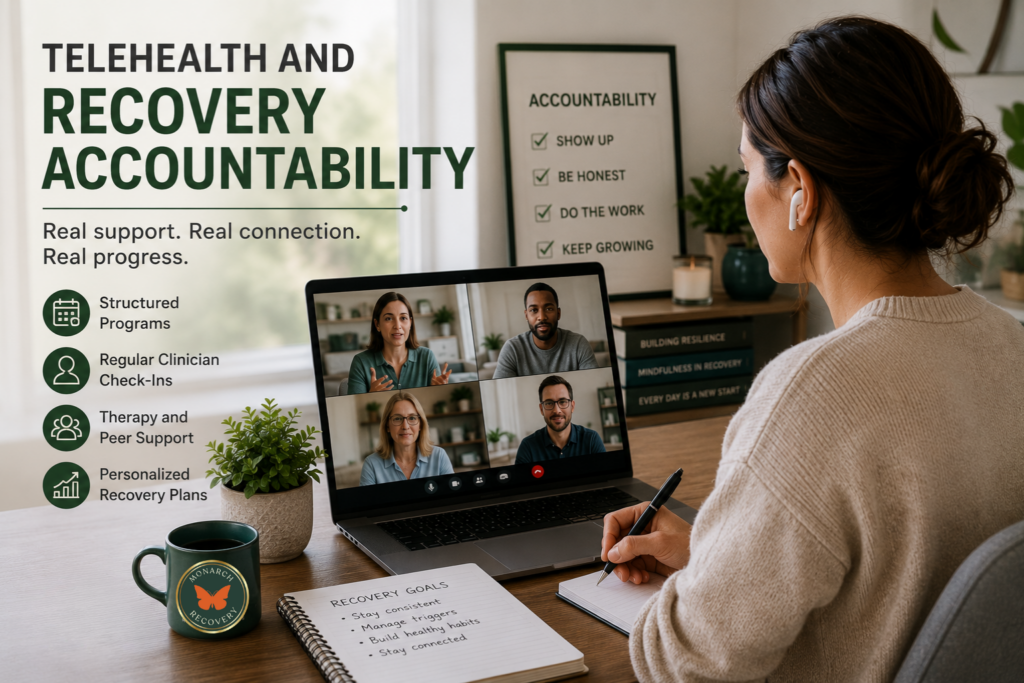
One of the biggest misconceptions about virtual addiction treatment is that it lacks accountability. Some people may assume that because patients are participating from home rather than sitting in a treatment center, recovery becomes less structured or somehow less effective. Others wonder whether telehealth can provide the same level of support, encouragement, and clinical guidance as traditional in-person care. In reality, accountability has never been about building; rather, it’s about consistency, engagement, and maintaining meaningful connections throughout the recovery process.
While telehealth programs are thoughtfully designed, they can provide many of the same elements that help patients stay committed to treatment, including scheduled therapy sessions, ongoing clinician support, individualized treatment planning and regular opportunities to reflect on progress and challenges. While virtual care isn’t the right fit for every person or every stage of recovery, it has become an important part of modern addiction treatment because it allows more people to access care without sacrificing structure.
At Monarch Recovery Centers, our telehealth addiction treatment Sacramento services are built around the same principles that guide all of our recovery programs: compassionate care, clinical accountability, and individualized support. Whether patients participate in telehealth rehab Sacramento services, online IOP California programs, or a hybrid treatment model, accountability remains an essential part of every recovery plan.
Quick Answer Summary
Can telehealth provide accountability during addiction recovery?
Yes. Telehealth addiction treatment maintains accountability through scheduled therapy sessions, regular clinician check-ins, structured treatment plans and ongoing recovery support. For many patients, virtual care provides the same level of clinical guidance and engagement as traditional outpatient treatment while improving accessibility and consistency.
Key Takeaways
- Recovery accountability is built through consistency, honest communication and active participation—not simply attending treatment in person.¹²
- Telehealth programs maintain structured schedules, individualized treatment plans, and regular clinician support.¹
- Virtual counseling encourages self-awareness, healthy coping skills, and long-term personal accountability.²
- Online IOP programs combine flexibility with consistent therapeutic support, helping patients stay engaged while balancing daily responsibilities.¹²
- The most effective treatment approach depends on each individual’s clinical needs and may include virtual, in-person, or hybrid care.²³
Accountability Is More Than Just Showing Up
When people hear the word ‘accountability,’ they often think about attendance. While consistently participating in treatment is certainly important, accountability extends much further than simply appearing for appointments.
Recovery often involves following through on commitments, communicating honestly with clinicians, practicing healthy coping strategies, and remaining actively engaged in the therapeutic process. It also includes recognizing setbacks, discussing challenges openly, and continuing to work toward long-term recovery goals. These behaviors can take place in both virtual and in-person treatment settings.
Rather than focusing solely on where treatment occurs, effective recovery programs focus on how patients participate and how clinicians support ongoing progress throughout care.
Structure Remains a Core Part of Telehealth Treatment
One reason telehealth has become increasingly accepted within behavioral healthcare is that virtual treatment can maintain many of the same clinical structures found in traditional outpatient programs. Patients participating in telehealth substance abuse treatment don’t simply check in whenever it’s convenient. Rather, they follow structured schedules, attend planned therapy sessions, participate in counseling, and work collaboratively with their treatment team to address recovery goals.
Just as with in-person care, treatment plans are individualized and adjusted as patients make progress or encounter new challenges. The Substance Abuse and Mental Health Services Administration (SAMHSA) recognizes telehealth as an important way to expand access to behavioral healthcare while maintaining continuity of care and ongoing clinical support for many patients.1 Structure remains an important part of recovery regardless of whether services are delivered virtually or in person.
Regular Clinician Check-Ins Help Patients Stay Connected
Recovery rarely follows a perfectly straight path. Stressful situations, emotional challenges, workplace pressures, relationship conflicts or unexpected life events can all influence a person’s recovery experience. Regular clinician check-ins help patients address these situations before they become larger obstacles.
Throughout telehealth addiction treatment Sacramento programs, patients maintain consistent communication with their treatment providers. These conversations help create opportunities to discuss progress, identify concerns, celebrate successes, and adjust treatment plans when necessary.
Rather than waiting until difficulties become overwhelming, patients receive ongoing guidance that helps them navigate recovery as it unfolds in real time. This continuous connection often becomes one of the most valuable aspects of treatment.
Therapy Creates Opportunity for Honest Reflection
Accountability also develops through self-awareness. Individual counseling and group therapy provide spaces where patients can honestly examine their experiences, recognize patterns, and identify situations that may affect their recovery.
Many people initially believe that accountability means having someone else monitor their behavior. In reality, long-term recovery often depends on developing internal accountability as well. Patients gradually learn to recognize triggers, evaluate their decisions, communicate openly about challenges, and make internal choices that support their recovery goals.
Virtual therapy creates opportunities for these conversations to happen consistently, while allowing patients to remain connected to their everyday responsibilities.
Recovery Happens In Everyday Life
One of the strengths of telehealth treatment is that patients continue navigating their normal routines while participating in care. Work responsibilities, family relationships, financial pressures, and everyday stressors continue throughout treatment. While these realities can sometimes create challenges, they can also provide valuable opportunities for growth.
Patients are also able to practice coping skills in real-world situations and then discuss those experiences during therapy sessions. A difficult interaction with a coworker, a stressful family conversation, or an unexpected setback can become meaningful learning experiences rather than isolated struggles. This ongoing connection between treatment and daily life allows recovery skills to become practical habits instead of remaining concepts discussed only within a clinical setting.
Online IOP Programs Maintain Consistency
An online IOP California program provides significantly more structure than people realize. Rather than occasional appointments, patients participate in scheduled therapeutic programming designed to support consistent progress over time. This may include individual counseling, group therapy, recovery education, relapse prevention planning, and ongoing collaboration with the treatment team.
Because services occur on a regular schedule, patients remain engaged throughout their recovery journey while continuing to balance work, school or family responsibilities. The consistency of these interactions helps reinforce healthy routines and encourages patients to remain actively involved even when life becomes busy.
Technology Supports Access, Not Isolation
Some people worry that virtual care may feel less personal than meeting face-to-face. While every person’s preferences are different, telehealth is designed to strengthen access rather than reduce connection.
For many individuals, participating from home eliminates barriers that might otherwise interfere with treatment. Long commutes, transportation challenges, childcare responsibilities, or demanding work schedules become less likely to prevent someone from attending therapy.
Removing these obstacles often improves consistency, which, in turn, supports accountability. Patients who can reliably attend appointments are better positioned to build therapeutic relationships, remain engaged with their treatment plans, and continue making steady progress toward recovery goals.
Telehealth Is Not the Right Fit for Every Situation
Although telehealth offers important advantages, it is not intended to replace every form of addiction treatment. The National Institute on Drug Abuse (NIDA) emphasizes that effective treatment should be matched to each individual’s clinical needs. Some patients may require more intensive levels of care, additional medical supervision or services that are most appropriately delivered in person. Others may benefit from a hybrid approach that combines virtual counseling with onsite treatment.2,3
At Monarch Recovery Centers, recommendations are based on comprehensive clinical assessments rather than convenience alone. Our team works with each patient to determine whether telehealth, in-person care or a combination of both will provide the strongest foundation for recovery. This individualized approach helps ensure that accountability is supported by the right level of clinical care.
Accountability That Supports Lasting Recovery
Successful recovery is rarely achieved alone. Whether treatment takes place in a counseling office or through a secure virtual platform, meaningful progress depends on honest communication, consistent participation, supportive relationships and ongoing accountability. Telehealth has expanded opportunities for people to receive treatment who might otherwise delay or avoid care because of scheduling conflicts, transportation limitations, health concerns or other practical barriers. For many individuals, that increased accessibility becomes the reason that recovery can begin in the first place.
At Monarch Recovery Centers, we believe that accountability should remain at the center of every treatment plan, regardless of where services are delivered. Through telehealth addiction treatment Sacramento services, telehealth substance abuse treatment, telehealth rehab Sacramento programs, and online IOP California options, we help patients stay connected to the support, structure, and guidance that they need to build lasting recovery.
If you or someone you love is exploring flexible addiction treatment programs, contact us today to learn whether telehealth or a hybrid treatment program may be the right fit for your recovery.
Citations
- Substance Abuse and Mental Health Services Administration (SAMHSA). Using Telehealth for the Treatment of Serious Mental Illness and Substance Use Disorders. https://store.samhsa.gov/product/telehealth-treatment-serious-mental-illness-substance-use-disorders/pep21-06-02-001
- National Institute on Drug Abuse (NIDA). Principles of Drug Addiction Treatment: A Research-Based Guide (Third Edition). https://nida.nih.gov/publications/principles-drug-addiction-treatment-research-based-guide-third-edition
- National Institute on Drug Abuse (NIDA). Drugs, Brains, and Behavior: The Science of Addiction. https://nida.nih.gov/publications/drugs-brains-behavior-science-addiction