Recovery from a substance use disorder is about far more than stopping alcohol or drug use. For many people, it also involves learning how to manage stress, navigate difficult emotions, rebuild relationships, and care for their mental health in new ways. This process takes time, and having consistent support can make a truly meaningful difference.
At the same time, many individuals face practical challenges that can make participating in treatment difficult. From work schedules and family responsibilities to school commitments and transportation limitations, daily obligations can quickly interfere with regular appointments. This can cause some people to delay treatment or remain engaged once they begin it. Telehealth has helped change that.
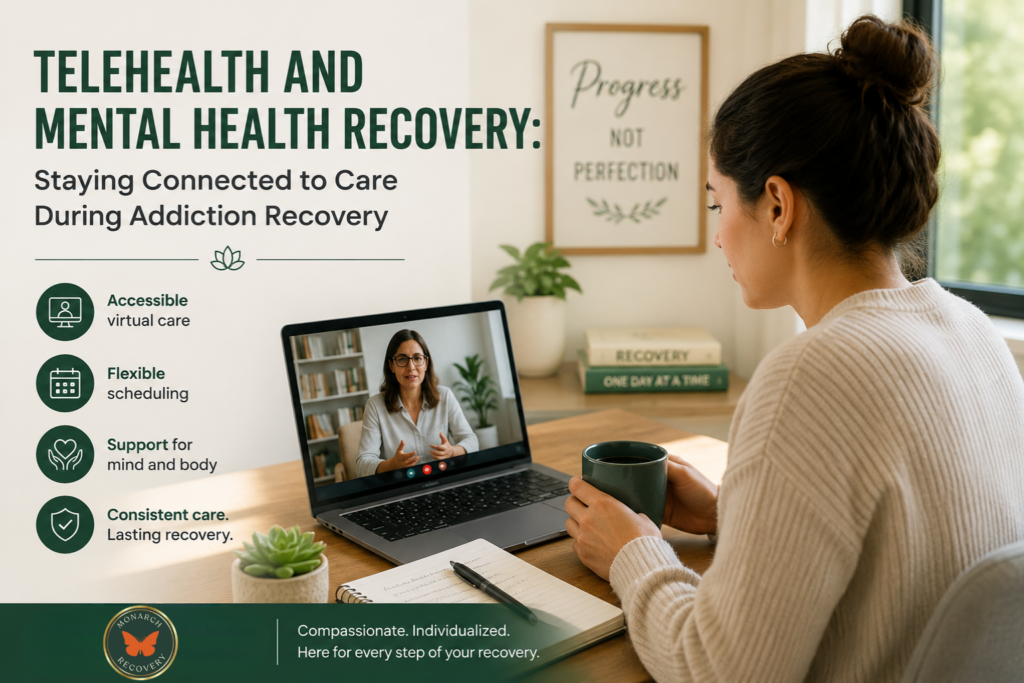
By making therapy and recovery services more accessible, virtual care allows many people to receive consistent support while continuing to manage the realities of everyday life. For individuals participating in IOP therapy or other forms of intensive outpatient therapy, telehealth can help provide structure, accountability, and ongoing clinical guidance without requiring them to put their lives on hold.
At Monarch Recovery Centers, we believe that recovery should be accessible and individualized. Through flexible Sacramento addiction treatment options, including virtual services when clinically appropriate, we help patients build recovery plans that support both their mental health and their long-term recovery goals.
Quick Answer Summary
How does telehealth support mental health recovery during addiction treatment?
Telehealth helps individuals stay connected to addiction treatment and mental health services by providing flexible access to therapy, counseling, and recovery support. Through virtual IOP therapy and individualized outpatient care, patients can maintain consistent treatment while balancing work, school, family, and other daily responsibilities.¹²³
Key Takeaways
- Telehealth makes addiction treatment more accessible by reducing common barriers such as transportation, scheduling conflicts and family responsibilities.²³
- Virtual IOP therapy provides structured, individualized treatment while allowing patients to remain engaged in their everyday lives.¹²
- Consistent participation in therapy supports both mental health and long-term addiction recovery by helping patients develop practical coping skills.¹³
- Effective addiction treatment addresses the whole person, including emotional wellness, relationships and behavioral health—not substance use alone.¹²
- Recovery plans should remain flexible and evolve over time to meet each individual’s changing clinical needs and long-term recovery goals.¹²
Mental Health and Addiction Recovery Are Closely Connected
Many people entering recovery discover that substance use was only one part of the challenges that they were experiencing. Stress, anxiety, depression, trauma, grief and other emotional concerns often continue even after substance use is stopped. While every person’s experience is different, these challenges can influence motivation, relationships, decision-making and overall wellbeing throughout recovery.
According to the Substance Abuse and Mental Health Services Administration (SAMHSA), recovery is a process of improving health, wellness and quality of life while working toward meaningful goals. That process includes emotional wellness alongside physical recovery.1
Addressing mental health doesn’t mean that recovery becomes more complicated. Rather, it recognizes that lasting recovery often involves supporting the whole person instead of focusing on substance use alone.
Consistency Matters During Recovery
One of the most important elements of recovery is consistency. Attending therapy regularly, communicating openly with clinicians, practicing healthy coping strategies, and maintaining recovery routines all help to build momentum over time.
Unfortunately, consistency can become difficult when life is busy. A demanding work schedule or parenting responsibilities, transportation issues, or unexpected life events – all of these issues can make it challenging to attend appointments as often as needed. Missing treatment doesn’t necessarily reflect a lack of motivation. More often, it’s a reflection that balancing recovery with everyday responsibilities can be difficult. Telehealth helps reduce many of these practical barriers by bringing treatment to the patient instead of requiring the patient to travel to treatment.
If work schedules, transportation, financial concerns, or other obstacles have delayed treatment, our Breaking Down Barriers to Addiction Treatment page highlights additional resources designed to make recovery more accessible.
How Telehealth Expands Access to Care
Virtual behavioral healthcare has become an increasingly important part of addiction treatment because it allows more people to participate consistently. Instead of commuting to appointments, patients can attend therapy sessions from home or another private location. This flexibility may help to reduce travel time, minimize scheduling conflicts, and make it easier to remain engaged in treatment.
SAMHSA notes that telehealth has expanded access to behavioral healthcare by helping patients overcome common barriers to treatment participation while supporting continuity of care.2 For many people, improved access means that treatment becomes something that they can realistically maintain rather than something that they struggle to fit into an already demanding schedule.
Virtual IOP Therapy Still Provides Structure
A common misconception about virtual care is that it is less structured than traditional treatment. In reality, patients participating in IOP therapy continue following individualized treatment plans developed by their clinical team. Therapy sessions are scheduled, treatment goals are regularly reviewed, and patients remain connected to clinicians who monitor their progress throughout recovery. The format may be different, but the commitment remains the same.
Virtual services are often designed to increase accessibility while preserving accountability that helps patients continue moving forward. Recovery still requires active participation, honest communication, and consistent engagement regardless of whether therapy takes place in person or online.
Therapy Supports More Than Sobriety
Although maintaining recovery is an important goal, therapy often addresses much more than substance abuse itself. For many individuals, treatment is an opportunity to better understand their emotional responses, improve communication, strengthen relationships, and develop healthier coping strategies for everyday stress.
For someone balancing work, parenting, or school, these conversations can be especially valuable. Therapy provides space to explore challenges as they arise rather than waiting until they become overwhelming.
According to the National Institute on Drug Abuse (NIDA), effective treatment addresses multiple aspects of a person’s life, recognizing that recovery extends beyond substance use alone.3 As recovery progresses, many patients find that strengthening emotional well-being also strengthens their ability to maintain long-term sobriety.
Recovery Happens Between Therapy Sessions
One of the advantages of outpatient care is that patients continue living their everyday lives while receiving treatment. Rather than practicing recovery skills only within a clinical setting, they immediately begin applying them at work, at home, in school and within their relationships, creating opportunities for meaningful learning.
A stressful meeting, an argument with a loved one or feelings of anxiety before an important event can all become experiences that patients later discuss with their therapist. Together, they can explore what happened, identify effective coping strategies and prepare for future situations. This connection between therapy and everyday life helps recovery become practical rather than theoretical.
Recovery Needs May Change Over Time
Recovery rarely exists in a straight line. Some periods require more support than others, particularly during major life transitions or times of increased stress. As people gain confidence and stability, their treatment plans often evolve to reflect changing needs. For some individuals, virtual care becomes an important way to maintain continuity during these transitions. Others may benefit from a combination of in-person and virtual services, while some may require a higher level of care depending on their clinical circumstances.
The National Institute on Drug Abuse emphasizes that treatment should be individualized and adjusted as needs change over time rather than relying on a single standardized approach.4. Flexibility allows treatment to evolve alongside recovery rather than remaining static.
Finding the Right Level of Care
Telehealth offers meaningful benefits for many people, but it’s not the right choice for every situation. Individuals experiencing severe withdrawal symptoms, complex medical needs, or certain co-occurring mental health conditions may benefit more from intensive services before transitioning into outpatient care. A comprehensive clinical assessment helps determine which level of treatment best matches each person’s circumstances, recovery goals and support needs.
If you are searching online for an IOP program in Sacramento, remember that choosing a treatment provider often involves more than finding a convenient location. Individualized care, experienced clinicians and flexible treatment options all contribute to a program’s ability to support long-term recovery. The right treatment plan is one that provides the appropriate level of care while remaining realistic for the person’s daily life.
Staying Connected to Care Strengthens Long-Term Recovery
No one should have to postpone treatment because life feels too busy. Recovery is more sustainable when it can be integrated into everyday responsibilities rather than requiring people to step away from everything that matters to them. Telehealth has expanded access to care by making therapy more flexible while preserving the structure, accountability, and clinical support that recovery requires.
At Monarch Recovery Centers, we provide compassionate Sacramento addiction treatment through individualized intensive outpatient therapy, virtual IOP therapy and comprehensive recovery planning designed to meet each patient’s unique needs. Whether you are balancing work, family responsibilities, or school, our team can help you explore treatment options that support both your mental health and your recovery journey.
If you or a loved one are looking for an intensive outpatient program substance abuse treatment option or searching for an IOP program near me, contact us today. Together, we can build a recovery plan that will help you stay connected to care while continuing to move forward in everyday life.
Citations
- Substance Abuse and Mental Health Services Administration (SAMHSA). Telehealth for the Treatment of Serious Mental Illness and Substance Use Disorders. SAMHSA explains how telehealth expands access to behavioral healthcare by reducing barriers to treatment and improving continuity of care. https://store.samhsa.gov/product/telehealth-treatment-serious-mental-illness-substance-use-disorders/pep21-06-02-001
- Substance Abuse and Mental Health Services Administration (SAMHSA). Recovery. SAMHSA defines recovery as a process of improving health, wellness, and quality of life while supporting individuals in achieving meaningful life goals. https://www.samhsa.gov/recovery
- National Institute on Drug Abuse (NIDA). Principles of Drug Addiction Treatment: A Research-Based Guide (Third Edition). NIDA explains that effective addiction treatment should be individualized, address multiple aspects of a person’s life, and evolve as clinical needs change over time. https://nida.nih.gov/publications/principles-drug-addiction-treatment-research-based-guide-third-edition