Recovery is not a one-size-fits-all journey. Every person enters treatment with different experiences, responsibilities, and goals, which means the path toward long-term recovery can look different from one individual to the next.
For some people, attending treatment entirely in person provides the structure that they need to build a strong foundation. Others may benefit from the convenience of virtual services that make it easier to balance recovery with work, school, parenting, or other responsibilities. Increasingly, many patients find a combination of both approaches that offers the right balance of flexibility and support.
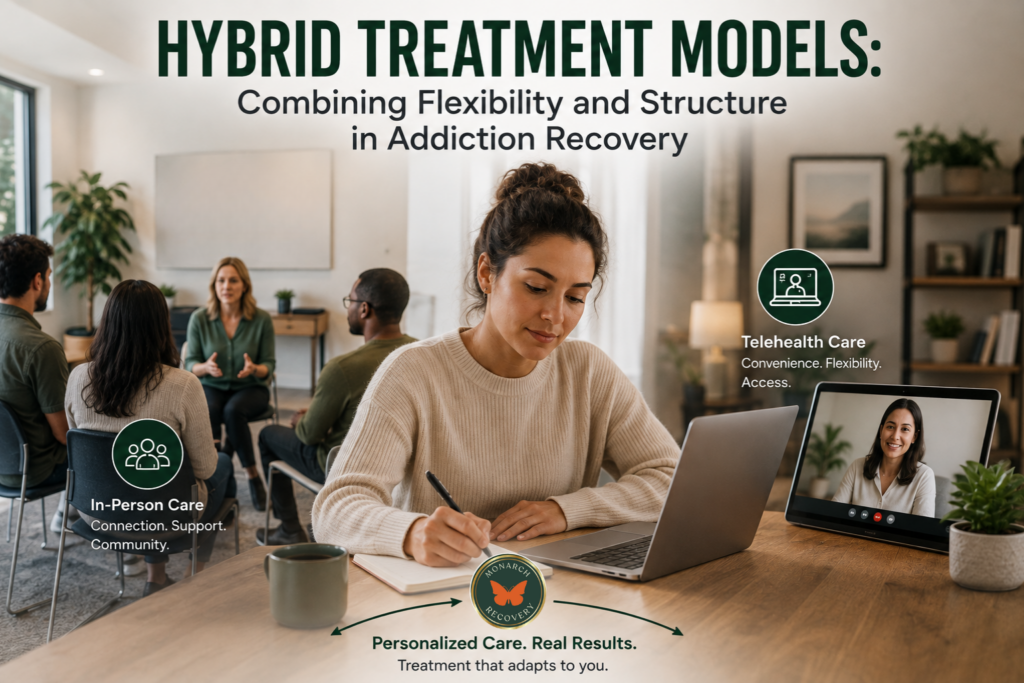
This hybrid addiction treatment model combines in-person care with virtual services to create an individualized recovery experience. Rather than asking patients to choose one format over the other, hybrid care allows treatment to adapt to changing needs while maintaining consistency throughout the recovery process.
At Monarch Recovery Centers, we recognize that successful recovery often requires flexibility without sacrificing accountability. Through IOP therapy, telehealth addiction treatment, and personalized recovery planning, we help patients receive comprehensive care that fits their lives while supporting lasting healing.
Quick Answer Summary
What is a hybrid addiction treatment model?
A hybrid addiction treatment model combines in-person therapy with secure telehealth services to create a flexible, individualized recovery plan. This approach helps many people receive consistent clinical support while balancing work, school, family responsibilities and other everyday commitments.¹²³
Key Takeaways
- Hybrid treatment combines in-person therapy with telehealth services to provide individualized addiction recovery support.¹
- Flexible treatment models help reduce scheduling, transportation and work-related barriers while maintaining accountability.²³
- In-person care continues to play an important role alongside virtual services for many aspects of addiction treatment.¹²
- Recovery plans should evolve over time to reflect each person’s changing clinical needs and recovery goals.¹
- Hybrid treatment allows patients to build recovery skills in real-world settings while remaining consistently connected to their treatment team.¹²³
Recovery Needs Can Change Over Time
The support that someone needs during the first weeks of recovery may not be the same support that they need several months later. Early in treatment, a patient may benefit from more frequent face-to-face interaction while establishing healthy routines, building trust with their treatment team, and developing foundational recovery skills. As confidence grows and life becomes more stable, virtual appointments may provide a practical way to maintain momentum while reducing scheduling challenges.
Recovery is rarely static. According to the National Institute on Drug Abuse (NIDA), effective addiction treatment should be individualized and adjusted as a person’s needs change over time rather than relying on a single standardized approach.1 Hybrid care reflects this philosophy by allowing treatment to evolve alongside recovery.
What Is a Hybrid Treatment Model?
A hybrid treatment model combines in-person services with virtual care delivered through secure telehealth technology. Depending on an individual’s treatment plan, patients may attend some therapy sessions onsite while participating in others remotely. This approach allows clinicians to tailor treatment based on clinical recommendations, scheduling needs, transportation considerations, and the patient’s progress through recovery.
For many people, hybrid care provides the consistency of regular treatment while offering greater flexibility than an entirely in-person schedule. Rather than viewing telehealth as a replacement for traditional care, hybrid treatment recognizes that both approaches have valuable roles within a comprehensive recovery plan.
Flexibility Makes Treatment More Accessible
One of the greatest advantages of hybrid care is that it reduces many of the practical barriers that can interfere with treatment. Work schedules, school commitments, parenting responsibilities, transportation challenges, and unexpected life events can all make attending multiple in-person appointments each week difficult.
Many of these challenges are common obstacles to beginning addiction treatment. Our guide to Breaking Down Barriers to Addiction Treatment explores how flexible care, transportation support and telehealth are helping more people access recovery.
By incorporating telehealth services into an individualized treatment plan, many patients are able to remain connected to care while continuing to meet their daily responsibilities. The Substance Abuse and Mental Health Services Administration (SAMHSA) notes that telehealth helps expand access to behavioral healthcare by reducing logistical barriers and improving continuity of care.2,3 This increased accessibility often makes it easier for patients to remain engaged throughout treatment.
In-Person Care Continues to Play an Important Role
Although virtual services offer significant benefits, there are many situations where in-person treatment remains an essential part of recovery. Face-to-face therapy provides an opportunity for direct interaction with clinicians and peers, allowing patients to build therapeutic relationships in a structured environment. Certain clinical assessments, group experiences, or therapeutic interventions may also be best delivered in person.
Hybrid treatment recognizes these strengths rather than attempting to replace them. Instead, virtual services complement in-person care by extending support beyond the treatment center and making it easier for patients to participate consistently. The goal is not to choose one format over the other, but rather to use each where it offers the greatest benefit.
Accountability Remains at the Center of Recovery
Some people assume that adding virtual appointments makes treatment less structured. In reality, accountability depends on participation rather than location. Patients enrolled in intensive outpatient therapy continue following individualized treatment plans, attending scheduled sessions, communicating regularly with their clinicians, and working toward clearly defined recovery goals.
Whether recovery occurs in person or through a secure online platform, the expectations remain consistent. Recovery continues to require honesty, commitment, and active engagement throughout the treatment process.
Recovery Happens Beyond the Treatment Center
One of the unique advantages of hybrid care is that it helps bridge the gap between therapy and everyday life. Patients spend part of their time receiving guidance from clinicians while also applying recovery skills in real-world situations. Managing workplace stress, navigating daily relationships, responding to unexpected challenges, or maintaining healthy routines all become opportunities to practice what has been discussed during treatment.
During future therapy sessions, patients can reflect on these experiences, celebrate successes, identify obstacles, and continue strengthening practical coping strategies. This ongoing connection between treatment and daily life often helps recovery feel more sustainable because new habits are developed in the environments where they will continue long after formal treatment ends.
Hybrid Care Supports Long-Term Engagement
Recovery is built through consistency. Attending therapy regularly, maintaining communication with a treatment team, and continuing to develop healthy coping strategies all contribute to long-term progress.
For some individuals, an entirely in-person schedule may become difficult to maintain because of changing work demands, transportation issues, or family obligations. Hybrid care offers additional flexibility without requiring patients to disconnect from treatment.
This adaptability can make it easier to remain engaged during busy seasons of life while continuing to receive meaningful clinical support. Rather than interrupting recovery when life changes, hybrid treatment helps recovery change alongside it.
Finding the Right Treatment Approach
Although hybrid care benefits many people, it’s not the appropriate choice for every situation. Some individuals require a higher level of care because of withdrawal symptoms, medical needs, or co-occurring mental health conditions. Others may initially benefit from more intensive in-person services before transitioning into a hybrid model as recovery progresses.
A comprehensive assessment helps determine which level of care best matches each person’s clinical needs, recovery goals and support system. If you are searching online for an intensive outpatient program substance abuse treatment option or exploring an IOP rehab program, it’s important to choose a provider that offers individualized recommendations rather than a one-size-fits-all approach. Effective treatment should fit the person, not the other way around.
Flexible Care Helps Recovery Fit Real Life
There is no single path to lasting recovery. For many individuals, combining in-person treatment with virtual support provides the balance of structure, flexibility, and consistency needed to remain engaged throughout the recovery process. Hybrid treatment makes it possible to receive compassionate, evidence-informed care while continuing to manage work, school, family responsibilities and other important aspects of daily life.
At Monarch Recovery Centers, we provide personalized Sacramento addiction treatment through intensive outpatient program, telehealth addiction treatment and individualized recovery planning designed to meet each person’s unique needs. Whether you are beginning treatment or looking for a more flexible way to continue your recovery, our team can help you build a plan that supports both your goals and your everyday responsibilities.
Contact us today to learn more about our hybrid treatment options and discover how personalized, flexible care can support your recovery journey.
Citations
- National Institute on Drug Abuse (NIDA). Principles of Drug Addiction Treatment: A Research-Based Guide (Third Edition). NIDA explains that addiction treatment should be individualized and adjusted as a person’s needs change throughout recovery. https://nida.nih.gov/publications/principles-drug-addiction-treatment-research-based-guide-third-edition
- Substance Abuse and Mental Health Services Administration (SAMHSA). Recovery and Recovery Support. SAMHSA describes recovery as a process of improving health, wellness and quality of life while working toward meaningful life goals. https://www.samhsa.gov/recovery
- Substance Abuse and Mental Health Services Administration (SAMHSA). Telehealth for the Treatment of Serious Mental Illness and Substance Use Disorders. SAMHSA explains how telehealth improves access to behavioral healthcare by reducing logistical barriers and supporting continuity of care. https://store.samhsa.gov/product/telehealth-treatment-serious-mental-illness-substance-use-disorders/pep21-06-02-001