
When people think about therapy, they often picture sitting across from a therapist and talking through thoughts, memories, and experiences. While conversation can be an important part of mental health treatment, it is not the only way therapists help people work through difficult emotions or past experiences.
Brainspotting is a relatively newer therapeutic approach that takes a different path. Developed in 2003 by psychotherapist David Grand, PhD, Brainspotting uses specific points within a person’s visual field as a focus during therapy. The approach combines this visual focus with awareness of emotions and physical sensations that arise during a session.1
For someone exploring Brainspotting for trauma, the process can sound unusual at first. What does a particular spot have to do with emotional processing? What happens during a session? And how does Brainspotting fit alongside other forms of therapy?
While research into Brainspotting is still developing, some therapists incorporate it into broader trauma-informed treatment plans for patients experiencing emotional distress or working through difficult experiences. At Monarch Recovery Centers, Brainspotting therapy may be used alongside other appropriate behavioral health and recovery services rather than viewed as a replacement for comprehensive care.
Quick Answer Summary
Brainspotting is a trauma-informed therapeutic approach that uses points within a person’s visual field alongside awareness of emotions and physical sensations to help explore difficult experiences.¹ While research into Brainspotting is still developing, some clinicians incorporate it into individualized treatment plans alongside established behavioral health and addiction recovery services.²
Key Takeaways
- Brainspotting uses visual focus during therapy. A therapist may help identify a particular point in a client’s visual field while the client observes thoughts, emotions, memories and physical sensations that arise.¹
- Brainspotting can be incorporated into trauma-informed care. Trauma-informed approaches emphasize safety, trust, collaboration and patient empowerment while recognizing that people respond to trauma differently.²˒³
- Patients may not need to verbally recount every detail of an experience. Brainspotting can include periods focused more heavily on internal emotional and physical experiences, although communication with the therapist remains an important part of care.¹
- Brainspotting has a smaller evidence base than established trauma treatments. Research is still developing, so it is best considered one potential component of an individualized treatment plan rather than a universally superior or proven replacement for established therapies.¹
- Trauma-informed therapy can be relevant during addiction recovery. Trauma and substance use can intersect for some individuals, making appropriate assessment and individualized behavioral health care important components of recovery.⁴˒⁵
What is Brainspotting?
Brainspotting is a therapeutic technique built around the idea that a person’s visual focus may be associated with emotional and physical responses that emerge while thinking about a difficult experience. During a session, a therapist helps the client identify a particular point in their field of vision, often called a ‘brainspot.’ The client may then maintain their gaze around that location while paying attention to thoughts, emotions, memories or physical sensations that arise.1
The approach was developed by David Grand while he was working with clients using Eye Movement Desensitization and Reprocessing, better known as EMDR. Brainspotting has since developed into its own therapeutic modality.
The developers of Brainspotting propose that eye position can help access and process emotionally significant material. However, the specific neurological mechanisms proposed for Brainspotting have not been firmly established through large-scale scientific research. It is therefore more accurate to think of Brainspotting as an emerging, exciting therapeutic approach rather than a fully understood neurological treatment.
What Happens During Brainspotting Therapy?
A Brainspotting therapy session can vary depending on the therapist, the client’s goals, and where someone is in their treatment process. Typically, the therapist begins by discussing what the client would like to work on and helping them notice how that topic feels emotionally and physically. Instead of focusing exclusively on explaining or analyzing the experience, the therapist may encourage the client to pay attention to sensations occurring in the body.
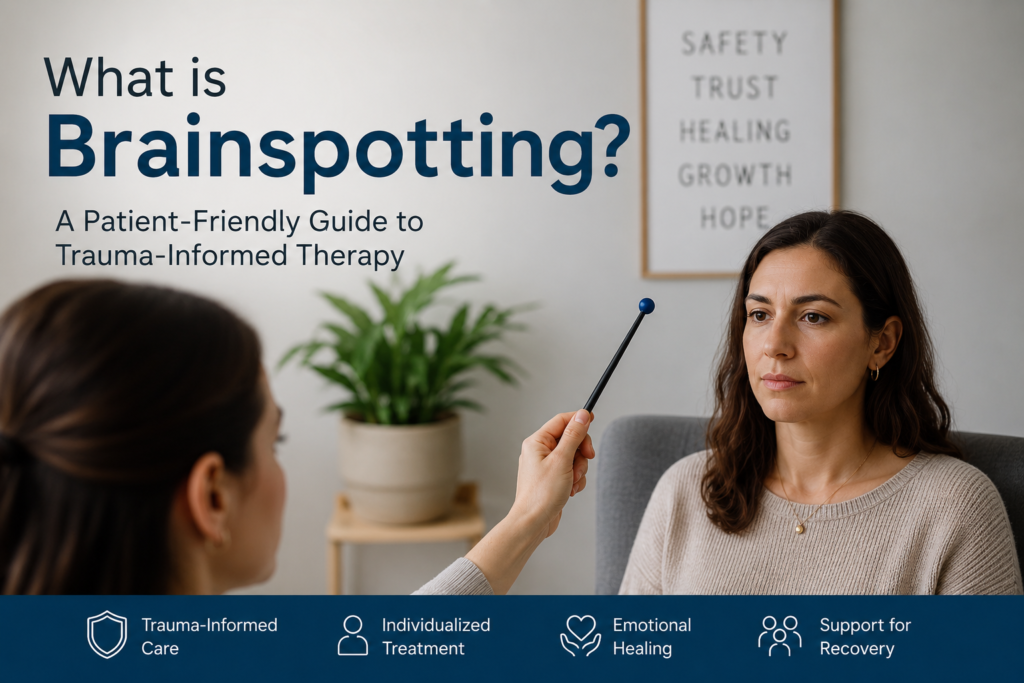
The therapist then helps the client locate a visual position associated with that experience. A pointer or another visual reference may be used as the therapist slowly moves across the client’s field of vision. Once a relevant position is identified, the client may maintain their gaze in that general area while observing whatever emerges. This can include thoughts or memories in addition to emotions, physical sensations, images, or changes in how the original concern feels.
Throughout the process, the therapist remains present, helping create a supportive environment without necessarily directing every moment of the experience.
Why is Brainspotting Used in Trauma-Informed Care?
Trauma can affect people in very different ways. Some individuals experience intrusive memories or clearly recognize the connection between a past event and their current distress. Others may notice anxiety, emotional reactivity, avoidance, relationship difficulties, or physical response without immediately understanding why certain situations affect them so strongly.
The Substance Abuse and Mental Health Services Administration (SAMHSA) describes trauma as experiences perceived as harmful or threatening that can have lasting effects on emotional, physical, social and mental wellbeing.2 SAMHSA also emphasizes that responses to trauma can vary significantly from person to person.3
Trauma-informed treatment takes these differences seriously. Rather than assuming that everyone should process difficult experiences in the same way, trauma-informed care emphasizes safety, trust, collaboration, empowerment, and efforts to avoid retraumatization. Brainspotting for trauma may be incorporated within this broader framework for some patients, particularly when a clinician believes a body-aware, experiential approach could complement other therapeutic work.
Do You Have to Talk About Everything That Happened?
One reason that some people become interested in Brainspotting is that sessions do not necessarily depend on describing every detail of a difficult experience. Traditional talk therapy can involve discussing experiences, beliefs, behaviors, and emotional patterns in depth. Brainspotting may involve less continuous verbal processing during certain portions of a session.
That does not mean that someone will never discuss what they are experiencing. Communication with the therapist remains an important part of treatment, particularly when establishing goals, assessing safety, and determining whether the approach is appropriate.
Instead, Brainspotting allows periods of therapy to focus more heavily on observing internal experiences as they arise. For someone who has struggled to put an experience into words, that different format may be worth discussing with a qualified therapist.
How Does Brainspotting Compare With Other Trauma Therapies?
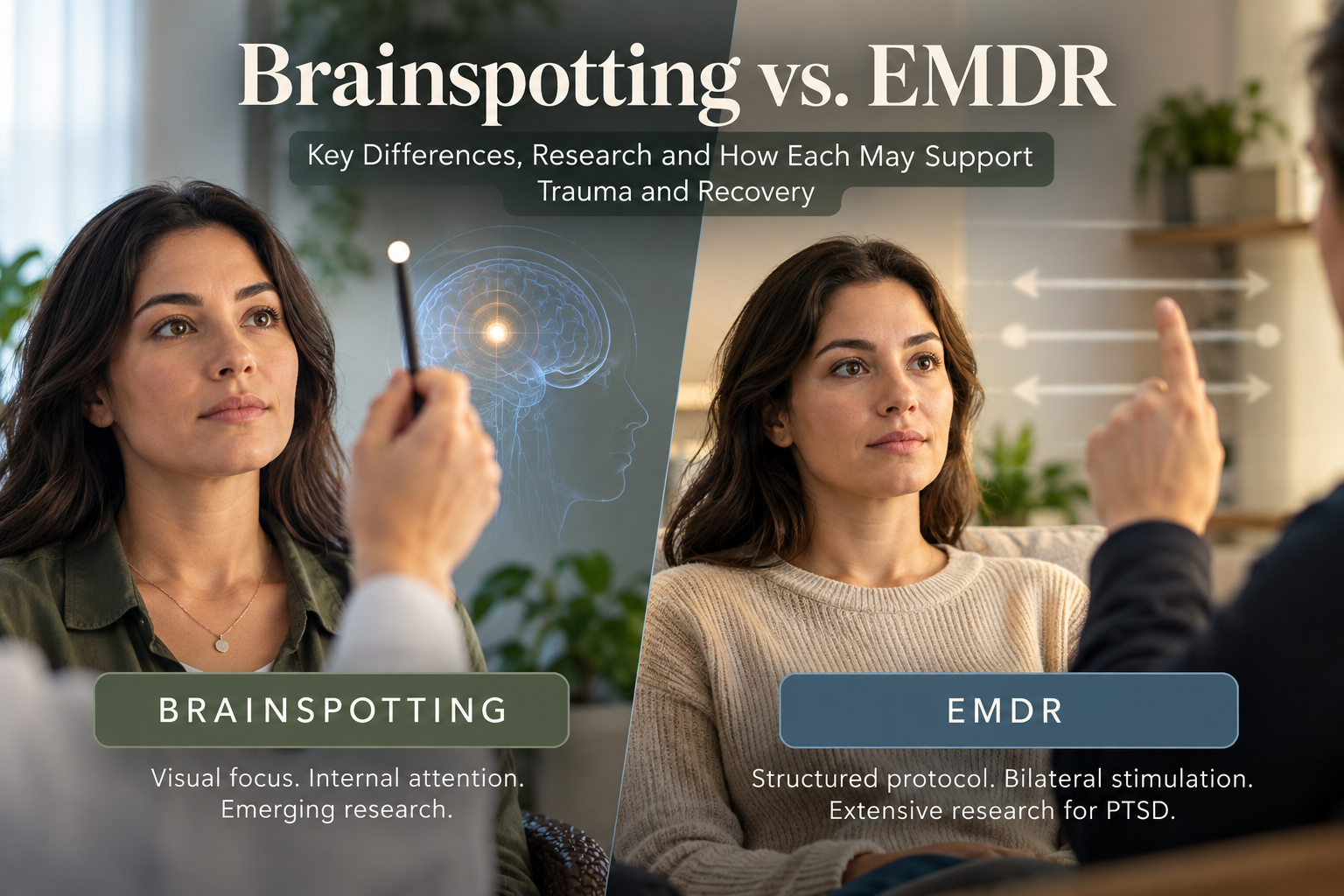
Brainspotting is one of several approaches that therapists may use when helping patients process trauma or emotional distress. Some therapies place greater emphasis on thoughts and beliefs, while others focus on behavior, exposure, mindfulness, physical sensations, or the processing of traumatic memories. EMDR, for example, uses a structured protocol that includes bilateral stimulation while a patient processes distressing material.
Brainspotting shares some historical roots with EMDR but uses sustained visual positioning differently. Importantly, the evidence supporting these approaches is not equal. Brainspotting remains comparatively new, and more research is needed to determine its effectiveness, which conditions it may be most useful for, and how it compares with other established trauma treatments.
This distinction matters when patients are considering Brainspotting treatment. It shouldn’t be presented as a universally superior alternative or a guaranteed solution. Rather, it may be one therapeutic option incorporated into an individualized plan when a qualified clinician believes that it’s appropriate.
Trauma, Emotional Distress and Addiction Recovery
Trauma-informed care can also be relevant within addiction recovery. Trauma does not cause every substance use disorder, and not everyone receiving addiction treatment has a trauma history. However, SAMHSA notes an association between traumatic experiences and behavioral health concerns, including substance use.4
For some people, substances may have become connected with attempts to cope with stress, emotional pain, memories, or difficult internal experiences. When substance use stops, those underlying concerns may still need attention.
SAMHSA’s guidance on trauma-informed behavioral health care emphasizes understanding the impact of trauma when working with people experiencing mental health and substance use concerns.5 In these situations, Brainspotting may be considered as one component of a broader recovery plan. Addiction treatment may also include individual and group therapy, relapse prevention work, mental health care, intensive outpatient services, recovery support, and other evidence-based interventions based on the person’s needs.
How Brainspotting Fits Into a Broader Treatment Plan
No single therapeutic technique can address every aspect of recovery or mental health. This is particularly important to remember when searching for Brainspotting near me. Finding a provider should involve more than determining whether Brainspotting appears on a list of services.
Patients should receive an individualized assessment that considers their symptoms, history, current circumstances, treatment goals, and any substance use or co-occurring mental health concerns. A clinician can then determine whether Brainspotting is appropriate and how it might complement other treatment options.
For example, for someone receiving addiction treatment, Brainspotting may be incorporated alongside counseling and other services rather than becoming the entire treatment plan. This broader approach also allows care to change and evolve over time. Someone’s needs during early recovery may be very different several months later, and therapeutic recommendations should be able to adjust accordingly.
Is Brainspotting Right for You?
Being curious about Brainspotting does not mean that you have to know whether it’s the right therapy before speaking with a professional. A conversation with a qualified clinician can help you understand what the process involves, why it may or may not be recommended for your circumstances, and what alternatives are available.
It’s also reasonable to ask about a provider’s professional credentials and specific training in Brainspotting, as well as the other therapeutic approaches that they use. More importantly, treatment should feel collaborative. Trauma-informed care emphasizes creating an environment built around safety, trust, and patient involvement rather than forcing someone through a predetermined process.
Explore Brainspotting as Part of Your Recovery Journey
Trauma and emotional distress can be difficult to explain, particularly when someone understands intellectually what happened but continues to experience strong emotional or physical reactions. Brainspotting offers one possible way of approaching those experiences differently.
Although research into Brainspotting continues to develop, some clinicians use it as a part of trauma-informed care alongside more established behavioral health and addiction treatment approaches. The goal is not to find a single therapy that promises to fix everything, but to build a treatment plan around the needs of the individual.
At Monarch Recovery Centers, Brainspotting treatment can be incorporated into comprehensive care when clinically appropriate. Our team takes an individualized approach to addiction recovery and emotional well-being, helping patients explore therapeutic options that support their specific needs and goals.
If you are researching Brainspotting therapy in Sacramento or want to learn whether Brainspotting could have a place in your broader treatment plan, contact us today to speak with our team about available services and next steps.
Citations
- Cleveland Clinic. How Brainspotting Therapy Works. https://health.clevelandclinic.org/brainspotting-therapy-and-how-it-works
- Substance Abuse and Mental Health Services Administration. Interagency Task Force on Trauma-Informed Care. https://www.samhsa.gov/mental-health/trauma-violence/trauma-informed-care
- Substance Abuse and Mental Health Services Administration. Trauma-Informed Approaches and Programs.
https://www.samhsa.gov/mental-health/trauma-violence/trauma-informed-approaches-programs - Substance Abuse and Mental Health Services Administration. Trauma and Violence: What Is Trauma and Its Effects?
https://www.samhsa.gov/mental-health/trauma-violence - Substance Abuse and Mental Health Services Administration. TIP 57: Trauma-Informed Care in Behavioral Health Services.
https://www.samhsa.gov/resource/dbhis/tip-57-trauma-informed-care-behavioral-health-services