
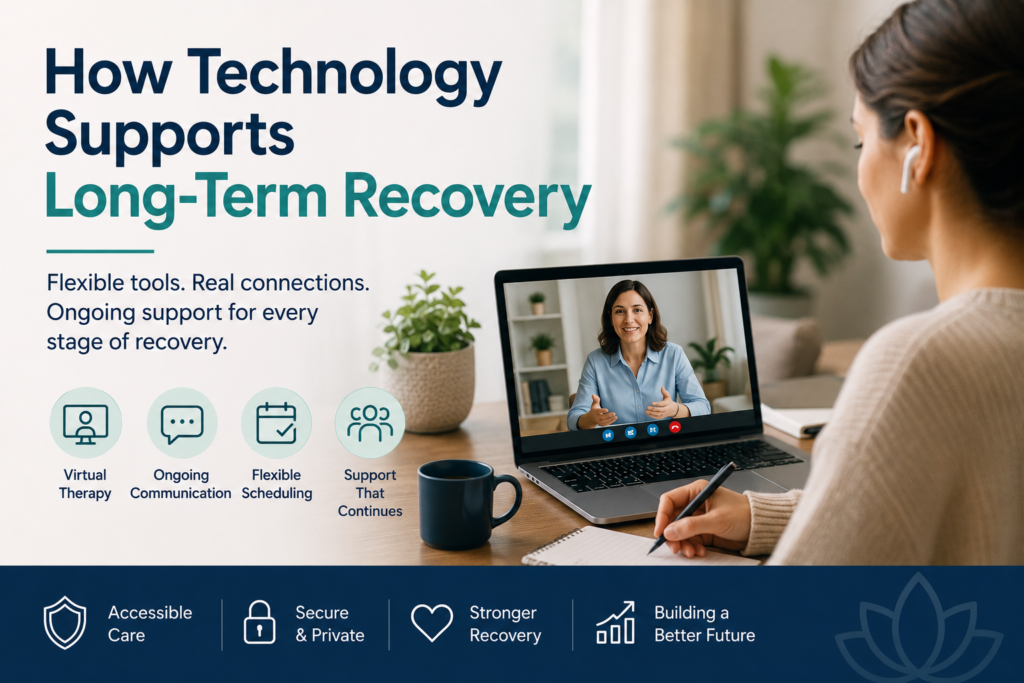
Recovery doesn’t end when someone completes the first stage of addiction treatment. For many people, the months and years that follow involve continuing to build healthy routines, strengthen coping skills, and stay connected to supportive people and resources. Technology has created new ways to maintain those connections.
Virtual therapy sessions, secure communication with treatment providers, online educational resources and hybrid care models can make ongoing recovery support easier to access and integrate into everyday life. Rather than replacing the relationships and clinical care at the center of treatment, technology can help extend that support beyond the walls of a treatment center. This flexibility is part of a broader effort to break down barriers to addiction treatment by addressing practical challenges such as transportation, scheduling and geographic distance.
For those participating in IOP therapy or other forms of outpatient care, technology may also reduce common barriers to treatment such as transportation, work schedules, family responsibilities, and distance from the treatment center. The result is a more flexible approach that can help people remain connected to recovery as their lives and needs evolve.
At Monarch Recovery Centers, technology is one tool within a larger, individualized approach to Sacramento addiction treatment. By combining virtual and in-person services when clinically appropriate, patients can receive ongoing structure and accountability without requiring every part of recovery to happen in the same place.
Quick Answer Summary
Technology can support long-term addiction recovery by making therapy, communication and recovery resources more accessible as a person’s needs change.¹˒² Telehealth and hybrid treatment can reduce barriers such as transportation, distance and scheduling while helping appropriate patients maintain consistent clinical support and accountability.²
Key Takeaways
- Recovery is an ongoing process that can change over time. Treatment and support may need to evolve as a person gains independence, encounters new challenges or moves through different stages of recovery.¹˒³
- Telehealth can make continued treatment easier to access. Virtual services can reduce barriers related to transportation, distance, work and family responsibilities while helping appropriate patients remain connected to care.²
- Technology can support accountability rather than replace it. Scheduled virtual appointments, treatment goals, progress reviews and communication with clinicians can preserve structure within a flexible treatment model.²
- Hybrid treatment combines virtual accessibility with in-person care. When clinically appropriate, combining the two formats can help treatment adapt to changing schedules and circumstances without unnecessarily interrupting care.²˒³
- Technology works best as a tool within comprehensive treatment. Digital resources, telehealth and communication tools can strengthen access and continuity, but they do not replace individualized clinical care or the human relationships central to recovery.²˒³
Recovery Is an Ongoing Process
One of the most important things to understand about addiction treatment recovery is that it does not follow a fixed timeline. The Substance Abuse and Mental Health Services Administration (SAMHSA) describes recovery as a process of change through which people improve their health and wellness, live self-directed lives, and work toward reaching their full potential. That definition recognizes recovery as something that continues to develop rather than a single life event that someone completes.1
The National Institute on Drug Abuse (NIDA) similarly explains that substance use disorders can require ongoing care and that treatment plans should be adjusted as a person’s needs change over time.3. Technology can support this continuity by giving people more ways to remain engaged with care as they transition between different stages of recovery.
Virtual Sessions Can Make Continued Care More Accessible
One of the clearest ways that technology has changed addiction treatment is through telehealth. Virtual appointments allow appropriate patients to meet with clinicians through secure video platforms rather than traveling to treatment centers for every session. For someone balancing employment, parenting, school or other responsibilities, eliminating even a few commutes each week can make treatment significantly easier to maintain.
SAMHSA recognizes telehealth as a tool that can expand access to behavioral health services and support continuity of care, particularly when practical barriers make traditional appointments difficult.2 Through telehealth addiction treatment, patients may be able to maintain regular therapeutic contact even as their schedules or circumstances change. That accessibility matters because long-term recovery depends in part on staying connected to appropriate support, not simply receiving intensive care at the beginning.
Technology Can Help Maintain Accountability
Flexibility does not have to mean less accountability. Virtual care can still involve scheduled appointments, individualized treatment goals, regular progress reviews, and ongoing communication with clinicians. Patients are expected to participate actively in treatment whether a session occurs in an office or through a secure online platform. This structure can be particularly valuable as someone becomes more independent in recovery.
Early treatment may provide external accountability. Over time, patients begin taking greater responsibility for recognizing triggers, using coping strategies, maintaining healthy routines, and reaching out when they need additional support. Technology can help bridge those stages by keeping professional support accessible while patients practice greater independence in their daily lives. For people participating in intensive outpatient therapy, that combination of independence and continued clinical connection can provide an important middle ground.
Flexible Communication Can Strengthen Continuity
Recovery challenges don’t conveniently appear just before a scheduled therapy appointment. A stressful week at work, family conflict, changes in living circumstances or an unexpected transition can affect how someone feels and responds in recovery. While technology should not be viewed as a substitute for emergency or crisis services, appropriate communication tools can help patients stay connected to their treatment team between scheduled visits.
Depending on the program and clinical plan, this might include secure patient portals, appointment reminders, digital scheduling tools, or other approved methods of communication. These systems can make the practical side of treatment easier to manage. They can also reduce the likelihood that a forgotten appointment, scheduling conflict or change in circumstances leads to a longer interruption in care.
Digital Resources Can Reinforce What Happens in Therapy
Technology can also extend learning beyond formal treatment sessions. Educational materials, recovery exercises, digital worksheets, guided practices and other clinician-recommended resources can give patients opportunities to revisit concepts discussed during therapy.
Someone working on identifying triggers, for example, may use a digital journal or worksheet to identify patterns throughout the week. Another may refer back to educational materials about coping strategies before navigating a stressful situation. These tools are most useful when they complement an individualized treatment plan rather than attempting to replace professional care.
There is no shortage of recovery information online, but more information is not always better. Patients should look to their treatment providers for guidance about trustworthy resources that truly align with their overall recovery goals and treatment plan.
Hybrid Care Combines Digital Access With In-Person Connection
Technology doesn’t require recovery to become completely virtual. In fact, for many people, a hybrid approach offers a useful balance between the accessibility of telehealth and the benefits of face-to-face care. A patient might participate in some counseling sessions while attending other services in person. The exact combination can change depending on clinical needs, progress, scheduling, and the type of service being provided.
This model can be particularly helpful when life changes unexpectedly. A new work schedule, transportation problem, move, or family responsibility does not necessarily have to result in losing contact with treatment altogether. Instead, virtual treatment options can provide another route to continued support when clinically appropriate.
Technology Can Help Reduce Transportation and Distance Barriers
For some people, accessing care has less to do with motivation and more to do with geography. Someone may live far away from an addiction treatment provider, lack reliable transportation, or depend on public transit that makes frequent appointments difficult. These challenges can become particularly significant when treatment requires several sessions each week.
Technology cannot eliminate every barrier, but it can reduce the number of times that a patient needs to travel for services that can be appropriately provided virtually. That flexibility can make an intensive outpatient program more accessible to individuals who might otherwise struggle to attend consistently. For patients who still require in-person services, combining virtual and onsite care may also reduce the overall transportation burden while preserving appropriate clinical support.
Technology Is a Tool, Not a Replacement for Treatment
As useful as technology can be, long-term recovery cannot be reduced to video calls, apps, reminders or online resources. The relationships that people build with clinicians, peers, family members and other supportive individuals remain central to recovery. Technology is most valuable when it helps strengthen or preserve those connections rather than attempting to replace them.
Virtual care is also not appropriate for every person or at every stage of treatment. Some individuals may require medical supervision, residential care, or other services that cannot safely or effectively be delivered remotely.
NIDA emphasizes that treatment should be individualized and adjusted to a person’s needs over time.3 That principle should guide decisions about technology as well. The question is not whether digital care is universally better or worse than traditional treatment. Rather, it’s whether a particular tool helps an individual receive the appropriate care consistently.
Stay Connected to Recovery as Life Changes
Long-term recovery involves change – jobs shift, families grow, schedules become busier, people move, and new challenges inevitably emerge. Treatment that worked during one stage of recovery may need to evolve during another. Technology gives patients and treatment providers more options for navigating those changes without automatically losing continuity of care.
At Monarch Recovery Centers, we use flexible treatment approaches to help patients remain connected to appropriate support as their needs evolve. Through IOP rehab and intensive outpatient services, virtual sessions and telehealth addiction treatment, our team can build individualized plans that balance accountability, accessibility, and real-world responsibilities.
If you are exploring Sacramento addiction treatment or looking for a more flexible way to stay connected to recovery support, contact us today. Recovery continues long after the first stage of treatment, and the right combination of clinical care, human connection and technology can help make ongoing support easier to access along the way.
Citations
- Substance Abuse and Mental Health Services Administration (SAMHSA). Recovery and Recovery Support.
https://www.samhsa.gov/find-support/health-care-or-support/support-group-or-local-program/recovery - Substance Abuse and Mental Health Services Administration (SAMHSA). Telehealth for the Treatment of Serious Mental Illness and Substance Use Disorders.
https://library.samhsa.gov/product/telehealth-treatment-serious-mental-illness-and-substance-use-disorders/pep21-06-02-001 - National Institute on Drug Abuse (NIDA). Principles of Drug Addiction Treatment: A Research-Based Guide (Third Edition).
https://nida.nih.gov/publications/principles-drug-addiction-treatment-research-based-guide-third-edition