When you’re standing at the edge of change, exhausted, afraid or unsure, those first steps into treatment can feel impossible. What will it be like? Will people understand you? Will you feel safe or just more overwhelmed?
At Monarch Recovery Centers, we know the courage that it truly takes to walk through the door, and we want you to know this: the fear does not last. The first week, although unfamiliar, is where relief begins. It’s where structure replaces chaos, your story starts to be heard, and healing begins to feel real.
If you’re thinking about taking the next step in recovery and entering a treatment center but are unsure of what to expect, we’re happy to help. Keep reading to discover what to expect in your first week inside a residential treatment program. Whether you’re searching for treatment centers near you or feeling nervous about taking the next step, we’ll help inform you about what happens when you choose care over chaos and why your first week is one of the most important parts of your recovery journey.
Quick Answer Summary
The first week in treatment is designed to provide stability, safety, and structure during a time that often feels uncertain. Most residential treatment programs begin with assessments, orientation, therapy, routine-building, and personalized care planning. Research shows that early engagement, supportive relationships, structured treatment environments, and individualized care plans help improve treatment participation and support long-term recovery outcomes.
Key Takeaways
- The first week of treatment focuses on stabilization, assessment, and helping individuals feel safe and supported as they begin recovery.¹
- Structured daily routines can help reduce stress, create predictability, and establish healthy habits during early recovery.²
- Building trust with therapists, case managers, and peers is an important part of successful treatment engagement and long-term recovery.¹
- Individualized treatment plans allow care teams to address substance use, mental health concerns, trauma history, and personal recovery goals.²
- Early participation in therapy and recovery activities can strengthen motivation, accountability, and treatment retention.³
- Recovery is a gradual process, and meaningful progress often begins with small improvements in routine, sleep, emotional regulation, and connection.¹
- Comprehensive treatment programs often combine individual counseling, group therapy, family support, and ongoing recovery planning.²³
- A positive first treatment experience can help build confidence and create momentum for long-term healing and recovery success.¹
A Safe, Grounded Arrival
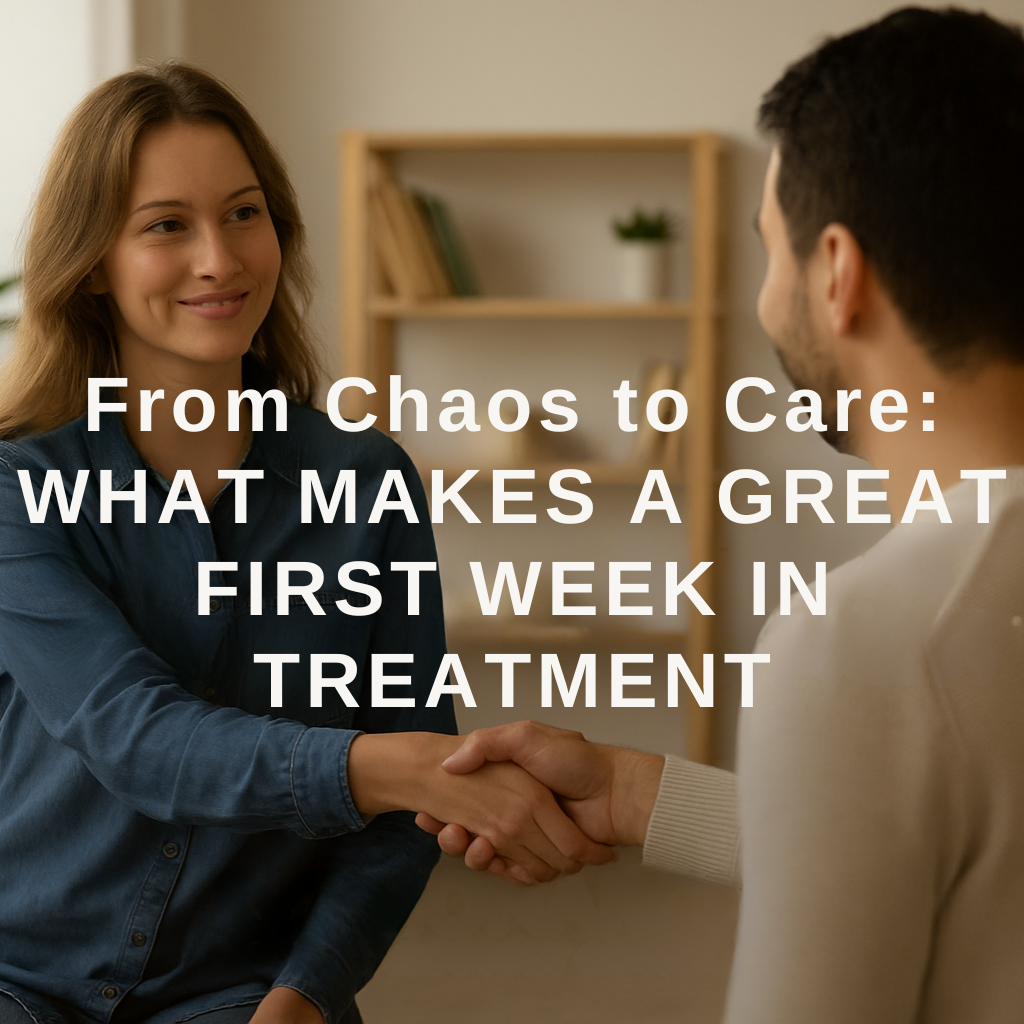
The first day in any treatment center is all about stabilization. You’ll be welcomed by staff who are trained not just in procedure but in compassion. Monarch’s team knows how to meet people in vulnerable moments with calm, dignity and non-judgment. Expect to be greeted, oriented to the space, and to unpack (both literally and emotionally) in a peaceful, private room. You will also go over your medical and psychological intake with a clinician during your first week. Finally, you’ll meet others in the house and get a feel for the daily rhythm.
All in all, there’s no pressure to be ‘on’ and no demand for instant vulnerability. Just structure, calm, and space to breathe. That’s what your first day should offer at your treatment facility or center.
An Establishing Rhythm with Structure That Soothes
In the days that follow, your schedule will begin to take shape. At Monarch Recovery Centers, days are structured to provide enough movement to keep you engaged without overwhelming you. A typical day might include morning check-ins and mindfulness, individual or group therapy, time for rest, meals and reflection, and evening meetings or house activities.
Structure is a powerful antidote to the chaos of addiction. It allows your nervous system to begin settling. Monarch’s spaces, designed with intention and comfort in mind, help reinforce that sense of peace and safety.
Building of Trust Through Real Connection
Your first week of treatment is all about meeting people. This includes your treatment team, your housemates, and maybe for the first time, yourself. You’ll connect with a primary therapist who will walk you through your care plan and case managers to help with logistics like work leave and insurance. In addition, you’ll connect with peers in group therapy who understand where you’ve been. At Monarch, relationships are the foundation of healing. That starts day one, not through forced vulnerability but through honest, helpful connection.
Creation of a Personalized Care Plan
By midweek, your team will begin crafting a treatment plan that is tailored specifically to you. That means addressing mental health concerns with dual diagnosis support if needed, in addition to exploring identity, trauma history, and family dynamics. This will also involve identifying immediate recovery goals and future transitions.
Unlike some programs, Monarch Recovery Centers doesn’t offer a one-size-fits-all approach. We create a residential treatment experience that adapts to you entirely, taking your past, your values, and your future into account.
Small Wins and Big Relief
By the end of your first week, you may notice that you’re sleeping more deeply, you’re laughing a little again, and you’re beginning to feel hope. That’s not a coincidence. Monarch’s approach is built to create momentum. We focus on small, consistent steps that build confidence. We don’t expect transformation overnight; we build it day by day.
Your First Week Can Be the First Real Step Toward Peace
At the end of the day, always remember that you deserve a week that heals. So much of recovery hinges on that early experience. A good first week doesn’t just introduce you to a program – it helps reintroduce you to yourself.
At Monarch Recovery Centers, we’ve designed every detail of our treatment facility experience to make the first week safe, structured and filled to the brim with care. From a calming design to attentive staff, from personalized therapy to peer connection, we ensure that your entry into recovery feels nothing like the chaos that you’ve left behind.
If you’re searching for treatment centers near me and feeling uncertain, always know that the fear is temporary. The healing is real. And your first week? It could be the beginning of everything. Ready to get started? Contact us today.
Citations
- Substance Abuse and Mental Health Services Administration (SAMHSA). Recovery and Recovery Support. https://www.samhsa.gov/recovery
- National Institute on Drug Abuse (NIDA). Treatment and Recovery. https://nida.nih.gov/publications/drugs-brains-behavior-science-addiction/treatment-recovery
- National Center for Biotechnology Information (NCBI). Principles of Effective Treatment and Recovery Support Services. https://www.ncbi.nlm.nih.gov/books/NBK424861/