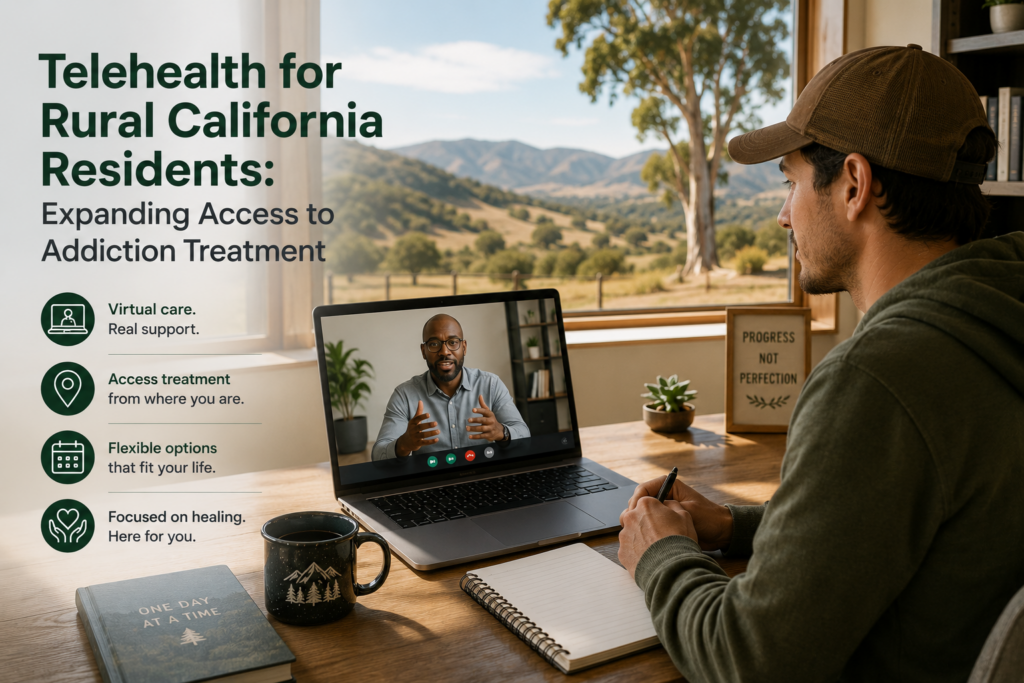
For many Californians living in rural communities, accessing addiction treatment can be more challenging than simply deciding to ask for help. Long travel distances, limited public transportation, fewer local treatment providers, and demanding work or family responsibilities can make it all difficult to attend appointments consistently.
These barriers can leave people feeling as though quality care is only available in larger cities. In reality, advances in telehealth have made it possible for many individuals to receive structured addiction treatment without traveling long distances for every appointment.
Virtual care has expanded access to behavioral healthcare across California, allowing more people to stay connected to treatment while continuing to manage their everyday responsibilities. For individuals enrolled in virtual IOP, this can significantly reduce the time and expense associated with treatment while allowing them to remain connected to their clinical team.
At Monarch Recovery Centers, we believe that where someone lives should never determine whether or not they can receive compassionate, evidence-based care. Through telehealth addiction treatment and intensive outpatient therapy (IOP), we help patients throughout California access recovery services that fit their lives while supporting long-term healing.
Quick Answer Summary
Can rural California residents receive addiction treatment through telehealth?
Yes. Telehealth allows many rural California residents to access structured addiction treatment, counseling, and intensive outpatient therapy without traveling long distances. Virtual care helps reduce transportation and scheduling barriers while maintaining consistent clinical support and accountability.¹²³
Key Takeaways
- Telehealth expands access to addiction treatment for people living in rural California by reducing travel and transportation barriers.²³
- Virtual intensive outpatient therapy provides structured, individualized care while allowing patients to remain in their communities.¹³
- Consistent participation in therapy supports long-term recovery by strengthening accountability and healthy coping skills.¹²
- Recovery is most effective when treatment is individualized and adapted to each person’s changing clinical needs.¹
- Flexible telehealth services make it easier for rural residents to receive compassionate, evidence-based addiction treatment without sacrificing quality of care.¹²³
Rural Communities Often Face Unique Challenges
Living in a rural community offers many advantages, but accessing specialized healthcare can sometimes be more difficult than it is in metropolitan areas. Treatment centers may be located hours away, requiring significant travel for every appointment, while public transportation may be limited or unavailable. Additionally, weather, road conditions, and work schedules can make long commutes even more challenging. Individuals working in agriculture, construction, healthcare or other industries common in rural areas may also have schedules that make weekday travel difficult. These barriers don’t reflect a lack of motivation to seek treatment.
Transportation is only one of several practical barriers that can make recovery feel out of reach. Work schedules, childcare responsibilities, financial concerns, and access to care can all influence whether someone begins treatment. Our guide to Breaking Down Barriers to Addiction Treatment explores these challenges and the resources available to help people access recovery with greater confidence.
According to the Substance Abuse and Mental Health Services Administration (SAMHSA), improving access to behavioral healthcare requires reducing the primary obstacles that prevent people from engaging in care.1 Telehealth has become one of the most effective ways to address these challenges by making treatment available regardless of where someone lives.
Telehealth Brings Addiction Treatment Closer to Home
One of the greatest strengths of telehealth addiction treatment is that it reduces the need for frequent travel. Instead of driving long distances for every counseling session or recovery meeting, many patients can participate in scheduled appointments from home or another private location using secure video technology.
For individuals enrolled in intensive outpatient programs, this can significantly reduce the time and expense associated with treatment while allowing them to remain connected to their clinical team.
SAMHSA notes that telehealth has expanded access to behavioral healthcare by supporting continuity of care and helping patients overcome transportation and scheduling barriers.2 By reducing travel demands, telehealth allows many people to focus more energy on recovery itself.
Structure Remains an Essential Part of Recovery
Virtual care is sometimes misunderstood as being less structured than traditional treatment. In reality, patients participating in intensive outpatient therapy continue following individualized treatment plans that include scheduled counseling sessions, recovery education, progress reviews, and ongoing communication with their clinicians.
The format may be different, but the expectations remain the same. Recovery continues to evolve through consistent participation, honest communication, and active engagement in therapy. Telehealth simply changes how services are delivered, not the level of commitment required. For many individuals living in rural California, this combination of flexibility and accountability makes consistent participation much more realistic.
Consistency Supports Long-Term Recovery
Recovery is rarely defined by one significant milestone. Instead, lasting progress is often built through consistent engagement over weeks, months, and years. Attending therapy regularly, discussing challenges openly, practicing healthy coping strategies and maintaining communication with treatment providers all contribute to long-term success.
Transportation barriers and lengthy travel times can make maintaining this consistency difficult. Telehealth helps reduce those disruptions by making appointments easier to attend, even when daily life becomes busy. Patients facing transportation challenges may also benefit from learning how flexible addiction treatment helps remove barriers to care.
The National Institute on Drug Abuse (NIDA) emphasizes that effective addiction treatment should provide ongoing support and be adjusted to meet an individual’s changing needs throughout recovery.3 When treatment remains accessible, patients are often better positioned to remain engaged over time.
Recovery Happens Where Life Happens
One advantage of outpatient treatment is that patients continue living their everyday lives while participating in care. They return to work after therapy sessions, care for their families, manage household responsibilities, and maintain relationships and community involvement.
These experiences also become opportunities to practice recovery skills in real-world situations. When challenges arise, patients can discuss them during future therapy sessions, reflect on their responses and continue strengthening healthier coping strategies. This connection between treatment and everyday life often helps recovery become more sustainable because new skills are practiced in the environments where they will ultimately be used.
Flexible Care Doesn’t Mean One-Size-Fits-All
Although telehealth has expanded access to care, it’s not appropriate for every patient or every stage of recovery. Some individuals require medical supervision during withdrawal, more intensive behavioral health services or residential treatment before transitioning into outpatient care. Others benefit from a hybrid approach that combines virtual and in-person services. A comprehensive clinical assessment helps determine which level of care best matches each person’s needs.
If you are searching online for an IOP program in Sacramento, it’s important to choose a provider that develops individualized treatment plans rather than offering the same approach to every patient. After all, recovery is strongest when treatment reflects the person’s circumstances, goals, and clinical needs.
Making Recovery Accessible Across California Through Telehealth Addiction Treatment
Everyone deserves the opportunity to receive high-quality addiction treatment, regardless of where they live. Telehealth has helped reduce the distance between patients and providers, making it possible for more Californians to receive consistent care while remaining connected to their communities, families and responsibilities. For rural residents, this increased accessibility can help remove barriers that once made treatment feel out of reach.
At Monarch Recovery Centers, we are committed to making recovery more accessible through telehealth addiction treatment, flexible outpatient services and personalized care plans. Whether you’re looking for intensive outpatient program services or exploring treatment options from a rural California community, our team can help you find a path that supports your recovery and your everyday life.
Contact us today to learn more about our telehealth services and how flexible outpatient care can help you begin your recovery wherever your home is.
Citations
- Substance Abuse and Mental Health Services Administration (SAMHSA). Recovery and Recovery Support. SAMHSA explains that improving recovery outcomes includes reducing barriers to behavioral healthcare while supporting health, wellness and long-term quality of life. https://www.samhsa.gov/recovery
- Substance Abuse and Mental Health Services Administration (SAMHSA). Telehealth for the Treatment of Serious Mental Illness and Substance Use Disorders. SAMHSA explains how telehealth expands access to behavioral healthcare by reducing transportation and scheduling barriers while improving continuity of care. https://store.samhsa.gov/product/telehealth-treatment-serious-mental-illness-substance-use-disorders/pep21-06-02-001
- National Institute on Drug Abuse (NIDA). Principles of Drug Addiction Treatment: A Research-Based Guide (Third Edition). NIDA emphasizes that effective addiction treatment should be individualized, provide ongoing support and evolve as each person’s recovery needs change. https://nida.nih.gov/publications/principles-drug-addiction-treatment-research-based-guide-third-edition