Recovery often begins with one major goal: stop using substances and begin healing. But once treatment ends or sobriety begins to stabilize, many people discover a new challenge waiting on the other side. After years of addiction-related instability, rebuilding confidence in everyday life can feel unexpectedly difficult.
Substance use can affect so much more than just physical health. Over time, it can disrupt routines, relationships, employment, financial responsibility, and a person’s sense of self. Responsibilities may have become difficult to maintain, trust may need rebuilding, and daily structure can feel unfamiliar after years of living in survival mode. That reality is one reason that early recovery can feel both exciting and overwhelming at the same time.
Recovery is often strongest when people have ongoing support after treatment rather than attempting to immediately navigate every challenge alone. According to the Substance Abuse and Mental Health Services Administration (SAMHSA) Recovery Support Resources, recovery support systems play an important role in helping individuals sustain long-term progress and improve overall well-being.
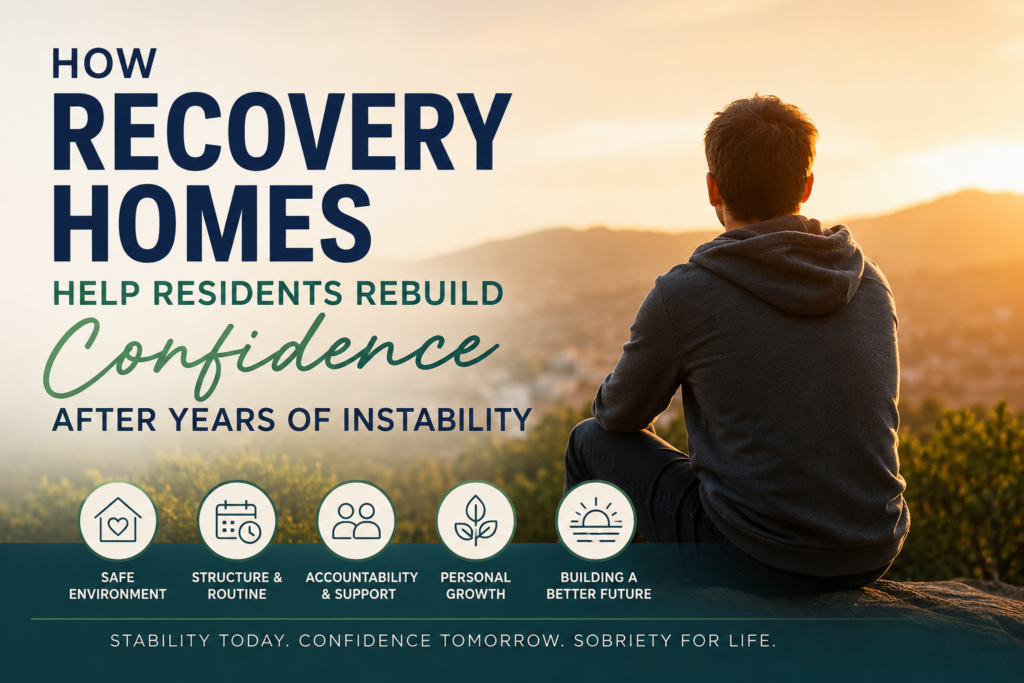
For many people, recovery homes create a valuable bridge between treatment and fully independent living. These environments offer structure, accountability, and support while also helping residents to gradually rebuild confidence and stability in their daily lives. Rather than simply providing housing, recovery homes often create opportunities for personal growth during one of the most important stages of recovery. Keep reading to discover more about how recovery homes can help residents rebuild their confidence and heal after years of instability.
Quick Answer Summary
Recovery homes help residents rebuild confidence after years of instability by providing structure, accountability, emotional support and gradual independence. These environments create stability during early recovery while helping individuals rebuild routines, strengthen daily living skills and develop healthier coping mechanisms. Supportive sober living environments may also improve long-term recovery outcomes by reducing stress and promoting consistency.
Key Takeaways
- Addiction often impacts far more than substance use itself, disrupting routines, relationships, employment, finances and emotional stability over time.²
- Early recovery can feel emotionally overwhelming because individuals are relearning how to manage responsibilities, stress and routines without substances.²
- Recovery homes provide structure and predictability through routines, accountability and shared responsibilities, helping residents rebuild stability gradually.¹
- Confidence in recovery typically develops through repeated small successes, such as maintaining routines, showing up consistently and following through on goals.²
- Recovery housing can help bridge the gap between treatment and full independence by offering support without removing personal responsibility.³
- Emotional safety and peer support in sober living environments may reduce isolation and help residents continue progressing through setbacks and challenges.¹
- Luxury sober living environments can support recovery by reducing stressors and creating calm, wellness-focused spaces that support emotional regulation and healing.¹
- Research suggests that recovery housing environments may positively contribute to long-term recovery outcomes and sober living stability.³
Addiction Often Creates More Than Substance Dependence
Unfortunately, addiction rarely impacts only one area of life. Over time, instability can begin affecting nearly everything surrounding a person. Work schedules can become inconsistent, relationships may experience strain, and daily responsibilities may gradually fall away as substance use becomes more central.
Many individuals entering recovery have spent months or years living in highly unpredictable circumstances. Days may have revolved around obtaining substances, managing withdrawal symptoms, avoiding consequences or simply trying to get through one day at a time.
After living in that kind of environment for extended periods, stability itself can sometimes feel unfamiliar. Simple responsibilities such as maintaining a routine, attending appointments consistently, managing finances or creating healthy habits can suddenly feel much larger than expected.
This experience is not uncommon. According to the National Institute on Drug Abuse (NIDA) Treatment and Recovery Overview, recovery often involves improving multiple areas of life beyond substance use itself, including mental health, relationships, employment, and overall quality of life.2
Healing frequently involves more than abstinence. Rather, it often includes rebuilding confidence in daily life.
Why Confidence Can Feel Fragile During Early Recovery
Early recovery can create a difficult emotional balancing act. People are often making significant positive changes while simultaneously confronting uncertainty. They may be adjusting to sobriety while repairing relationships, returning to work, managing emotions differently, and relearning routines that used to feel automatic.
Even positive changes can create stress. Someone may begin questioning whether they can handle daily responsibilities without substances. They may wonder whether previous mistakes define them or whether they are capable of maintaining long-term change.
Confidence during recovery often develops gradually through experience rather than appearing all at once. People frequently rebuild confidence by creating small moments of success, like showing up for meetings consistently or getting to work on time, as well as managing stress in healthier ways and actually following through on goals. These moments may seem small from the outside, but they often represent significant internal progress.
How Sober Living Creates Stability Through Structure
Structure can play an important role in early recovery because stability often develops through repetition. A sober living environment typically provides routines and expectations designed to support accountability and consistency. While every residence differs, many sober living homes include expectations around house responsibilities, curfews, recovery participation, and maintaining a substance-free space.
These routines may appear simple, but they can create an important foundation for true growth. Predictability often creates a sense of safety, especially for those coming from environments marked by instability or chaos. Regular schedules, shared responsibilities, and clear expectations can help residents begin establishing rhythms that support recovery.
Research supported by the National Institute of Health Recovery Housing Overview suggests that recovery housing environments may contribute positively to sober living outcomes and long-term recovery support. Over time, the consistency found in these programs will help transform new behaviors into new healthy habits.
Recovery Homes Provide Accountability Without Complete Independence
One of the challenges that many people face after treatment is transitioning directly from highly structured care into total independence. That shift can sometimes feel abrupt.
Treatment programs often provide frequent support, structured schedules, and regular therapeutic contact. Returning immediately to independent living can create an environment where people suddenly become responsible for navigating stressors or triggers without the same level of support.
Recovery houses can help bridge that gap. Rather than removing structure entirely, they provide a middle ground where residents continue practicing recovery skills while increasing independence. Individuals maintain greater personal responsibility while still benefiting from a supportive environment designed around accountability. This transition can allow confidence to develop at a pace that feels sustainable.
Emotional Safety Can Support Personal Growth
Recovery is not only a physical process, but an emotional one as well. Many individuals entering early recovery are learning how to experience emotions without relying on substances to numb discomfort or avoid stress. During that process, emotional safety can become incredibly important.
Living in a sober living environment surrounded by individuals pursuing similar goals may reduce feelings of isolation. Shared experiences create understanding and foster connection during moments that might otherwise feel overwhelming. Recovery can feel less intimidating when people realize that they aren’t navigating every challenge alone. Emotional support doesn’t eliminate difficulties, but it can create space for people to process setbacks, celebrate progress, and continue moving forward.
The Role of Luxury Sober Living in Recovery Support
Supportive environments can often look different for every individual. For some people, luxury sober living environments provide additional comfort and stability during the recovery process. These settings prioritize thoughtfully designed spaces, privacy, wellness-focused amenities, and environments intended to reduce unnecessary stressors.
While recovery itself remains the priority, physical surroundings can still influence well-being. A calm, welcoming environment may help residents fully focus on healing and rebuilding routines without distractions that can create additional stress. Luxury sober living is not about comfort replacing recovery work, but rather creating an environment that can create an environment that supports the recovery process itself. For many residents, feeling physically safe and emotionally supported can contribute positively to confidence and long-term stability.
Rebuild Confidence with Monarch Sober Homes
Confidence rarely returns overnight. For many individuals recovering after years of instability, confidence develops gradually through routine, accountability, and repeated experiences of showing up for themselves in new ways. Recovery homes can help provide an important space for that process to unfold. Through structure, emotional support and opportunities to practice daily living skills, sober living homes often help residents build a stronger sense of stability while adjusting back into everyday life.
At Monarch Recovery Centers, we understand that recovery continues long after the initial treatment ends. Healing often involves redefining routines, rediscovering independence and creating a foundation that truly supports long-term success.
If you or someone you love is exploring recovery homes, sober living homes, or luxury sober living options, we’re happy to help. Reach out to us today to learn more about these supportive environments that are designed to help residents continue growing through their recovery.
Citations
- SAMHSA Recovery Support Resources: https://www.samhsa.gov/substance-use/recovery
- National Institute on Drug Abuse (NIDA) Treatment and Recovery Overview: https://nida.nih.gov/publications/drugs-brains-behavior-science-addiction/treatment-recovery
- J Psychoactive Drugs. Author manuscript; available in PMC: 2008 Oct 1. Published in final edited form as: J Psychoactive Drugs. 2008 Jun;40(2):153–159. doi: https://doi.org/10.1080/02791072.2008.10400625