Recovery from fentanyl addiction often begins with a major milestone: completing detox, stabilizing physically or finishing an initial treatment program. But while those first steps are important, they are rarely the end of the true recovery process. For many people, the earliest stages of recovery can also be among the most challenging.
The weeks and months immediately following fentanyl use often involve much more than just physical healing. Individuals may be managing intense cravings, emotional changes, disrupted routines and the high stress of attempting to return to everyday life. During this period, maintaining progress can feel difficult, even for those who are deeply committed to recovery.
Fentanyl presents unique challenges compared to many other substances due to its potency and impact on the brain and body. Opioid use disorder is considered a chronic but treatable condition that often requires ongoing care and support rather than a single intervention. According to the CDC, long-term treatment and continued recovery support are often important components of successful outcomes.1
That reality is why ongoing treatment matters. Effective fentanyl addiction treatment often extends well beyond initial stabilization and focuses on helping patients develop structure, rebuild healthy routines and maintain accountability during daily life. For individuals exploring options like an intensive outpatient program or substance abuse treatment Sacramento services, continued support can help create a stronger foundation during one of recovery’s most vulnerable stages. Keep reading to discover more about this type of program and what makes fentanyl relapse risk so high during the early stages of recovery.
Quick Answer Summary
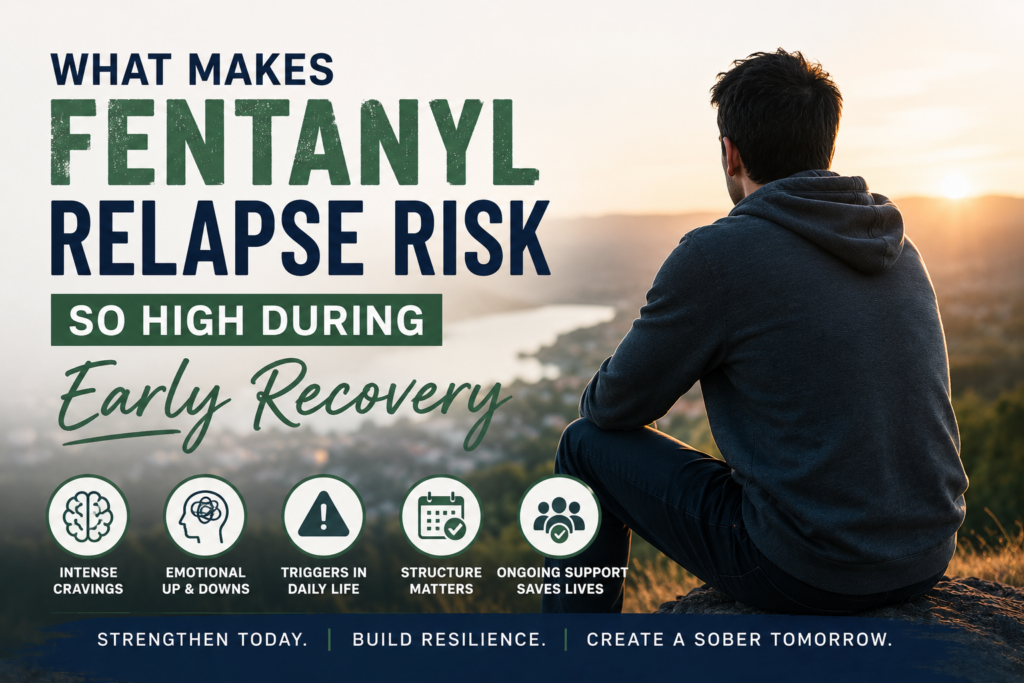
Fentanyl relapse risk is especially high during early recovery because cravings, emotional instability, stress sensitivity and learned behavioral patterns often continue long after detox ends. Ongoing treatment through intensive outpatient therapy (IOP), accountability and structured support can help individuals strengthen coping skills, rebuild routines and reduce relapse risk during this vulnerable stage of recovery.
Key Takeaways
- Fentanyl is a highly potent synthetic opioid that has significantly contributed to rising overdose deaths and opioid-related health challenges across the United States.²
- Early recovery from fentanyl addiction often involves intense cravings, emotional instability, disrupted routines and increased stress sensitivity even after physical withdrawal symptoms improve.¹³
- Detox is an important first step, but recovery from opioid use disorder frequently requires long-term treatment, continued support and structured care.¹⁴
- Cravings and psychological symptoms may continue long after detox because addiction often becomes connected to emotional patterns, environments and daily routines.³⁴
- Recovery frequently involves rebuilding healthy habits, emotional coping skills, supportive relationships and stable routines over time.⁴
- Structured programs like intensive outpatient therapy (IOP) help patients continue developing recovery skills while gradually reintegrating into daily life.¹
- Accountability through regular therapy, group support and ongoing treatment can help identify relapse warning signs before they become more difficult to manage.¹⁴
- Local substance abuse treatment Sacramento programs and IOP Sacramento options may improve treatment consistency by making ongoing care more accessible and sustainable.¹
Why Early Recovery Can Feel Especially Difficult After Fentanyl Use
Recovery from any opioid addiction can bring challenges, but fentanyl often introduces additional complexities. Fentanyl is a synthetic opioid that is significantly more potent than morphine and has become a major driver of overdose deaths across the United States. Complicating matters further, illicit fentanyl is frequently mixed into other substances, making exposure and dependence increasingly difficult to predict.2
Over time, repeated fentanyl use can create significant physical dependence. When use stops, the body begins adjusting, often resulting in withdrawal symptoms and powerful cravings that can be difficult to manage without support. Symptoms may include anxiety, sleep disruption, physical discomfort, emotional instability, restlessness and strong urges to return to use.3
However, the physical symptoms are only part of the challenge. Many individuals in early recovery describe feeling emotionally exposed once fentanyl use stops. Emotions that may have been numbed or avoided return all at once; stress can feel heavier, and frustration tolerance may become lower. In addition, everyday situations that once seemed manageable may suddenly feel overwhelming.
During this stage, individuals are often navigating recovery while simultaneously learning how to cope without relying on a familiar survival mechanism. This adjustment can take time.
Cravings Often Continue Long After Detox Ends
One common misconception about recovery is that once withdrawal symptoms improve, the hardest part is over. Detox can be an important first step because it addresses immediate physical stabilization. But recovery doesn’t end when withdrawal symptoms subside. Cravings and psychological symptoms frequently continue well beyond the acute withdrawal period, particularly with opioid use disorders. Research suggests that stress sensitivity and persistent urges to use may remain present long after physical symptoms begin improving.4
Daily life also tends to return quickly, with work obligations resuming and family dynamics continuing. Unfortunately, responsibilities and stressors don’t take a pause while someone heals.
Early recovery often requires people to manage these realities while their brains and bodies continue adjusting. A difficult conversation, an unexpected stressor, or even a familiar place or routine can trigger powerful emotional responses.
It’s important to remember that these moments do not necessarily signal failure. Instead, they reflect how closely addiction can become tied to everyday experiences and why ongoing support often plays such an important role during recovery.
Fentanyl Use Becomes Connected to Daily Routines & Emotional Patterns
Addiction rarely develops in isolation. Over time, substance use often becomes woven into routines, relationships, emotional experiences, and patterns of behavior.
Some people may have used fentanyl during periods of stress or emotional discomfort, while others may have associated use with specific environments or social circles. Certain emotions or situations may eventually become linked to ravings without someone fully realizing it.
When recovery begins, these learned associations do not disappear overnight. Instead, many individuals find themselves rebuilding large parts of their daily lives. They may be establishing healthier sleep habits, developing new coping strategies, reconnecting with supportive relationships, or learning how to manage stress differently.
Always keep in mind that recovery involves much more than simply removing a substance. It also includes new systems and routines that support long-term wellbeing. This process takes time, repetition, and support.
Why Ongoing Structure Matters During Fentanyl Addiction Treatment
Early recovery often creates an in-between stage where people no longer feel consumed by active substance use but may not yet feel stable in their new routines and coping skills. For many patients, this period can feel uncertain. While inpatient treatment or detox may provide initial stabilization, transitioning directly into complete independence can sometimes feel overwhelming.
This is where continued care can become especially valuable. Programs that provide structured support create opportunities for patients to continue building recovery skills while gradually returning to everyday life. Rather than abruptly removing support, patients can continue strengthening healthy habits while receiving guidance along the way.
An intensive outpatient program often includes individual counseling, group therapy, relapse prevention education, coping skills development, and support for co-occurring mental health needs. This type of structure can help patients address challenges while they are actively happening rather than after difficulties begin affecting recovery progress.
How Intensive Outpatient Therapy Supports Accountability
One of the challenges of early recovery is that setbacks often develop gradually rather than all at once. Increased stress, disrupted sleep, isolation, emotional overwhelm, or exposure to triggers can build slowly over time before becoming larger obstacles. Without regular support, these changes may go unnoticed until they begin affecting a person’s recovery progress.
This is where accountability becomes increasingly valuable. Recovery often benefits from consistency and routines, particularly during the early stages after fentanyl use. Participating in intensive outpatient therapy (IOP) creates regular touchpoints throughout the week where patients can check in, process challenges, and continue developing practical recovery skills.
An intensive outpatient program provides ongoing opportunities to recognize patterns, address concerns early, and adjust strategies before stressors become more difficult to manage. Through individual counseling, group support, and structured treatment sessions, patients can continue strengthening coping tools while remaining engaged in daily life. For many individuals, this continued connection helps reduce the feeling of navigating recovery isolated and alone.
The Value of Local Substance Abuse Treatment Resources
Recovery doesn’t happen separately from everyday life. Work schedules, transportation concerns, family responsibilities, and other practical realities can all influence one’s ability to remain actively engaged in their treatment.
This is one reason why a local support system often plays an important role during the recovery process. For individuals seeking substance abuse treatment Sacramento services, having access to care close to home can make participation more manageable and sustainable over time.
Patients exploring IOP Sacramento options may benefit from programs that allow them to continue rebuilding everyday routines while still receiving structured clinical support. Rather than placing recovery outside real life, outpatient treatment such as intensive outpatient treatment (IOP) helps to create opportunities to practice recovery skills while navigating real-world situations.
This approach can help bridge the gap between initial stabilization and greater independence, allowing recovery tools to develop within the environments where they will ultimately be used.
Embracing a Brighter Future
Early recovery after fentanyl addiction can be challenging precisely because change is often happening beneath the surface. The body is adjusting, emotions are resurfacing, new habits are developing, and daily routines are being rebuilt. All of this takes time.
Relapse risk during this period doesn’t reflect a lack of motivation or commitment, but rather that opioid recovery is an ongoing process that benefits from structure, support, and continued care. In fact, the CDC notes that recovery frequently requires long-term treatment approaches and ongoing support systems.
At Monarch Recovery Centers, we understand that healing rarely ends after detox or initial treatment. Continued care through programs like intensive outpatient therapy can help patients rebuild stability, strengthen their coping skills, and continue progressing through recovery one step at a time.
If you or someone you love is exploring fentanyl addiction treatment and not sure where to start, we’re happy to help. Contact us today to learn more about our intensive outpatient programs, substance abuse treatment Sacramento options, and how ongoing support can create a stronger, long-lasting foundation for recovery.
Citations
- CDC Treatment for Opioid Use Disorder: https://www.cdc.gov/overdose-prevention/treatment/opioid-use-disorder.html
- CDC Understanding the Opioid Overdose Epidemic: https://www.cdc.gov/overdose-prevention/about/understanding-the-opioid-overdose-epidemic.html
- StatPearls [Internet]. Treasure Island (FL): StatPearls Publishing; 2025 Jan–. Opioid Withdrawal. In: StatPearls [Internet]. Authors: Varshneya NB, Thakrar AP, Hobelmann JG, Dunn KE, Huhn AS. https://www.ncbi.nlm.nih.gov/books/NBK526012/
- National Institute on Drug Abuse Medications for Opioid Use Disorder: https://nida.nih.gov/research-topics/medications-opioid-use-disorder